Lane Kiffin’s $250K LSU Bonus: The Most Unlikely Check in College Football
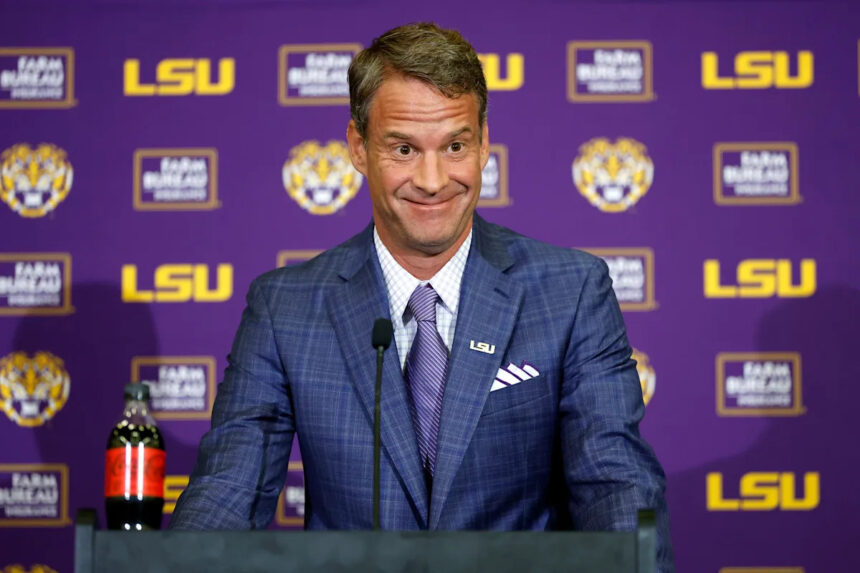
In the high-stakes, often-absurd world of college football coaching contracts, a new benchmark for bizarre financial arrangements has been set. Lane Kiffin, the newly minted head coach of the LSU Tigers, just received a $250,000 bonus. The reason? His former team, the Ole Miss Rebels, whom he left in a high-profile mid-December move, won a College Football Playoff game. The kicker? The check isn’t coming from Ole Miss. According to the intricate clauses woven into his LSU deal, Kiffin’s new employer is contractually obligated to pay him the postseason incentives he left on the table in Oxford. This isn’t just a quirky footnote; it’s a revealing look into the modern arms race for elite coaching talent and the extreme lengths programs will go to secure their guy.
The Clause That Defies Conventional Logic
To understand this situation, one must first grasp the unprecedented timeline. Kiffin was leading an Ole Miss squad barreling toward the 12-team College Football Playoff. Yet, with the season’s climax still in play, LSU executed a full-court press, successfully wooing Kiffin away from a potential national championship contender. This created an immediate contractual dilemma: Kiffin was walking away from potentially millions in performance bonuses.
LSU’s solution was as simple as it was staggering. They agreed to honor the postseason bonus schedule from his Ole Miss contract. This meant if Ole Miss achieved certain milestones under its interim (and later permanent) coach, Kiffin would still be paid—by LSU. The Rebels’ decisive 41-10 first-round victory over Tulane triggered the first of these payments: a cool quarter-million dollars for a playoff win.
This arrangement is far from standard. Typical “buyout” clauses involve the new school paying the old school to release a coach. This is different. This is a new school proactively assuming the financial liability of the old school’s success-based incentives. It underscores Kiffin’s leverage and LSU’s desperation to eliminate any financial hesitation from his decision-making process.
Expert Analysis: More Than Just a Bonus, A Strategic Power Play
From a coaching industry perspective, this clause is a masterstroke in negotiation and a telling sign of the times. “This isn’t just about $250,000,” says a veteran collegiate athletic director familiar with high-level contracts. “It’s a symbolic and practical guarantee. It tells the coach, ‘We believe in you so much that we will pay you for the success of the program you’re leaving. Your value is not tied to your current address.’ It completely neutralizes the ‘what if’ financial fear a coach has when leaving a successful situation late in the cycle.”
The clause serves multiple strategic purposes for LSU:
- Competitive Recruitment: It was a unique, decisive offer that other suitors likely didn’t match, ensuring Kiffin chose Baton Rouge.
- Goodwill Gesture: It fosters immediate loyalty, showing Kiffin that LSU views him as a partner, not just an employee.
- Market Setting: It raises the bar for future elite coaching hires, potentially making such bonus-assumption clauses a new norm for in-season moves.
For Kiffin, it provided a seamless financial transition and validated his market worth at the absolute peak of his value. He managed to parlay Ole Miss’s success into a better deal at LSU, a maneuver as slick as any offensive game plan.
The Ripple Effects on the Coaching Carousel and Beyond
The implications of this contractual oddity will reverberate through future coaching searches. Athletic directors and agents are already taking notes. We can expect to see:
- More Complex Contracts: Future deals for in-demand coaches will include specific language covering mid-to-late-season moves, with bonus protection becoming a standard bargaining point.
- Blurred Loyalty Lines: While Kiffin publicly congratulated his former team, this clause financially incentivizes him to keep one eye on Oxford’s results. It creates a rare scenario where a coach has a vested, contractual interest in his former team’s performance.
- Boosted Leverage for Coaches: The power continues to shift toward top-tier coaches. This case proves that if a program wants a coach badly enough, they will not only pay for his future but also for the successful past he is willingly abandoning.
Furthermore, it adds a surreal layer to the LSU-Ole Miss rivalry. The next time these two SEC West foes meet, Kiffin will be on the LSU sideline, having already been paid by the Tigers for a playoff win achieved by the Rebels. It’s a narrative twist fit for a Hollywood script, not the typical boilerplate of sports contracts.
Predictions: Will This Become the New Normal?
While the specific circumstances of a coach leaving a playoff-bound team are rare, the precedent is set. The “Kiffin Clause” is likely to emerge in two key scenarios moving forward:
- For “Can’t-Miss” Coaches: When a program identifies its absolute top target, regardless of timing, expect bonus protection to be part of the closing package. It’s the ultimate sign of commitment.
- In-Season Hires: As coaching carousels begin to spin earlier and earlier, more coaches will be poached before their regular season ends. Guaranteeing accrued incentives will be a key tool to facilitate a quicker, cleaner move.
However, it won’t become universal. This is a weapon for the blue-blood programs with deep pockets chasing the very top of the coaching market. For most schools, the financial risk of paying for achievements at another institution will be too great. But for the Alabamas, Ohio States, and Texases of the world, the “Kiffin Clause” is now a proven, potent tool in the arsenal.
One must also consider the potential for optics backlash. Will boosters and fans at a school like LSU happily accept writing a check to their new coach because his old team won a big game? In the cold calculus of winning, the answer is probably yes. But it undoubtedly adds another layer of complexity to the already fraught relationship between amateurism and exorbitant coaching compensation.
Conclusion: A $250,000 Symbol of a Sport Transformed
Lane Kiffin’s $250,000 bonus from LSU for Ole Miss’s playoff win is more than a bizarre financial transaction. It is a stark, undeniable symbol of modern college football’s realities. It highlights the extreme financialization of coaching talent, the erosion of traditional seasonal boundaries in employment, and the winner-take-all mentality of elite programs. The clause brilliantly solved a unique problem for LSU, ensuring they landed their man without leaving money on the table in Oxford.
In the end, the most successful play of Ole Miss’s playoff run might not have been a touchdown pass or a goal-line stand. It was a clause, buried in a contract in Baton Rouge, that turned a rival’s victory into a direct deposit for their former coach. As college football continues its breakneck evolution into a corporate enterprise, this story will stand as a landmark moment—the day a bonus became the ultimate testament to a coach’s value, transcending team, conference, and conventional logic itself.
Source: Based on news from Yahoo Sports.