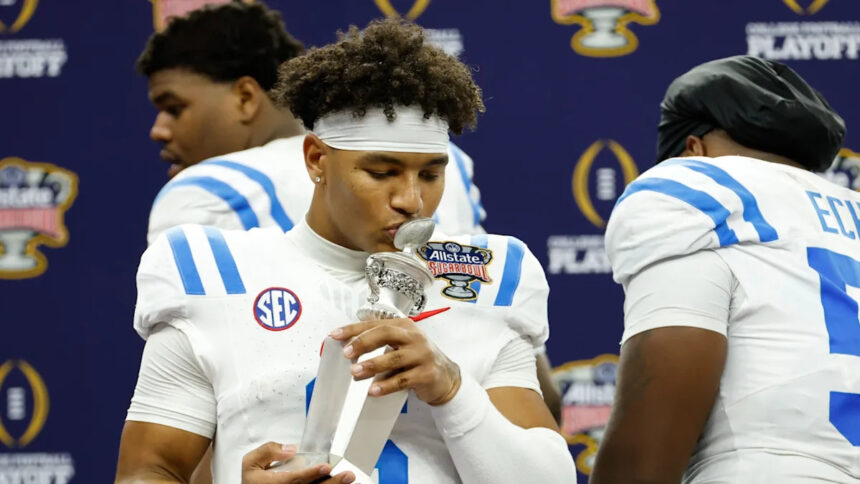
Ole Miss QB Trinidad Chambliss Sues NCAA in Landmark Eligibility Battle
In a move that could reshape how the NCAA governs athlete eligibility, Ole Miss quarterback Trinidad Chambliss has filed a lawsuit against the collegiate sports governing body. The suit, filed in Lafayette County Circuit Court on Friday, seeks to overturn the NCAA’s denial of an extra year of eligibility for the 23-year-old signal-caller. This legal challenge strikes at the heart of the NCAA’s often-opaque decision-making process, pitting a player’s documented medical history against the association’s bureaucratic standards. With the 2024 season on the line, Chambliss isn’t just fighting for one more year in Oxford; he’s challenging a system athletes often describe as inflexible and cold.
The Heart of the Dispute: Medical Documentation vs. NCAA Bureaucracy
The crux of Trinidad Chambliss’s case lies in a stark disagreement over paperwork and pathology. The NCAA denied Ole Miss’s initial waiver request, stating the university and Chambliss’s previous school, Division II Ferris State, failed to provide adequate medical documentation. However, the lawsuit paints a dramatically different picture, alleging the NCAA acted in “bad-faith, unreasonable and arbitrary” manner.
The suit details a significant history of illness that derailed Chambliss’s early collegiate career. Despite submitting letters from physicians, the NCAA’s denial has sparked accusations that the organization is evaluating evidence in an “isolated, rather than comprehensive manner.” This case highlights a recurring tension: athletes with complex, real-world medical struggles navigating a system built on rigid compliance checkboxes.
Key Arguments from Chambliss’s Legal Team:
- The “Clock” vs. Reality: Although Chambliss has been enrolled in college for five academic years, he has only participated in three seasons of college football due to medical issues. The lawsuit argues the NCAA’s “five-year clock” rule is being applied without proper consideration for the lost time.
- Interpretation of Rules: The filing accuses the NCAA of “interpreting its rules to impose requirements not contained therein,” suggesting the association moved the goalposts on what constitutes sufficient medical proof.
- Duty of Care: A compelling legal claim within the suit is that the NCAA breached its “duty of good faith and fair dealing” owed to the student-athlete, a principle that could have far-reaching implications if upheld by the court.
Expert Analysis: A Precedent-Setting Legal Gambit
Sports law analysts see the Chambliss case as more than a simple eligibility appeal. “This isn’t just an administrative waiver request anymore; it’s a formal legal challenge alleging bad faith,” says Dr. Ellen Reeves, a professor of sports law. “By filing in state court, his attorneys are attempting to hold the NCAA accountable to basic standards of fairness and rationality that sometimes get lost in its own internal committees.”
The case’s strength may hinge on the medical evidence. The inclusion of detailed physician letters in the lawsuit is a strategic public relations and legal move, designed to contrast the human element of Chambliss’s struggle with the NCAA’s clinical denial. The central question for the court will be: Did the NCAA act arbitrarily, or was its request for more specific documentation a valid exercise of its rules?
Furthermore, Ole Miss’s full-throated support is significant. The university’s alignment with the player signals a growing frustration among even powerful member institutions with the NCAA’s waiver process. “When a school like Ole Miss, with its resources, can’t navigate the documentation process to the NCAA’s satisfaction, it begs the question: is the bar impossibly high, or is the communication fundamentally broken?” notes veteran college football analyst Marcus Thigpen.
Potential Outcomes and Ramifications for College Athletics
The lawsuit against the NCAA filed by Trinidad Chambliss could unfold in several ways, each with distinct consequences.
Scenario 1: A Swift Settlement and Eligibility. The most likely outcome may be an expedited settlement. Facing discovery and public scrutiny of its decision-making process, the NCAA could grant the waiver, allowing Chambliss to play. This would be a quiet victory for the quarterback but avoid a precedent-setting court ruling.
Scenario 2: A Court Order and New Precedent. If the judge grants an injunction or rules against the NCAA, it would be a seismic event. A judicial finding that the NCAA acted in an “arbitrary and capricious” manner would empower other athletes in similar situations to seek legal recourse, potentially flooding the system with challenges.
Scenario 3: A Loss for Chambliss and Reinforcement of NCAA Authority. A ruling in favor of the NCAA would reinforce its broad discretionary powers over eligibility. However, even in loss, the public airing of the case’s details could pressure the association to reform its waiver process to be more transparent and athlete-centric.
Broader Implications:
- Waiver Process Scrutiny: This case puts the entire NCAA waiver system under a microscope, potentially leading to calls for more objective, published standards for medical extensions.
- State Court Strategy: Success here could inspire a wave of similar state-level lawsuits, where judges and juries may be less deferential to the NCAA than federal courts have historically been.
- Player Empowerment: In the NIL era, athletes are more aware of their leverage and rights. Legal action becomes a more viable tool when a career year—and its associated NIL value—is at stake.
The Road Ahead for Chambliss and Ole Miss
For Trinidad Chambliss, this lawsuit is the ultimate audible. His collegiate journey, marked by health battles and a transfer to the SEC, now culminates in a courtroom fight. The emotional and physical toll of the process is undeniable, but the potential reward—leading the Rebels for a full season—is a powerful motivator.
For Head Coach Lane Kiffin and the Ole Miss program, the situation is a delicate balance of support and preparation. The Rebels must install their offensive schemes for the upcoming season, all while uncertainty hangs over a quarterback position that could benefit from Chambliss’s experience. His presence would provide valuable depth and a mature voice in the quarterback room.
Regardless of the immediate outcome, the Chambliss vs. NCAA lawsuit has already succeeded in spotlighting a critical flaw in the college sports model: the lack of a transparent, compassionate, and consistent process for athletes dealing with legitimate medical hardships. The case argues that the spirit of the rule—to protect athletes who lose time to circumstances beyond their control—has been lost to a rigid interpretation of the letter of the law.
Conclusion: A Test Case for Compassion in College Sports
Trinidad Chambliss’s lawsuit is more than a petition for one more season. It is a referendum on how the NCAA treats the individual athletes under its charge. By alleging bad faith and arbitrary action, the case challenges the association to justify its processes in open court, not just behind closed doors in Indianapolis.
The coming weeks will reveal whether the threat of legal exposure forces a change in the NCAA’s stance or if it will dig in to defend its authority. In the balance hangs the final chapter of a player’s career and a potentially transformative precedent for how medical hardships are evaluated. In an era of constant change in college athletics, this case asks a fundamental question: Can the system accommodate human complexity, or will it remain bound by its own bureaucratic inertia? The answer will resonate far beyond the football fields of Oxford, Mississippi.
Source: Based on news from Yahoo Sports.