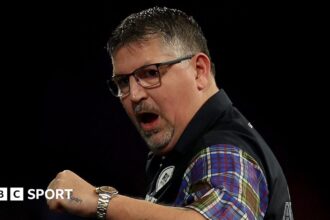
Littler’s Rotterdam Roar: How Darts’ Teen Sensation Turned Boos Into Fuel
The relationship between a sporting prodigy and a crowd is often a delicate dance of adoration and expectation. For 17-year-old Luke Littler, the latest step in that dance came not to a symphony of cheers, but to a chorus of jeers. At Night 11 of the Premier League Darts in Rotterdam, the teenager walked into a cauldron of Dutch hostility, a ritual usually reserved for the sport’s most established villains. His response, however, was not one of wide-eyed shock, but of cool, collected confirmation. Littler didn’t just handle the boos; he had prepared for them, expected them, and ultimately, used them as a backdrop for his ever-growing legend.
The Rotterdam Reception: A Rite of Passage
Rotterdam’s Ahoy arena is a fortress of Dutch darts. When a non-Dutch player—particularly one threatening local hero Michael van Gerwen’s dominion—steps into the spotlight, the atmosphere is famously, and ferociously, partisan. For Luke Littler, his arrival in this arena for the first time as a Premier League contender was a pivotal moment. The crowd, a sea of orange, greeted his walk-on with a deafening wave of boos, a sound that has unnerved veterans of the sport.
Yet, in his post-match comments, Littler displayed a maturity that belied his years. “It was exactly what I expected,” he stated, his tone almost nonchalant. This wasn’t bravado; it was strategic preparedness. Littler and his team had clearly done their homework, understanding that in the high-stakes theater of European darts, crowd dynamics are as much a part of the game as the treble 20. By anticipating the hostility, he effectively disarmed its psychological power before a dart was even thrown.
Swagger Forged in Experience, Not Just Talent
To dismiss Littler’s composure as simple teenage fearlessness would be to misunderstand his journey. His swagger is not innate arrogance; it is a trait forged in the white-hot spotlight of a World Championship final and the weekly grind of the Premier League. He is learning the meta-game at a breakneck pace.
- Mental Fortitude: Accepting boos as part of the job reframes them from a personal attack to an environmental factor, like draughts or lighting.
- Tactical Awareness: By expecting the worst in terms of crowd reaction, he conserves mental energy otherwise spent on surprise or indignation.
- Respect Through Performance: Littler understands that in darts, the loudest answer is not a retort, but a maximum score. His precision on the board is the ultimate mic-drop.
This episode in Rotterdam was less about crowd rejection and more about Littler’s professional assimilation. He is no longer just the wonderkid; he is a bona fide contender who warrants the full, intimidating treatment reserved for the sport’s elite. The boos were, perversely, a badge of honor.
The Expert Analysis: Reading the Game Beyond the Oche
From a tactical perspective, Littler’s Rotterdam mindset reveals a player accelerating his development at a phenomenal rate. Sports psychologists often speak of “controlling the controllables.” Littler, by vocalizing his expectation of the boisterous crowd, demonstrated a masterful grasp of this principle.
Veteran players often speak of “using” the crowd’s energy, whether positive or negative. The hostile atmosphere can sharpen focus, heighten adrenaline, and create a “them against me” mentality that some competitors thrive upon. Littler’s pre-emptive mental preparation allowed him to potentially channel the negative noise into a more concentrated performance. He didn’t have to adapt in the moment; he arrived adapted.
Furthermore, this incident underscores his unique position in the sport. He carries the weight of being darts’ most marketable new star, a pressure that could cripple some. His handling of Rotterdam suggests he is separating his persona as a global phenomenon from his process as a competitor—a skill that often takes athletes years, if not decades, to learn.
Predictions: The Forging of a Future Champion
So, what does this mean for Luke Littler’s trajectory? The Rotterdam test was a significant one, and passing it with such emotional intelligence points to several likely developments.
- Enhanced Away-Game Strength: If he can remain unfazed in Rotterdam, he can handle any hostile arena in the world. This makes him a terrifying prospect in future World Matchplays or Grand Prix events.
- Rivalry Acceleration: His poised response under fire will only intensify his burgeoning rivalries with players like Van Gerwen and Luke Humphries. They now face a teenager who is unflappable both on the board and in the arena.
- Main Event Magnetism: Littler is becoming must-watch TV. Fans will tune in not only for his darts but for the entire spectacle—how the crowd reacts, and how the unflappable teen responds. He is a narrative engine for the sport.
The ultimate prediction is this: Littler’s mental game is catching up to his extraordinary technical skill. For most players, the former is the limiting factor. If he continues to marry world-class talent with this level of pre-meditated composure, his first major TV title outside the World Championship is not a matter of ‘if,’ but ‘when.’
Conclusion: The New Blueprint for Sporting Composure
Luke Littler’s night in Rotterdam will be remembered not for a specific checkout or a tournament victory, but for a masterclass in pre-emptive mental conditioning. In stating the hostile reception was “exactly what I expected,” he did something remarkable: he claimed ownership of the narrative before it could claim him. He transformed potential intimidation into expected ambiance.
This is the evolution of a prodigy into a professional. The darts world is witnessing a rare phenomenon—a player whose psychological growth is keeping pace with his extraordinary talent. The boos in Rotterdam were not a setback; they were the sound of Luke Littler’s arrival as a complete, resilient, and formidable force in the sport. He didn’t just prepare for the darts; he prepared for the entire theater, and in doing so, he wrote a new chapter on how to handle the heat. The swagger is earned, and the future is listening—even if it’s sometimes booing.
Source: Based on news from Sky Sports.