The Class of ’92 & Modern United: A Complicated Legacy of Critique, Passion, and Power
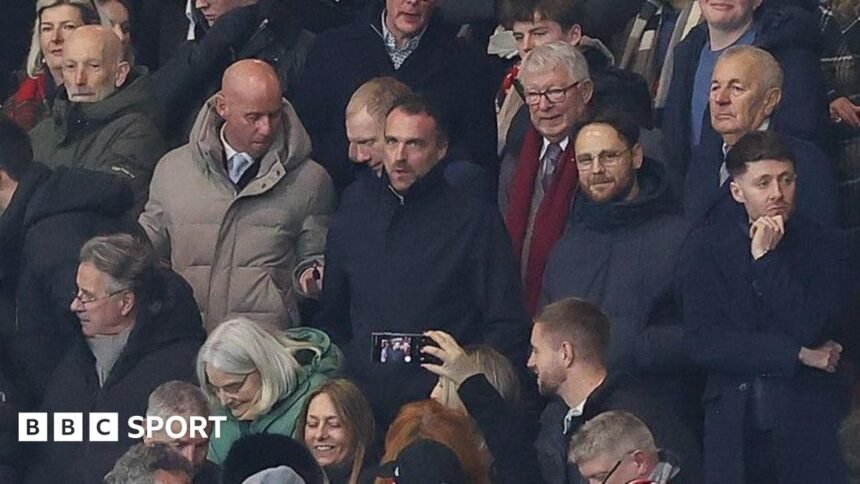
The image was a poignant snapshot of Manchester United’s past, present, and perpetual turbulence. There, in the stands during January’s FA Cup defeat to Brighton, sat Sir Alex Ferguson, the architect of modern United, flanked by two of his most trusted lieutenants: Nicky Butt and Paul Scholes. The trio, a living monument to the club’s golden era, watched as the latest iteration of their beloved team faltered. This was not a mere reunion of old friends; it was a visual metaphor for the club’s ongoing struggle under the shadow of its own history. The relationship between Manchester United and its fabled ‘Class of ‘92’ has evolved from one of pure celebration into something far more complex—a potent, often uncomfortable, blend of unofficial oversight, public critique, and raw, unflinching passion that frequently spills into the public arena.
From Pitch to Punditry: The Unavoidable Shadow of Success
The Class of ‘92—Ryan Giggs, Paul Scholes, Nicky Butt, Gary and Phil Neville, and David Beckham—are not just former players. They are the embodiment of a DNA, a standard of excellence, and a relentless winning mentality that defined United for a generation. Their transition from the pitch to various roles in business, coaching, and media has been seamless, but their voices have never left Old Trafford. Unlike many ex-players, their opinions carry extraordinary weight. They are not distant pundits; they are the club’s spiritual guardians, and their critiques are felt not as professional analysis, but as familial disapproval.
This creates a unique dynamic. Modern Manchester United players and managers must perform not only for the current fanbase and hierarchy but also under the intense, watchful gaze of the very legends whose jerseys they now wear. The standards they set are non-negotiable. When Scholes or Butt speaks on a podcast or in a studio, it is not simply a comment on a game; it is a judgment on whether the current custodian is upholding the legacy they built with their own sweat and success.
- Cultural Gatekeepers: They act as de facto guardians of the “United way,” a style and attitude they helped define.
- Media Megaphones: Their platforms, like the popular ‘The Overlap’ or ‘The Good, The Bad, The Football’ podcast, give their critiques immediate and widespread resonance.
- Direct Lines to the Top: Their enduring relationships with key figures like Sir Alex Ferguson and, in some cases, the club’s ownership, blur the lines between external pundit and internal influencer.
The Martinez Microcosm: When Critique Meets Confrontation
The recent, fiery exchange between Lisandro Martinez and the Butt-Scholes duo perfectly encapsulates this complicated relationship. Prior to the Manchester derby, the pair engaged in light-hearted “mickey-taking” about Martinez’s stature and his potential vulnerability against Erling Haaland. For them, it was likely punditry banter. For Martinez, a player defined by his warrior mentality, it was a public slight. His response post-victory—a defiant “they can say what they want” and an invitation to “come to my house”—was pure, unvarnished emotion.
The pair’s subsequent reaction on their podcast was telling. They praised his “brilliant” performance, with Butt acknowledging he went “man-to-man with the best centre forward in the world.” However, they swiftly questioned his rationale for responding. “I just think when someone gets so upset about something on a podcast… to come out and say, ‘they can say what they want’ and ‘come to my house’ – grow up,” Butt stated. This sequence reveals the core tension: the former players see their role as objective critics, free to comment as they see fit. The current players, however, feel the unique pressure of that criticism coming from club icons, perceiving it as a lack of solidarity from within the family.
This incident is not an isolated one. Roy Keane’s searing assessments, Gary Neville’s detailed tactical dissections, and Paul Scholes’ blunt appraisals have consistently set the agenda for discussions around the club’s failures. For the modern player, it creates a “damned if you do, damned if you don’t” scenario. Ignoring it is seen as disrespectful to the legacy; responding to it is seen as thin-skinned.
A Burden or a Blueprint? Navigating the Legacy
For any manager or player at Manchester United, managing this legacy is a critical, unofficial part of the job description. The Class of ‘92’s presence is a double-edged sword. On one hand, it provides a living blueprint for success—a daily reminder of the mentality, camaraderie, and quality required to win at the highest level. Their stories are the club’s catechism. On the other hand, it can feel like an impossible standard, a past so glorious it stifles the present.
The key question for the current regime, led by Erik ten Hag, is how to harness this legacy as fuel rather than let it become an anchor. Ten Hag himself has shown a willingness to engage with the past, often speaking of the club’s DNA, while simultaneously trying to build something new and distinct. Successful integration of the likes of Academy graduates and a demand for a fierce, never-say-die attitude are direct nods to that heritage. However, he must also protect his players from the psychological weight of constant comparison, fostering a mindset where the Class of ‘92 is an inspiration, not an intimidation.
The Future: Coexistence or Collision?
Looking ahead, this relationship is unlikely to simplify. The Class of ‘92 are entrenched in the club’s fabric. Their media careers are built on candid insight, and their love for United ensures they will never be silent spectators. The prediction, therefore, is not for peace, but for a continued state of passionate, often fraught, coexistence.
The trajectory will be determined by on-pitch success. Sustained progress and tangible trophies under Ten Hag would grant the current squad a form of immunity and respect, shifting the narrative from “they’re not like the old days” to “they’re building their own legacy.” The critiques from the legends would then evolve from fundamental condemnation to nuanced, performance-based analysis. However, should inconsistency and underperformance persist, the voices of the past will grow louder, their critiques sharper, and the pressure on players like Martinez to “prove them wrong” will become an even heavier burden.
Conclusion: An Unbreakable, Uncomfortable Bond
Manchester United’s relationship with the Class of ‘92 is ultimately a story of profound, unbreakable love—a love that manifests not in gentle support, but in fierce, demanding, and often painfully honest critique. The image of Ferguson, Butt, and Scholes watching from the stands is the perfect emblem of this dynamic. They are not mere spectators; they are custodians. While their methods may sometimes clash with the sensibilities of a new generation of players, their authority is rooted in the unparalleled success they delivered.
For the modern United player, understanding this is part of wearing the shirt. The critiques from Scholes, Butt, Neville, and Keane are not the words of outsiders, but the challenging love of older brothers who built the house they now live in. The path forward lies not in confrontation, as Martinez briefly explored, nor in submission, but in using that relentless standard as a catalyst. The complicated relationship is, in fact, Manchester United’s eternal engine—a constant, noisy, and uncomfortable reminder that at this club, the past is never truly past, and excellence is the only acceptable language.
Source: Based on news from BBC Sport.