Old Trafford Chaos: A Throwback Thriller That Defied Explanation
On a night where the Manchester rain seemed to wash away any semblance of modern tactical dogma, Old Trafford staged a Premier League classic that felt ripped from a different era. Manchester United and Bournemouth didn’t just share the points in a 4-4 draw; they shared in the creation of a chaotic, mesmerising spectacle that left managers speechless, pundits purring, and fans breathless. This was not a match defined by low blocks or calculated pressing triggers, but by raw, unadulterated attacking intent, defensive frailty, and a relentless, almost naive, commitment to going forward. In a season often scrutinized for its strategic nuances, this was pure, uncut footballing adrenaline.
A Night Where Attack Was the Only Form of Defence
From the first whistle, the game pulsed with an erratic energy. The pattern was set early: Bournemouth, brilliantly orchestrated by the fearless Andoni Iraola, would slice through United’s midfield with alarming ease, only for United to respond in kind with moments of individual brilliance amid structural disarray. It was end-to-end in the truest, most chaotic sense. There was no control, only consequence. Every attack seemed to breed a counter-attack, every goal sparked an immediate desire for retaliation.
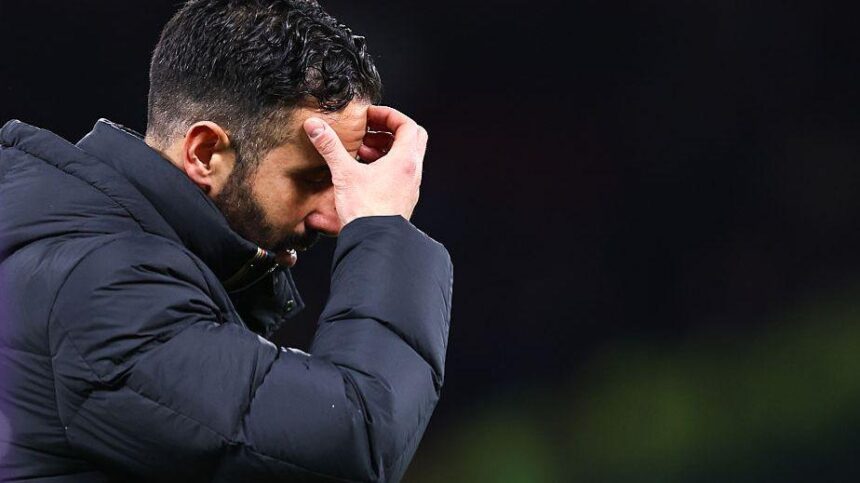
The managers’ post-match reactions said it all. Bournemouth’s Iraola, a tactician known for his meticulous approach, could only shrug at the madness. “Really difficult to explain,” he admitted, before landing on the perfect summary: “But I prefer 4-4 to 0-0.” His counterpart in the United dugout, Ruben Amorim, distilled it into a single, telling word: “Fun.” In the high-stakes pressure cooker of the Premier League, that sentiment is a rare and precious commodity, and it echoed around a stunned Old Trafford.
Carragher’s Verdict: An Echo of Fergie’s Fabled Fortress
The analysis that followed resonated deeply with a nostalgic chord. On Sky Sports, Jamie Carragher, never one for hyperbole when discussing Manchester United, made a striking declaration. “The best game of the Premier League season so far,” stated the former Liverpool defender. He then pinpointed why it felt so significant: “It was almost a throwback to Alex Ferguson’s Manchester United with attacking football.”
This was the core of the night’s magic. For years, the ‘Theatre of Dreams’ was synonymous with a specific brand of football: fearless, front-footed, and believing that scoring one more than the opponent was the only philosophy that mattered. Under Ferguson, chaos was often a calculated weapon. This current iteration, under Amorim, is not yet that refined machine. The chaos against Bournemouth was born as much from vulnerability as it was from verve. Yet, the spirit—the refusal to settle, the capacity for explosive attacking play, and the sheer will to salvage something from the brink—was unmistakably evocative.
- Relentless Pace: The game had the transitional fury of a classic Ferguson-era clash against Arsenal or Newcastle.
- Individual Flair: Moments of magic from United’s attackers papered over systemic cracks, a familiar tale from the past.
- Defensive Mayhem: The sheer openness and frequent errors were a stark contrast to the controlled, possession-dominant styles prevalent today.
- Never-Say-Die: United’s late equalizer, twice coming from behind, carried the faint echo of ‘Fergie Time’ drama.
Expert Analysis: Beautiful Bedlam or Tactical Regression?
So, how should this game be framed? Is it a blueprint or an anomaly? The expert view is split. For purists of the sport as entertainment, it was a glorious advertisement for the Premier League’s unpredictability and emotional payoff. It was a reminder that football, at its heart, is about goals, passion, and narrative.
However, for tactical analysts, the match was a case study in what happens when structure completely evaporates. Both midfields were often bypassed, defensive shapes were pulled apart with ease, and the game resembled a series of thrilling attack-versus-defense drills. For United, the performance raised familiar, concerning questions about their defensive organization and midfield control that have plagued them for years. The ‘throwback’ feel, therefore, is a double-edged sword. It recalls the attacking glory, but also a certain defensive negligence that the great Ferguson teams could often overcome through sheer force of will and superior firepower—a luxury this current squad does not consistently possess.
The key takeaway is context. This was not a coached style of chaos; it was an emergent property of two teams committing bodies forward with abandon. For Bournemouth, it was a courageous and successful point-earning strategy. For United, it was a turbulent ride that exposed their frailties while showcasing their spirit.
Predictions: What Does This Mean for United’s Future?
One swallow does not make a summer, and one chaotic 4-4 draw does not signify a return to the glory days. However, it does provide crucial insights into the team Ruben Amorim is building and the path ahead.
First, the identity is taking shape. Amorim’s United are clearly being forged in an attacking image. The willingness to fight fire with fire, even when wobbling, suggests a core mentality the manager is instilling. The days of cautious, possession-based football seem distant.
Second, the need for a midfield anchor is glaring. The space afforded to Bournemouth’s Dominic Solanke and others was a direct result of a missing defensive presence in the engine room. This summer’s transfer activity will be pivotal.
Finally, expect volatility. This United side is unlikely to be one that grinds out 1-0 wins consistently. Their season will be defined by peaks and troughs, by thrilling victories and head-scratching setbacks. The Bournemouth game is a template for that volatility: capable of the sublime and the vulnerable, often within the same passage of play. The challenge for Amorim is to harness the attacking energy while building a more resilient foundation—to create a modern team that can channel that classic United spirit without relying on chaos as a crutch.
Conclusion: A Welcome Jolt of Unscripted Drama
In an age of football where margins are microscopic and games are often decided by single moments of pre-rehearsed genius, Manchester United versus Bournemouth was a glorious, soaking-wet rebellion. It was a throwback not just to a specific era at Old Trafford, but to a time when matches could wildly defy pre-match tactical previews and become legendary for their sheer, unmanageable drama.
Jamie Carragher was right. This was the season’s best game so far precisely because it was unpredictable, emotionally charged, and fundamentally about the joy of attack. While it leaves United with more questions than answers about their long-term prospects under Amorim, it gifted the league something invaluable: a story. A story of a chaotic, mesmerising night where the result was almost secondary to the experience—a night that, for all its defensive flaws, reminded everyone why they fell in love with the game in the first place. The clinical operators in the dugout couldn’t explain it, but the fans in the stands and the purists in the studio certainly understood it. This was football, raw and unforgettable.
Source: Based on news from Yahoo Sports.