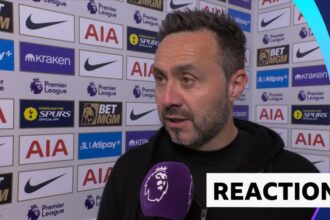
Maresca’s Silence Speaks Volumes: A Storm Brewing at Stamford Bridge?
The first storm clouds of the Enzo Maresca era at Chelsea have gathered not with a thunderclap, but with a pointed, deliberate silence. In a press conference that crackled with unspoken tension, the new head coach, when pressed to clarify his recent, surprising outburst about a lack of support from within the club, offered a terse, telling response: “I have nothing to add.” This refusal to elaborate, to smooth things over, is far more significant than the initial complaint. It signals a potential early fracture in the meticulously planned project at Stamford Bridge, raising urgent questions about unity, expectations, and whether the club’s infamous volatility has already claimed its first casualty of the season.
The Outburst and The Echoing Silence
The controversy stems from comments made by Maresca following a pre-season fixture, where the Italian voiced unexpected frustration. While the exact wording remains guarded, the core message was clear: he intimated that he was not receiving the level of backing he anticipated from the club’s hierarchy in certain operational areas. This immediately set alarm bells ringing. For a coach handpicked for a long-term, philosophy-driven project, such a public airing of grievances after only weeks in the job was highly unorthodox.
However, the real story unfolded days later. When journalists sought clarification—a standard opportunity to walk back comments or provide context—Maresca shut it down completely. His “nothing to add” stance is a calculated move. It is neither a retraction nor an escalation, but a hardening of his position. It transforms a moment of frustration into a defined stance, forcing the issue into the open without providing the media or the public a roadmap. This silence is not passive; it is an active pressure tactic, placing the ball firmly in the court of sporting directors Paul Winstanley and Laurence Stewart, and the co-controlling owners.
Decoding the “Support”: What Could Maresca Mean?
Maresca’s vague reference to a lack of “support” is the cryptic heart of this issue. Without clarification, we are left to analyze the potential pressure points in Chelsea’s much-discussed structure. Several key areas emerge as likely candidates:
- Transfer Market Alignment: Is there disagreement over remaining transfer targets? Maresca may be pushing for specific profiles crucial to his possession-dense system that the recruitment team, focused on data and long-term value, is hesitant to acquire.
- Backroom Staff and Control: The manager may be seeking full autonomy in appointing his coaching staff or making decisions on loan moves for development squad players, requests that clash with the club’s multi-club model and centralized planning.
- Patience and Expectations: With a squad still skewed heavily towards youth, Maresca’s project requires time. His outburst could be a pre-emptive strike, publicly signaling the need for patience before any dip in results triggers external noise.
- Infrastructure and Resources: While unlikely given Chelsea’s spending, it could relate to specific training ground upgrades or analytical resources he deems essential for implementing his complex tactical ideas.
This incident cuts to the core of the modern “head coach versus manager” debate. Maresca, a disciple of Pep Guardiola, is a tactician. He was hired for his innovative playing style. But his comments suggest a desire for more traditional managerial influence, potentially putting him on a collision course with Chelsea’s determinedly non-traditional structure.
A Pattern or a Pre-emptive Strike? Chelsea’s Turbulent Context
To understand the gravity of this moment, one must view it through the lens of recent Chelsea history. The club has become a graveyard for managerial reputations, with a pattern of coaches—from Thomas Tuchel to Graham Potter—ultimately clashing with the ownership’s vision and operational style. Maresca’s comments, therefore, feel like a canary in the coal mine.
Is he, aware of this history, making an early, loud stand to establish his boundaries and demand the tools he believes are non-negotiable? Or is this the first crack revealing a fundamental mismatch between his expectations and the club’s modus operandi? The Chelsea ownership has shown zero hesitation in making swift, brutal decisions when they perceive a misalignment. Maresca’s defiance, however quiet, tests this resolve uniquely early in the cycle.
Furthermore, this public tension threatens the fragile ecosystem at the club. The squad, already adapting to a third permanent coach in two years, now must process signals of internal discord. Fan patience, worn thin by consecutive disappointing seasons, is further strained by off-pitch drama. Maresca’s silence may be intended to pressure the board, but it also risks destabilizing the very environment he needs to succeed.
What Happens Next? Pathways from the Standoff
The standoff cannot last. Maresca’s “nothing to add” line draws a boundary, but the issue must be resolved behind closed doors. The coming days and weeks will reveal the trajectory of Chelsea’s season before a competitive ball is even kicked.
- The Reconciliation Scenario: Private meetings lead to a clear agreement. The board provides assurances (and perhaps action) on Maresca’s key requests. A unified front is presented at the next press conference, with the incident dismissed as “open conversation” and a testament to shared ambition. This is the optimal, but currently least dramatic, outcome.
- The Uneasy Truce: The issue is papered over but not resolved. Maresca begrudgingly accepts the constraints, but the trust is damaged. This creates a fragile working relationship where every future setback reignites the underlying tension, a toxic recipe for long-term success.
- The Escalation Path: If support is not forthcoming and results suffer, Maresca’s private frustration becomes public critique. The relationship breaks down irretrievably, leading to a costly and embarrassing separation that would represent a massive failure of the club’s much-vaunted project.
Crucially, the owners’ response will be telling. Will they mollify their chosen project leader, or will they demand he falls in line with the existing structure? Their choice will define the power dynamic at Chelsea for years to come.
Conclusion: Silence as the Loudest Statement
Enzo Maresca’s refusal to clarify his comments is a masterclass in political messaging within football. In saying nothing, he has said everything. He has revealed that all is not well in the nascent stages of the BlueCo project, exposing potential fissures between the technical vision on the pitch and the corporate strategy above it. This is no minor preseason hiccup; it is a stress test of Chelsea’s entire modern philosophy.
For Chelsea fans, the optimism of a fresh start under a bright tactical mind is now tinged with familiar anxiety. The club has invested not just in players, but in the idea of a patient, systematic rebuild. Maresca’s silent standoff threatens that idea at its inception. The coming silence from the boardroom will be even more deafening. How they choose to break it—with compromise, with force, or with inaction—will determine whether this is merely the first bump in the road or the beginning of another very short, very expensive journey to nowhere. The Premier League season hasn’t started, but the first, and perhaps most critical, battle for Chelsea’s soul is already underway.
Source: Based on news from Sky Sports.