Max Verstappen’s F1 Future in Doubt: Is the King Considering an Early Throne Exit?
The image was jarring. For four dominant years, Max Verstappen in parc fermé meant a splash of champagne, a wide grin, and the nonchalant posture of a man to whom victory had become a routine. Yet, at the 2025 Japanese Grand Prix, the scene was one of palpable frustration. An eighth-place finish, a car lacking its once-untouchable edge, and a driver speaking not of conquests, but of an endgame. In a startlingly candid moment, the reigning four-time World Champion hinted that the checkered flag on his storied career might be closer than anyone imagined, potentially as soon as the end of 2026.
The Cracks in the Empire: From Dominance to Discontent
Verstappen’s reign from 2021 to 2024 redefined modern Formula 1 excellence. He assembled seasons of such staggering supremacy—19 wins in a single campaign, a 10-race victory streak—that the sport seemed to exist in a binary state: Verstappen, and everyone else. The Red Bull RB19 and its successor were marvels of engineering, and Verstappen, their perfect pilot, operated with a ruthless, metronomic efficiency that broke spirits and records alike.
However, the 2025 season, under a new wave of technical regulations aimed at closing the field, has painted a different picture. The Japanese GP weekend was a microcosm of this shift. The car was fragile, the strategy faltered, and the driver was visibly and audibly exasperated. This wasn’t a blip; it was the culmination of growing vocal dissent. Verstappen has been a persistent critic of F1’s recent direction, particularly the 2026 power unit regulations and what he perceives as an over-emphasis on artificial competition.
- Record-Breaking Dominance: 2021-2024 championships, 10 consecutive wins, 19 wins in a season.
- Regulatory Resistance: Verstappen has openly criticized F1’s new technical and sporting direction.
- The Japan Catalyst: A frustrating P8 finish led to his most explicit retirement comments yet.
More Than a Bad Weekend: Decoding Verstappen’s Retirement Musings
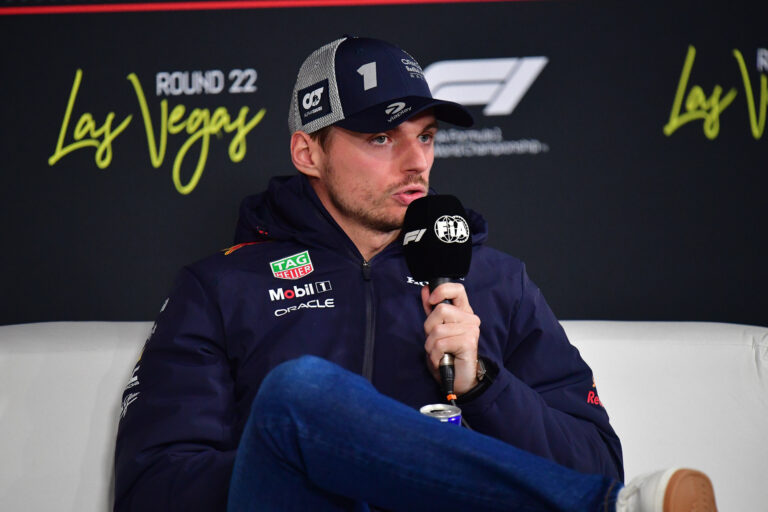
Speaking to the BBC after the Suzuka race, Verstappen’s words carried the weight of genuine introspection, not just heat-of-the-moment pique. “I’m considering retirement at the end of 2026,” he admitted, adding that the sport “isn’t giving me the same satisfaction anymore.” For an athlete at the absolute peak of his powers, this is a seismic statement. To understand it, one must look beyond lap times.
Verstappen is a pure racer, a driver whose competitive fire is fueled by the visceral challenge of machine and track. His discontent stems from a belief that the sport’s soul is changing. He has lamented the increasing weight and size of cars, the complexity of regulations that punish minor infractions, and a perceived shift towards entertainment over pure sporting merit. When the challenge becomes managing regulations rather than outright racing, a driver like Verstappen loses his motivation. Furthermore, the internal turmoil at Red Bull Racing over the past year, despite the on-track success, appears to have taken a cumulative toll, adding a layer of political fatigue to the technical frustrations.
The Ripple Effect: What Verstappen’s Exit Would Mean for F1
The potential early retirement of its reigning champion and biggest star would send shockwaves through the Formula 1 ecosystem. The implications are vast:
For the Driver Market: It would trigger a “silly season” of unprecedented scale. A seat at the top team would become available, setting off a chain reaction across the grid. Young talents like Liam Lawson or a veteran like Fernando Alonso would instantly be linked, but the prime candidate would likely be current McLaren star Lando Norris, creating another vacancy in a top team.
For the Sport’s Narrative: F1 would lose its central protagonist. The “Verstappen vs. The Field” story has driven global interest. His absence would create a vacuum, forcing a rapid re-crowning of a new leading figure—potentially Charles Leclerc, Norris, or a resurgent Lewis Hamilton—but none carry the same aura of invincibility Verstappen has recently held.
For Red Bull: The team is built around Verstappen. His feedback is integral to car development, and his presence is a magnet for sponsors and technical talent. Replacing him is about more than just finding a fast driver; it’s about filling a leadership void that has defined the team’s most successful era.
2026: A Logical Exit Point or a Strategic Warning?
Verstappen’s mention of 2026 is highly specific and strategically significant. That season marks the next major regulation overhaul, introducing new power units and chassis rules. It represents a natural closing of a chapter. For Verstappen, it could be the perfect time to step away if the new era of cars does not align with his driving philosophy or if Red Bull cannot provide a winning package from the outset.
However, experts are divided. Some see this as a genuine three-year warning shot, a man planning his life beyond the paddock’s pressures. Others interpret it as a calculated power play—a stark message to both F1’s rulemakers and the Red Bull hierarchy about the changes he wants to see to keep him engaged. It pressures the FIA to consider driver feedback more seriously and reminds Red Bull that his loyalty is not unconditional.
Predictions for the Path Ahead:
The most likely scenario is a tense period of observation. Verstappen will assess Red Bull’s 2025 car development and the team’s internal stability. He will watch how F1’s governing body responds to criticism of the 2026 rules. His performance on track will be the ultimate barometer; if Red Bull can return him to winning ways consistently, the retirement talk may recede. But if the frustration of Japan becomes the norm, his words will ring increasingly prophetic.
Conclusion: A Champion Questioning His Kingdom
Max Verstappen’s retirement comments are more than a headline; they are a profound moment of athlete agency. They reveal a champion who measures his career not just in trophies, but in pure, unadulterated challenge. The records are his, the titles are secure, and his legacy is already etched in history. Now, he holds the ultimate leverage: his own participation.
The coming months will determine whether this is the beginning of the end of a legendary career or a watershed moment that forces Formula 1 to listen to its greatest current asset. One thing is certain: the era of predictable Verstappen dominance is over. In its place is a far more compelling and human drama—the story of a king surveying his kingdom, wondering if the crown is still worth wearing, and realizing he has the power to simply lay it down.
Source: Based on news from Yahoo Sports.