McCullum & Key’s County Cricket Summit: Mending Fences or Managing Unrest?
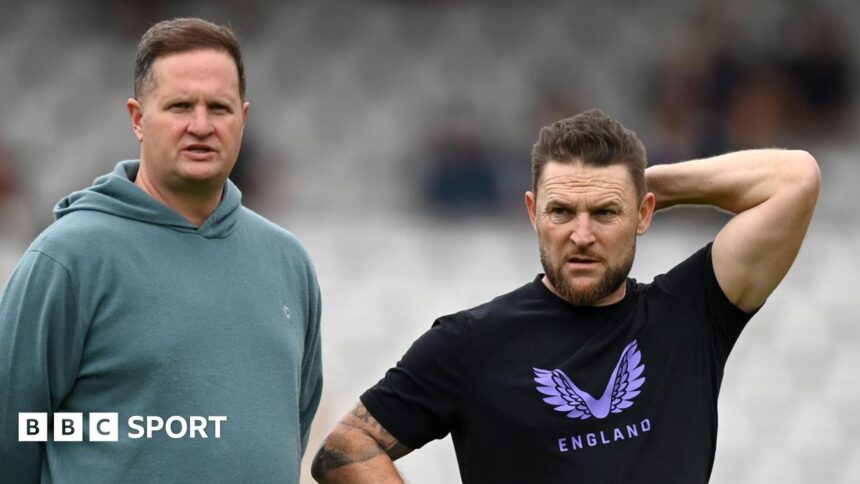
The dust has long settled on the Ashes urn residing in Australian hands, but the reverberations from England’s latest defeat Down Under continue to shake the foundations of the domestic game. In a move that signals both recognition of a growing schism and a desire for diplomatic outreach, England’s powerbrokers, Brendon McCullum and Rob Key, convened a virtual summit with county head coaches and directors of cricket this week. This was not a victory parade. It was a necessary, perhaps overdue, attempt to clear the air after a winter of discontent that saw the very pathway to the Test team questioned by those tasked with nurturing its future stars.
The “Misted Over” Pathway: A County Cry for Clarity
Since the transformative appointments of Rob Key as Managing Director and Brendon McCullum as Test head coach in 2022, the England men’s team has operated under a thrilling, if divisive, mantra: Bazball. The results, until the Ashes, were spectacular. Yet, a persistent murmur from the shires has grown into a vocal critique. The central charge? That the England setup has become an insular entity, with scant regard for the county cricket system that purportedly feeds it.
The comments from two respected county figures crystallized the unrest. Surrey’s Gareth Batty described the route to the Test team as “misted over,” a powerful metaphor suggesting a lack of transparency and communication. More starkly, Sussex’s Paul Farbrace, a former England assistant coach, asserted that McCullum has “no interest” in the county game. These are not barbs from the fringe; they are concerns from the engine room of English talent production. The perceived disconnect revolves around several key issues:
- Selection Philosophy: The preference for players with a specific, aggressive mindset over those grinding out county runs.
- Communication: A lack of clear feedback to counties on what their players need to work on to break into the England frame.
- Schedule Conflict: The marginalization of the County Championship, often played while the Test team is in action, devaluing its currency.
This week’s call, featuring not just McCullum and Key but also performance director Ed Barney and identification lead David Court, was a direct response to this building pressure. It was an acknowledgment that the ECB cannot simply demand talent from counties without fostering a genuine partnership.
Analysis: More Than a PR Exercise – A Strategic Necessity
To view this meeting merely as a public relations exercise would be to underestimate the strategic crossroads at which English cricket finds itself. The Ashes defeat, while close, exposed a fragility in England’s depth and a reliance on a core group of players. For the McCullum-Key project to be sustainable, it cannot be a revolution sustained by a handful of converts. It needs a broad church, and that requires buy-in from the county academies and first-team coaches.
The presence of Troy Cooley, recently returned as men’s pace bowling lead, is particularly telling. England’s pace-bowling development has been a topic of debate for years. Cooley’s inclusion suggests a practical strand to the discussions: how can counties and the national setup collaborate more effectively on technical player development, not just selection? Similarly, David Court’s role in player identification is crucial—it’s about aligning what the counties produce with what England needs.
At its heart, this is a challenge of dual mandates. Counties, understandably, are focused on winning championships and retaining members. England’s hierarchy is focused on winning Test matches. These objectives are not always perfectly aligned. The art of management, which Key must now master, is to find the synergy. It requires England to articulate a clearer player development blueprint and for counties to trust that producing England-ready players will be celebrated and rewarded, even if their style doesn’t always mirror the gung-ho Test approach.
Predictions: What Comes Next After the Call?
The virtual meeting is a first step, but it will be judged by the actions that follow. Expect the ECB to implement several key initiatives in the coming months to solidify this fragile détente:
- Structured Feedback Loops: Formalized processes for England coaches and selectors to provide detailed, actionable feedback to county coaches on their England-eligible players.
- Enhanced Liaison Roles: Greater utilization of figures like David Court and Troy Cooley as bridges between the national setup and the counties, perhaps with more frequent in-person visits.
- Dialogue on Scheduling: While the domestic schedule is a complex beast, more concerted efforts to give the County Championship prime windows to enhance its prestige and visibility.
- A “Style Guide” for Aspiring Test Cricketers: A clearer, communicated set of non-negotiables—beyond just strike-rate—that the England selection panel values in the red-ball game.
The ultimate prediction is one of cautious integration. The Bazball ethos is not going away; Key and McCullum’s contracts were renewed for a reason. However, its application may become more nuanced. We may see a slightly broader selection pool, with players who excel in tough county conditions being given clearer pathways and specific roles. The goal will be to preserve the attacking identity while rebuilding the robust foundation that only a healthy, respected county system can provide.
Conclusion: A Test of Leadership Beyond the Boundary
The true test for Rob Key and Brendon McCullum is no longer just about winning in India or reclaiming the Ashes. It is about winning over the hearts and minds of the county game. Their legendary status as players and their early success as administrators bought them time and capital. That capital has been spent. The Ashes loss forced a reckoning, and the vocal unrest from the counties has framed the next critical chapter of their tenure.
This week’s call was a necessary opening gambit. It showed a willingness to listen. But the counties will need to see tangible change. The pathway must be demisted, not with words, but with consistent actions that prove England values its domestic competition as a partner, not merely a supplier. The future of English Test cricket depends on this relationship being repaired. For Key and McCullum, their most important innings as leaders has just begun—and it’s being played not on the green grass of a Test arena, but in the committee rooms and on the practice grounds of the county circuit.
Source: Based on news from BBC Sport.