Anthony Joshua’s ‘Mental Strength Therapy’: A Heavyweight’s Return to the Ring of Routine
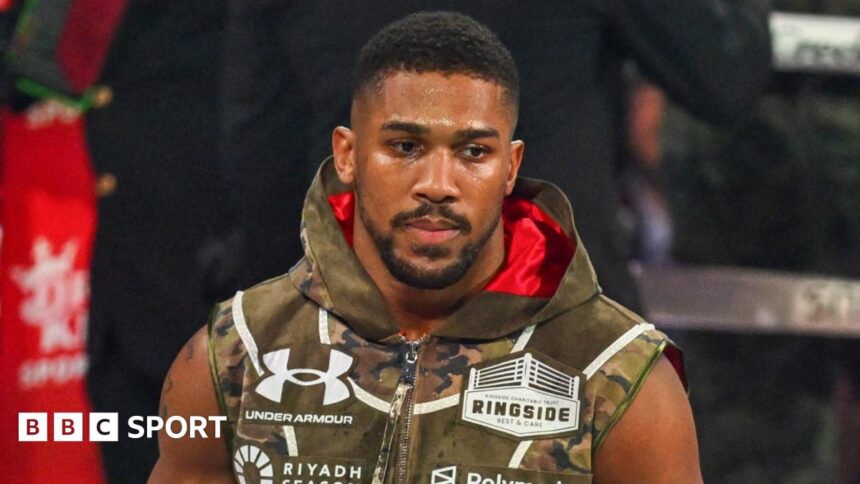
The heavy bag doesn’t care about your grief. The snap of a jab against a focus mitt doesn’t pause for tragedy. For a world-class athlete, the gym is often a sanctuary of sweat and structure, a place where the chaos of the outside world is distilled into the simple, punishing language of repetition. For Anthony Joshua, returning to that familiar language just 19 days after a horrific car crash in Nigeria that claimed the lives of two close friends, it has become something more profound: a public declaration of survival, labeled by the man himself as “mental strength therapy.”
On December 29th, on a major road near Lagos, the vehicle carrying Joshua collided with a stationary truck. The former unified world heavyweight champion sustained minor injuries. His close friends and team members, Sina Ghami and Latif ‘Latz’ Ayodele, were killed. The physical scars for Joshua may heal quickly, but the emotional and psychological toll of such a traumatic event, of surviving when others did not, is a weight far heavier than any championship belt. His recent Snapchat video—showing him hitting pads, moving his feet, and working up a sweat—is less about a boxing comeback and more about a human being grasping for the first rung of a new normal.
The Gym as a Crucible for Grief and Recovery
For an athlete of Joshua’s caliber, training is never just physical. It is a meticulously scheduled life, a framework of discipline that governs everything from sleep to nutrition to mood. When a catastrophic, random event like a fatal crash shatters that external world, the internal framework can collapse with it. Returning to the gym, therefore, is a monumental step. It is not about preparing for a specific fight; it is about re-establishing order.
“Mental strength therapy” is a remarkably apt and self-aware phrase. It speaks to a conscious choice to use the familiar, grueling rituals of his craft as a tool for psychological processing. The act of training releases endorphins, combats trauma-induced stress hormones, and provides a tangible sense of control—something violently stripped from him during the accident. Every punch thrown is, in this context, perhaps less an act of aggression and more an act of reclamation.
Sports psychologists often note that in the wake of trauma, athletes can benefit from the “automaticity” of their sport. The muscle memory of a combination, the sound of gloves on leather, the rhythm of footwork—these are neural pathways so deeply worn they can operate almost independently of a mind clouded by grief. They offer a temporary respite, a few minutes where the brain is focused on a task it knows intimately, providing a crucial break from the cycle of traumatic recall.
Navigating Survivor’s Guilt in the Public Eye
Joshua’s public sharing of this step adds another complex layer. He is one of the most scrutinized athletes on the planet, and his every move is analyzed for clues about his boxing future. By framing his return as therapy, he skillfully redirects the narrative. He is communicating to fans and media that this is not a training camp announcement; it is a personal process. It acknowledges the profound loss of Sina Ghami and Latif Ayodele while demonstrating a survivor’s attempt to move forward, a burden often accompanied by intense survivor’s guilt.
This public navigation is fraught. The gym videos show a man going through the motions, which in itself is a victory. Experts would suggest that the real challenge lies ahead: integrating this trauma into his life and career without letting it define him. Can the “therapy” of the gym eventually transition back into the fierce, competitive focus required to reclaim the heavyweight throne? The timeline for emotional recovery is non-linear and entirely personal, utterly disconnected from the strict calendars of fight promoters.
- Routine as Anchor: Re-establishing daily structure is a critical first step in post-traumatic recovery.
- Physical Exertion: Intensive exercise is clinically proven to alleviate symptoms of depression, anxiety, and PTSD.
- Controlled Environment: The gym is a known, safe space—a stark contrast to the unpredictable violence of the accident.
- Tribute Through Action: For many athletes, performing again is the ultimate homage to lost teammates, a way to carry their legacy forward.
What This Means for Joshua’s Boxing Future
Speculating on a boxing timeline feels almost trivial in the shadow of such loss, yet it is an inevitable part of the conversation surrounding an active, elite competitor. Joshua’s minor physical injuries are a silver lining, meaning there will be no significant athletic setback. The greater question is one of mental readiness and motivation.
Before the crash, Joshua was on a clear path. Having rebuilt himself with three wins following his back-to-back losses to Oleksandr Usyk, he was positioned for major fights in 2024, with a potential shot at the IBF title or a blockbuster bout against Deontay Wilder or Tyson Fury. That trajectory is now paused. The fire to compete must now be re-lit amidst grief.
This period will likely reveal a new dimension to Anthony Joshua, the man. The discipline he has always shown in training is now being applied to a far more personal and painful battle. If he can channel this experience, it could forge a resilience unlike any he has known before. The fighter who steps back into the ring will be fundamentally different from the one who left for Nigeria in December. He may carry a heavier heart, but he may also possess a deeper, more hardened sense of purpose.
A Champion’s Hardest Fight: The One Outside the Ring
Anthony Joshua’s “mental strength therapy” is a powerful, public lesson in confronting unimaginable adversity. It underscores a universal truth: recovery begins with the first step back into your world, however shattered it may be. For Joshua, that world has always included the smell of the gym, the feel of hand wraps, and the sound of a trainer’s commands.
His journey ahead is dual-track. One path involves the private, ongoing work of grieving and healing from a profound trauma. The other involves the public, punishing work of heavyweight boxing. They are now inextricably linked. The strength he builds in the quiet moments of remembrance will fuel the strength he displays in the bright lights of the ring. His return to training is not a signal that he is “over” the tragedy—such things are never truly over—but that he is choosing to move with it.
The boxing world will wait. The fights will be there. For now, the most important victory for Anthony Joshua is not a knockout or a title. It is found in every punch thrown in memory, in every round completed in the name of therapy, and in the immense courage it takes to simply step back into the gym, carrying the weight of two absent friends on his broad shoulders. In this, his hardest fight, he is already showing the heart of a champion.
Source: Based on news from BBC Sport.