Red Bull’s 2026 Gamble: The Rocky Road to Power Unit Glory
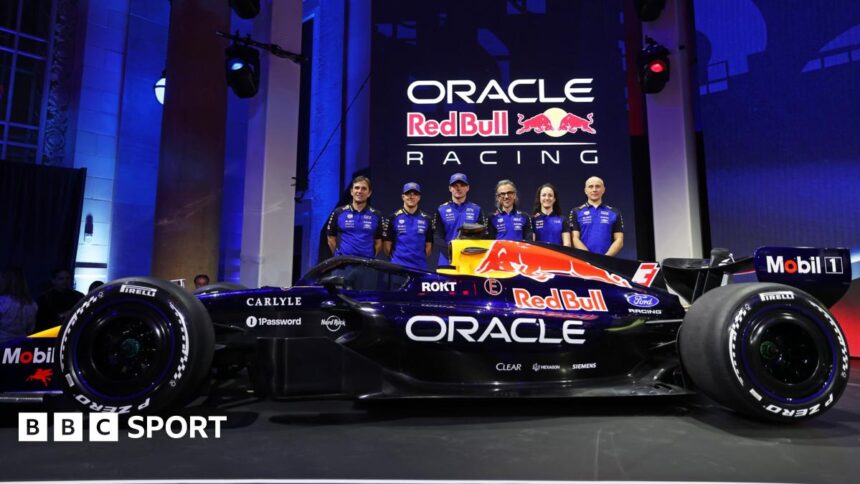
The iconic blue and red of Red Bull’s new livery shimmered not against the backdrop of Monaco or Monza, but under the industrial arches of Michigan Central Station in Detroit. This was more than a simple paint reveal; it was a declaration of intent, a statement of identity, and a stark admission of the monumental challenge ahead. As Red Bull presented its vision for the 2026 Formula 1 season, the message from within the team was one of tempered ambition. They are braced for a struggle, a period of painful adaptation, all in pursuit of a future where they once again reign supreme. This is the story of Red Bull’s highest-stakes gamble yet: building a championship-winning F1 engine from scratch.
The Detroit Declaration: A New Era Forged in the Motor City
Choosing Detroit, the historic heart of the American automotive industry, for their 2026 livery launch was a masterstroke of symbolism. It firmly anchored the narrative of Red Bull’s new partnership with Ford, a union critical to their future. The event was a visual spectacle, but the words spoken there carried the weight of reality. Team Principal Laurent Mekies did not mince his words, labeling the project a “crazy challenge.” This is not the typical pre-season bravado. It is a rare and honest assessment from a top team acknowledging the scale of climbing F1’s steepest technological mountain: developing a brand-new, competitive power unit under the radical 2026 regulations.
For over a decade, Red Bull’s success was powered by engines bearing another manufacturer’s name. The 2026 season marks the culmination of their journey to true independence, but it begins with a phase of anticipated vulnerability. As Mekies suggested, it would be “naive” to expect them to compete at the very front from the outset. This admission is a strategic shield, managing expectations while the team undertakes what is essentially a high-speed science project with the world watching.
Deconstructing the “Crazy Challenge”: Why 2026 is a Reset
To understand Red Bull’s caution, one must appreciate the seismic shift the 2026 power unit regulations represent. This isn’t a minor evolution; it’s a revolution designed to make the sport more sustainable and relevant. The new engines will feature:
- Dramatically increased electrical power, with the MGU-K delivering nearly 470 horsepower.
- A switch to 100% sustainable fuels, a completely new chemical formula for F1.
- Complex new energy management systems, where harvesting and deploying electrical energy will be even more critical to race strategy.
Building an engine is a multi-year, billion-dollar endeavor. While Red Bull Powertrains has been assembling its operation since 2022, starting with the frozen Red Bull-branded Honda units, 2026 is a clean-sheet design. The Ford partnership brings valuable expertise in areas like battery technology and production, but the core combustion and software integration—the soul of an F1 engine—rests on Red Bull’s shoulders. They are not just catching up to Mercedes, Ferrari, and Honda; they are trying to leapfrog them at a moment when the rulebook has been thrown out. The struggle Mekies references is inevitable: reliability gremlins, performance deficits, and strategic growing pains will be part of the 2026 curriculum.
Verstappen’s Crucible and Hadjar’s Golden Ticket
At the heart of this turbulent transition sits Max Verstappen. The four-time world champion, coming off a 2024 season where he finished a tantalizing two points behind Lando Norris, is now tasked with a role he has never faced at Red Bull: development driver and de facto leader through a potential valley of performance. Verstappen’s feedback and relentless drive will be instrumental in steering the development of the RB26 car and its new power unit. His patience and commitment will be tested as much as the machinery.
Alongside him will be a new face: Isack Hadjar. The promotion of the Frenchman from Racing Bulls is a fascinating subplot. Hadjar is a known quantity within the Red Bull system, a talented junior. Placing him in the senior team for 2026 is a clear, long-term investment. He will be brought into the fold during the expected struggle, learning alongside Verstappen and growing with the project. This is a stark contrast to bringing in an expensive, established star. It signals Red Bull’s confidence in their youth program and their focus on building a team for the next decade, not just a single season.
The 2025 season, therefore, becomes a crucial holding pattern. With the car likely an evolution of the 2024 challenger, the focus will be on maximizing results, refining team operations, and preparing the organizational mindset for the storm and stress of 2026.
The Path Through the Struggle: Analysis and Predictions
Expert analysis suggests Red Bull’s timeline is realistic, if optimistic. History shows new power unit manufacturers face a minimum of two to three seasons before reaching true competitiveness. Mercedes, despite its vast resources, endured a difficult first hybrid era season in 2014 before dominance. Red Bull’s advantage is its pre-existing, championship-winning chassis and aero department. Their path to success hinges on a critical factor: minimizing the “integration penalty.”
How well can Adrian Newey’s successor technical team package this new, complex power unit into a sleek, efficient chassis? If they can produce a car with a strong mechanical base and sublime aerodynamics, it can offset an initial power deficit. The prediction from this corner is a season of extremes in 2026:
- Early Season (Struggle): Qualifying may be a challenge. Points finishes will be the goal, with podiums considered a major success. Reliability retirements are likely.
- Mid-Season (Development): This is where Red Bull’s agility as an organization will shine. Expect rapid in-season upgrades and engine software gains, potentially closing the gap.
- Long-Term (The Comeback): By 2027 or 2028, if the project stays on track, Red Bull Powertrains could hit its stride. The full synergy with Ford, combined with their chassis genius, could produce a package that returns them to championship contention.
The boldest prediction is that this struggle will forge a stronger, more complete Red Bull. They will no longer be a chassis specialist reliant on a partner; they will be a true, vertically integrated works team.
Conclusion: The Necessary Pain for Ultimate Gain
The gleaming livery in Detroit represents a beautiful facade for what will be a grueling engineering marathon. Red Bull’s admission of impending struggle is not a sign of weakness, but of profound strategic clarity. They are willingly stepping into the fire of competition at its most fundamental level. For Max Verstappen, it is a chance to cement his legacy not just as a winner, but as a builder. For Isack Hadjar, it is the opportunity of a lifetime. And for the Red Bull Ford partnership, it is the ultimate proof of concept.
The 2026 season may not be painted in victory blue. It may be painted in the gritty hues of perseverance, late nights in Milton Keynes, and hard-earned points finishes. But within that struggle lies the crucible for their future. Red Bull has never been a team to do things the easy way. Their entire philosophy is built on challenging the status quo. This is their biggest challenge yet, and if their history is any guide, betting against them coming out on top in the long run would be the most naive assumption of all.
Source: Based on news from BBC Sport.