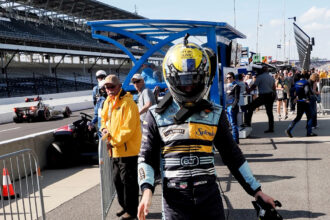
Kimi Antonelli Stuns the World, Conquers Suzuka for Maiden F1 Victory
The hallowed tarmac of the Suzuka International Racing Course has witnessed legends being born, and on a sun-drenched Japanese afternoon, a new name was etched into Formula 1 folklore: Kimi Antonelli. In only his seventh Grand Prix start, the 18-year-old Mercedes phenom delivered a drive of staggering maturity and blistering speed to win the Japanese Grand Prix, announcing his arrival not as a promise of the future, but as a present-day force to be reckoned with.
A Masterclass in Composure Under Fire
From the moment the five red lights vanished, the race was a high-wire act of strategy and nerve. Antonelli, starting from a career-best third on the grid, expertly navigated the chaotic run into Turn 1, emerging in second behind the pole-sitting Red Bull of Max Verstappen. What followed was not a story of sheer dominance, but of tactical brilliance and relentless pressure. The young Italian stayed within DRS range of the three-time champion, a persistent shadow in Verstappen’s mirrors.
The pivotal moment came during a virtual safety car period triggered by a midfield incident. The Mercedes pit wall, led by a bold call from Strategy Director James Vowles, opted for a bold undercut strategy, bringing Antonelli in for a switch to the hard compound tyre. This forced Red Bull’s hand, and when Verstappen emerged from his stop a lap later, the Mercedes was already up to temperature and screaming down the start-finish straight. The Suzuka crowd roared as Antonelli swept around the outside of the Red Bull into the first corner, a move of clean, decisive authority.
From there, Antonelli managed the race with the poise of a veteran:
- Flawless tyre management: On the demanding Suzuka circuit, known for its high degradation, he maintained consistent lap times while preserving his rubber.
- Impeccable technical precision: He navigated Suzuka’s fearsome high-speed sections—the Esses, Degner, and the legendary 130R—with millimeter-perfect accuracy.
- Mental fortitude: With Verstappen applying constant pressure and a late safety car erasing his lead, he executed a perfect restart to seal the victory.
Expert Analysis: The Making of an Instant Legend
This victory was no fluke. It was the culmination of a meticulously planned trajectory and raw, undeniable talent. Antonelli’s rapid ascent, bypassing Formula 2 entirely, was a controversial gamble by Mercedes. Today, it looks like a stroke of genius. His adaptation to the physical and mental demands of F1 has been astonishingly rapid.
“What we witnessed today was the complete package,” noted former F1 champion and analyst, Nico Rosberg. “It wasn’t just speed. It was the racecraft intelligence, the communication with his team, and the emotional control. To pass Max Verstappen on track at Suzuka, to withstand that pressure, and to win under a safety car restart… that is championship-winning material. The hierarchy of the sport has just received a seismic shock.”
The victory also signals a potential power shift within Mercedes. While teammate George Russell drove a solid race to finish fourth, the day belonged unequivocally to the rookie. Team Principal Toto Wolff, often stoic, was visibly emotional on the pit wall. This win validates his long-term vision and places Mercedes firmly back in a fight for victories, not just podiums.
The Ripple Effect: Predictions for the Season Ahead
Antonelli’s breakthrough win at a circuit as revered and demanding as Suzuka sends a clear message to the entire paddock. The 2025 season is now wide open. We can anticipate several immediate consequences:
- Intensified intra-team dynamics at Mercedes: The harmonious teammate narrative will be tested as Russell, a proven race winner, now faces an existential threat from within his own garage.
- Increased pressure on Red Bull and Ferrari: Verstappen and Charles Leclerc are no longer just racing each other. A new, hungry contender has emerged with machinery capable of winning.
- Accelerated development war: Mercedes will now throw every resource at maintaining this competitive edge, potentially triggering a mid-season development arms race.
- Media and commercial frenzy: “The Kimi Era” headlines will abound, creating a new global superstar and shifting marketing dynamics in the sport overnight.
The championship landscape is irrevocably altered. While Verstappen remains the favorite, his margin for error has vanished. Antonelli has proven he can win on merit. The question is no longer *if* he will win again, but how often.
Conclusion: A New Dawn for Formula 1
Kimi Antonelli’s victory at the Japanese Grand Prix is more than just a first win for a talented rookie. It is a paradigm-shifting moment. It breaks the established order, injects an unpredictable new narrative into the heart of the season, and fulfills the perennial hope for a genuine, multi-team title fight. He didn’t just win a race; he won it at one of the sport’s ultimate proving grounds, against the very best, in a manner that brooked no argument.
In the shadow of Mount Suzuka, a star has risen, full-formed and dazzlingly bright. The paddock, the fans, and his rivals now look at Kimi Antonelli not as a prospect, but as a Grand Prix winner. The journey from prodigy to champion has its first, monumental milestone. The rest of the Formula 1 world has been put on notice: the future is here, and it wears the silver arrows of Mercedes.
Source: Based on news from Yahoo Sports.
Image: CC licensed via www.rawpixel.com