Messi Remains Top MLS Earner with Salary of £18.5m: A Deep Dive into the Financial Landscape of American Soccer
The financial hierarchy of Major League Soccer has been confirmed once again, and at the very top sits a familiar, global icon. According to the latest figures released by the MLS Players Association, Lionel Messi remains the top MLS earner with a staggering base salary of $25 million (£18.5m). This figure, more than double the league’s next highest-paid player, underscores not just Messi’s unparalleled talent, but the seismic shift his arrival has caused in the valuation of talent within North American soccer.
The data, reflecting the contract extension the 38-year-old Argentina captain signed with Inter Miami in October 2024, reveals a compensation package that is truly in a league of its own. While the base salary of £18.5m is eye-watering, the total guaranteed compensation for the World Cup winner pushes to $28.3 million (£20.9m). This is not merely a salary; it is a statement of intent from a club and a league that have bet their future on the star power of the game’s greatest-ever player.
The Financial King: How Messi’s Deal Reshapes MLS Economics
To understand the magnitude of Messi’s earnings, one must look at the comparative landscape. The next highest earner is LAFC’s Son Heung-min, who commands a base salary of $10.4 million (£7.7m), with guaranteed compensation reaching $11.2 million (£8.3m). This means Messi’s base salary is more than double Son’s total guaranteed package. The gulf is astronomical, and it is by design.
Messi’s contract extension, signed in October 2024, effectively doubled his previous base salary from the $12 million he earned upon his initial arrival in 2023. This move was a masterstroke by Inter Miami owner Jorge Mas and the league’s front office. They understood that Lionel Messi is not just a player; he is a cultural phenomenon, a tourism magnet, and a subscription driver for the Apple TV broadcasting deal.
- Base Salary: $25 million (£18.5m) – Highest in MLS history.
- Guaranteed Compensation: $28.3 million (£20.9m) – Including performance bonuses and marketing rights.
- Age Factor: Messi turns 39 next month, yet his value has never been higher in a commercial sense.
- Comparative Gap: Messi earns 2.4 times more than the second-highest earner, Son Heung-min.
This financial dominance is not without its critics. Some traditionalists argue that such a massive disparity destabilizes the league’s salary cap structure. However, the MLS has always operated with Designated Player (DP) rules designed to attract global superstars. Messi is the ultimate test of that system. The league is betting that his presence will elevate the overall standard of play, increase television ratings, and attract future top-tier talent who see MLS as a viable destination, even before their twilight years.
Rodrigo de Paul: The Unsung Financial Power Broker
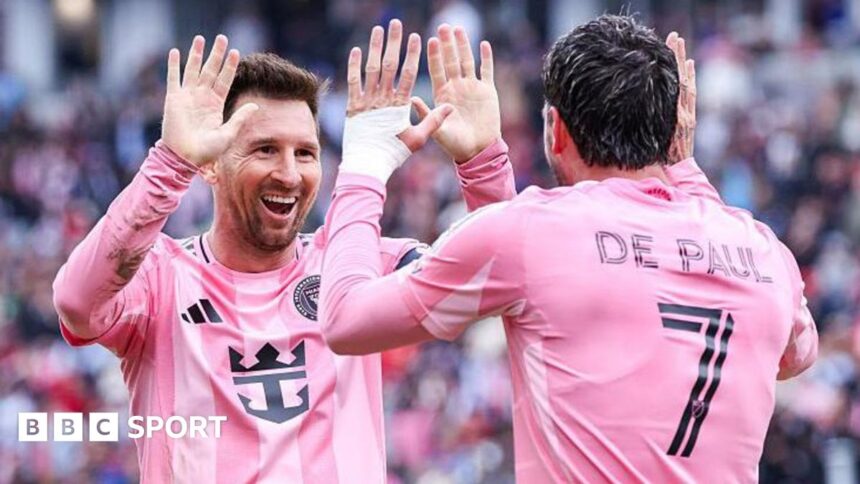
While Messi’s name dominates the headlines, the presence of his compatriot, Rodrigo de Paul, in the top three earners is a fascinating subplot. The World Cup-winning midfielder, who joined Inter Miami in a blockbuster move from Atletico Madrid, is now earning a base salary that places him in the elite tier of MLS compensation. While exact figures for De Paul were confirmed alongside the top earners, his inclusion solidifies Inter Miami’s financial muscle.
De Paul’s salary, while not disclosed in the same breath as Messi and Son, is reportedly in the range of $6-7 million per year, placing him firmly in the top bracket. This is a clear signal that Inter Miami is building a super-team, not just a retirement home for stars. De Paul, at 31, brings high-intensity pressing and Champions League experience. His salary reflects the market reality that MLS clubs must now pay premium wages to attract players still in their prime.
This creates an interesting dynamic. The presence of Messi and De Paul, along with other high-profile names like Sergio Busquets and Jordi Alba, has created a micro-economy within MLS. Inter Miami’s payroll is now one of the highest in the league, but their revenue streams—from merchandise sales to global touring matches—are also unprecedented. The team is essentially a self-funding financial engine, powered by the Messi brand.
Expert Analysis: The Ripple Effect on the MLS Market
From an expert perspective, the release of these salary figures is more than a gossip column item. It is a market correction. For years, MLS was seen as a selling league, a place where young talent was developed and sold to Europe. Messi’s contract, and the subsequent deals for players like De Paul and Son, signals a pivot. The league is now a buyer of global talent, willing to pay top dollar to compete for the Leagues Cup and MLS Cup.
The implications are profound. First, it raises the floor for all Designated Players. Agents representing other top talents will now point to Messi’s $25 million base as a benchmark. While few will reach that level, it normalizes the idea of a $10 million base salary in MLS. Second, it pressures other clubs to invest. LAFC’s decision to sign Son Heung-min for $10.4 million was a direct response to Inter Miami’s dominance. The arms race is real.
However, there is a cautionary tale. The league must ensure that the financial disparity does not create a two-tiered system where only a handful of clubs can compete for the best players. The salary cap, while flexible with DP slots, still limits depth. A team like Inter Miami can have three or four superstars, but the rest of the roster is filled with players earning the league minimum of around $100,000. This creates a fragile balance where injuries to Messi or De Paul could derail an entire season.
Predictions for the 2025 Season:
- Commercial Growth: Expect MLS to announce a new domestic television deal in 2026 that reflects the Messi effect, potentially doubling the current Apple TV agreement.
- Salary Cap Evolution: The league will likely introduce a fourth Designated Player slot or a “Messi Rule” to allow clubs to retain generational talent without breaking the salary structure.
- Player Movement: More European stars in their late 20s, like De Paul, will see MLS as a viable career destination, not a final payday.
- Messi’s Production: Despite turning 39, Messi’s guaranteed compensation suggests he will play 25+ regular season games. Expect 20+ goal contributions from the Argentine.
The Verdict: Money Well Spent?
As we digest the news that Lionel Messi remains the top MLS earner with a salary of £18.5m, the question is not whether he is worth it—the data says he is. Since his arrival, Inter Miami’s valuation has skyrocketed, match-day attendance has broken records, and the global profile of MLS has reached unprecedented heights. The league is no longer an afterthought in the global soccer conversation.
The real test lies ahead. Can the league sustain this momentum without Messi? Will clubs like LAFC and New York City FC continue to invest in stars like Son Heung-min to keep the product competitive? The answer is likely yes. Messi has not just been a player; he has been the catalyst for a financial revolution. His salary is the price of admission for a league that wants to be taken seriously on the world stage.
In conclusion, the salary figures are a mirror reflecting the ambition of MLS. Messi’s $25 million base is a bet on the future. It is a declaration that the United States and Canada are not just a retirement home for legends, but a destination for the very best. As the 2025 season kicks off, all eyes will be on Inter Miami, not just for the goals, but for the balance sheet. Because in modern soccer, the two are inextricably linked. And for now, Lionel Messi sits atop both the scoring charts and the payroll, a king in a kingdom he helped build.
Source: Based on news from BBC Sport.