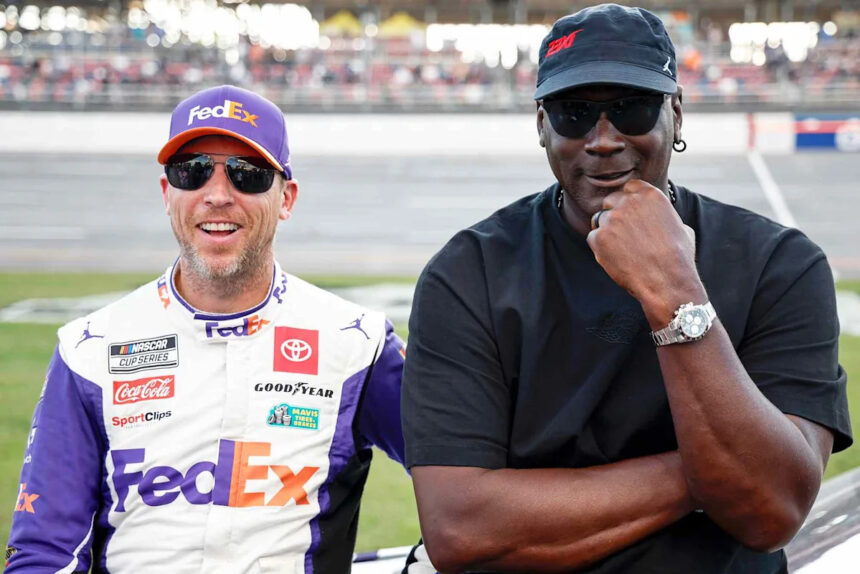
Michael Jordan and Denny Hamlin Declare Victory: Inside the Landmark NASCAR Antitrust Settlement
The gavel came down not with a definitive verdict, but with a seismic agreement. In a stunning conclusion to an eight-day trial that threatened to rip open the inner workings of stock car racing, a coalition led by NBA legend Michael Jordan and star driver Denny Hamlin has settled its antitrust lawsuit against NASCAR. The December 11th agreement marks a watershed moment, ending a high-stakes legal battle where the sanctioning body was accused of being “monopolistic bullies” and signaling a potential new era of partnership between the sport’s governing body and its competing teams.
A Clash of Titans: The Core of the Legal Battle
At the heart of the lawsuit, filed by Jordan and Hamlin’s 23XI Racing alongside Front Row Motorsports, was a fundamental challenge to NASCAR’s economic model. The teams alleged that NASCAR’s revenue sharing model was inequitable and unsustainable, arguing that the sport’s governing body wielded its power to suppress team profitability while controlling key aspects of the business, from licensing to media rights. The term “monopolistic bullies” wasn’t just legal jargon; it was a direct shot across the bow, accusing NASCAR of leveraging its position to the detriment of the very organizations that fill the grid each week.
The trial, closely watched across the sports and business worlds, promised an unprecedented public airing of NASCAR’s financial ledgers and strategic decisions. For eight days, testimony peeled back the layers of a sport built on speed, revealing the complex and often contentious financial engine that powers it. The central question was whether NASCAR’s model fostered fair competition or stifled it through overwhelming control.
Celebration and Cautious Optimism in the Aftermath
While the specific terms of the settlement remain confidential, the public reactions from the plaintiffs spoke volumes. Michael Jordan, whose involvement brought global spotlight to the case, struck a notably conciliatory yet proud tone. He told reporters he was “very proud of” the progress made during the trial and offered a telling olive branch, stating he believes NASCAR CEO Jim France “feels the same.” This suggests the resolution was less about one side capitulating and more about finding a mutually acceptable path forward.
Denny Hamlin, both a co-owner of 23XI and a top-tier Cup Series driver, echoed the sentiment of victory. The settlement allows both parties to avoid the uncertainty of a jury’s decision and a potentially drawn-out appeals process. For the teams, the celebration likely stems from:
- Securing a seat at the table for future financial discussions.
- Forcing a public reckoning on revenue distribution.
- Establishing their willingness to use legal means to protect their interests.
- Potentially negotiating better terms for team charter agreements and media rights payouts.
For NASCAR, settling avoids the risk of a damaging court-ordered restructuring and allows it to control the narrative and the implementation of any changes behind closed doors.
Expert Analysis: What This Settlement Truly Means for NASCAR’s Future
This settlement is far more significant than a simple legal dismissal. It represents a critical inflection point in the modern business of NASCAR. Sports business analysts see this as a necessary, if painful, step toward modernization.
“This lawsuit was a symptom of a growing pain NASCAR has experienced for over a decade,” says a veteran motorsports economist. “The old model, built for a different media and sponsorship landscape, was straining under the weight of rising team costs and evolving revenue streams. The trial forced a conversation that was inevitable.”
The confidential settlement terms are the great unknown, but experts predict they may include:
- A restructuring of the revenue sharing model to increase the teams’ share of media rights and licensing income.
- Greater transparency and formalized collaboration on future business ventures.
- Revised and more favorable charter system agreements, enhancing team equity and value.
- A framework for addressing team concerns without resorting to litigation.
The fact that Michael Jordan, a global business icon, is expressing optimism is a powerful signal to sponsors and investors. It suggests the sport is moving toward a more stable and collaborative economic foundation.
Predictions: A New Era of Partnership and Growth
The fallout from this settlement will define NASCAR’s trajectory for the next decade. The predictions point toward a transformative period.
First, expect a more formalized partnership model between NASCAR and its teams. Ad-hoc committees may evolve into a structured team owners’ council with real influence on commercial decisions. This could lead to more innovative approaches to sponsorship, digital content, and international expansion, with teams acting as true stakeholders rather than contractors.
Second, the resolution strengthens the value and stability of team charters. By addressing the financial grievances, NASCAR makes team ownership a more attractive investment. This could lure new ownership groups into the sport, following the trail blazed by Jordan and Hamlin, and increase the overall competitiveness and market value of the series.
Finally, the shadow of legal warfare has lifted. With this major internal conflict settled, NASCAR, its teams, and its drivers can present a more unified front to fans, broadcast partners, and sponsors. The energy once spent on litigation can now be redirected toward growing the sport’s audience and enhancing the on-track product.
The Checkered Flag Waves on a Legal Battle, Not the Story
The settlement between Michael Jordan, Denny Hamlin’s 23XI Racing, and NASCAR is not an ending, but a dramatic new beginning. It closes a contentious chapter of public accusation and opens one of private negotiation and, potentially, renewed prosperity. By choosing settlement over a verdict, both sides acknowledged that the future health of stock car racing was more important than a definitive legal win.
The true victory will be measured in the years to come—in the sustainability of race teams, the attractiveness of the sport to new investors, and the strength of its partnership model. When a competitor of Michael Jordan’s caliber speaks of being “proud of the progress” and assumes his adversary feels the same, it indicates a hard-fought understanding has been reached. The lawsuit accused NASCAR of being bullies; the settlement suggests they have agreed to become better business partners. In the high-speed, high-stakes world of NASCAR, that shift in dynamics may be the most important win of all.
Source: Based on news from Yahoo Sports.