NFL Admits Officiating Error in Steelers-Ravens Clash, Fueling Firestorm Over Replay and Consistency
The path to an AFC North crown is rarely a clean one, forged in the mud and grit of December football. For the Pittsburgh Steelers, their pivotal 17-12 Week 14 victory over the Baltimore Ravens was a testament to resilience. Yet, the aftermath has been dominated not by highlight-reel plays, but by a series of controversial flags and replay decisions that have cast a long shadow over the outcome. The league’s stunning admission of a key officiating mistake has ignited a fresh, and fierce, debate about the state of NFL officiating in the season’s most critical moments.
A Penalty That Changed the Game: The League’s Unusual Mea Culpa
With just under six minutes remaining in the second quarter and the Steelers leading 7-5, the game hung in the balance. Pittsburgh’s Chris Boswell nailed a 32-yard field goal, seemingly extending their lead. But a flag lay on the turf. Ravens nose tackle Travis Jones was penalized for unnecessary roughness for a hit on long snapper Christian Kuntz, deemed a defenseless player. The penalty gave the Steelers an automatic first down, erasing the field goal and offering a new life at the Baltimore 11-yard line.
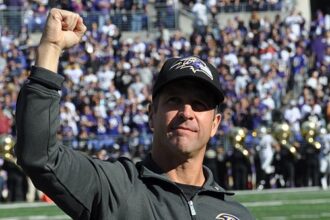
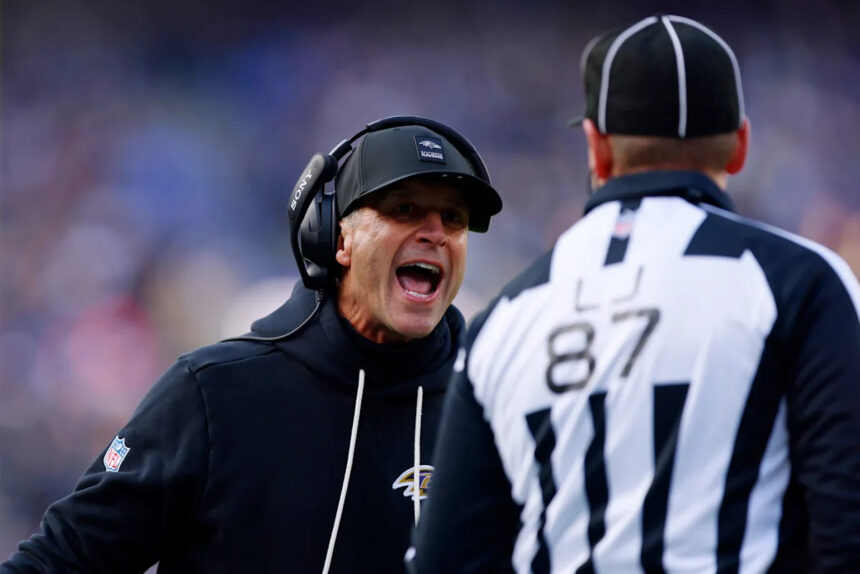
The very next play, quarterback Mitch Trubisky found wide receiver Diontae Johnson for a touchdown. A potential three-point swing became a seven-point touchdown drive, a monumental shift in a defensive slugfest. On Monday, Ravens head coach John Harbaugh delivered a bombshell: the league agreed the call was wrong.
“And the Travis Jones call, [the NFL] told me and they told me I had permission to state this, that it was the wrong call,” Harbaugh stated. “It should not have been called.” Such a public and specific admission from the league is rare, underscoring the significance of the error. The play was not a borderline judgment call on holding, but a rule-specific penalty with major consequences. For the Ravens, the league’s validation was cold comfort, as the points it gifted Pittsburgh ultimately stood as the difference in a five-point game.
A Cascade of Controversy: Likely’s Overturned TD and Rodgers’ “Catch”
The Jones penalty was not an isolated incident. It was part of a trio of pivotal decisions that left the Ravens and their fans feeling aggrieved. Earlier in the same quarter, rookie tight end Isaiah Likely appeared to haul in an incredible 8-yard touchdown catch, securing the ball as he hit the ground. The call on the field was a touchdown, but after a lengthy replay review, it was overturned, ruling the ball did not survive the ground.
Later, a potential game-changing play from veteran cornerback Corey Trice Jr. was also nullified. Trice intercepted a Trubisky pass in the fourth quarter, but the play was erased by a defensive holding penalty on fellow defensive back Patrick Queen—a call that, while less debated, added to the frustration.
Perhaps most baffling was the overturned Isaiah Likely touchdown sequence. The “clear and obvious” standard for overturning a call seemed stretched to its limit, with many analysts and fans believing the original call should have stood. Furthermore, the game featured another replay head-scratcher: a completion to Steelers tight end Connor Heyward where the ball visibly shifted as he hit the ground. Unlike Likely’s play, this catch was upheld after review, creating a glaring inconsistency in the application of the “process of the catch” rule. This juxtaposition fueled accusations of a non-uniform standard, where similar plays yield opposite results.
Expert Analysis: The Erosion of Trust in a League of Inches
The fallout from this game touches on the core challenges facing the NFL. We spoke to several former players and officiating consultants, who pointed to three critical issues:
- Momentum as an Official Stat: “That Jones penalty didn’t just give up yards; it stole momentum,” said a former AFC defensive coordinator. “Baltimore’s defense had gotten a stop. The stadium was energized. Then, with one flag, they’re back on their heels and suddenly down two scores. The NFL can’t quantify that in their ‘Next Gen Stats,’ but every player and coach feels it.”
- The Replay Paradox: The league introduced replay to get calls right and build confidence. Yet, the Likely overturn demonstrates how it can sometimes achieve the opposite. “When you have a call that is 50/50 even in slow motion, the original call should stand,” argued an officiating analyst. “The constant search for forensic perfection is undermining the officials on the field and frustrating fans. It’s creating more controversy than it resolves.”
- Selective Transparency: The NFL’s admission on the Jones penalty, while unprecedented, is a double-edged sword. It acknowledges error but offers no remedy. It also raises a question: how many other “wrong calls” each week go unacknowledged? This selective transparency can feel like a PR maneuver rather than a commitment to systemic improvement.
The central theme emerging is a crisis of consistency. In a league where games, divisions, and playoff berths are decided by the slimmest of margins, the perception that the rulebook is applied differently from game to game—or even play to play—is corrosive.
Playoff Implications and a Fractured Path Forward
The immediate ramifications are stark. The Steelers, now 7-6, seized control of their playoff destiny and kept pace in the AFC North. The Ravens, falling to 9-4, saw their grip on the division’s top seed loosen, though they remain in a strong position. But the long-term implications are more profound.
This game will be cited for years in arguments for expanded replay, coach’s challenges on penalties, or the adoption of a “sky judge.” The competition committee will undoubtedly review these sequences in the offseason. However, officiating mistake admissions do not change standings. The result is final, a hard reality that leaves one team validated and another embittered.
For the Steelers, the victory is a testament to finding a way. For the Ravens, it’s a lesson in overcoming not just their opponent, but adversity in its most frustrating form. For the NFL, it’s another self-inflicted wound in a season where officiating has remained a dominant, and unwelcome, narrative. As the playoffs approach, the league’s greatest fear is that a sequence of calls—not a spectacular play—will decide the Super Bowl. The events in Baltimore suggest that fear is well-founded.
The NFL’s admission is a historic footnote, but it does little to mend the fractured trust. In the high-stakes theater of the NFL, getting the call right on the field is the only thing that matters. Once the game ends, an apology is just words, and for the Baltimore Ravens, those words will echo painfully all the way into January.
Source: Based on news from Yahoo Sports.