NFL Suspends Steelers’ DK Metcalf Two Games for Fan Confrontation: A Line Crossed
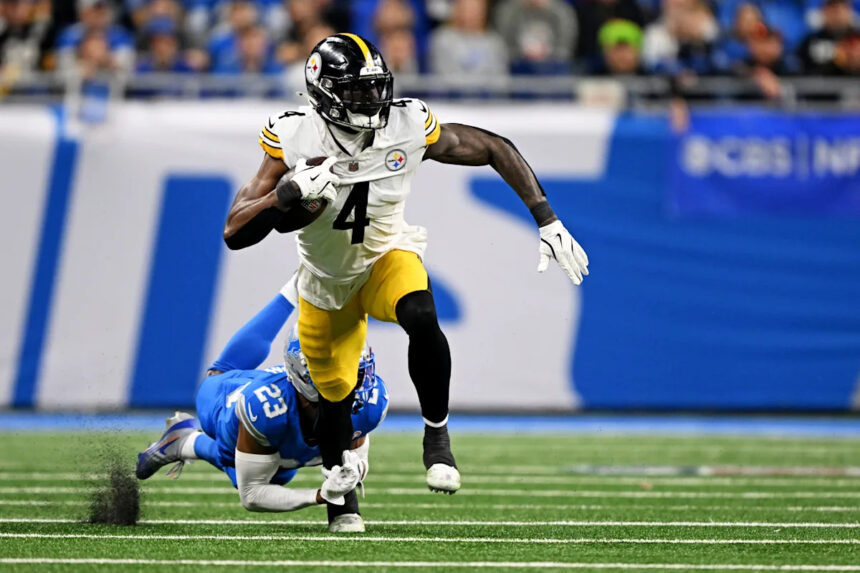
The NFL has drawn a hard, unambiguous line in the turf. In a swift and decisive move, the league announced the suspension of Pittsburgh Steelers wide receiver DK Metcalf for two games without pay for conduct detrimental to the NFL. The punishment stems from a physical confrontation with a fan during Pittsburgh’s pivotal Week 16 loss to the Detroit Lions. This incident, occurring in the high-stakes crucible of a late-season playoff chase, sends shockwaves through the league, raising immediate questions about player safety, fan accountability, and the fragile barrier separating the field from the stands.
The Incident and the Immediate Fallout
While specific video of the initiating moment remains scarce, league sources and post-game reports confirm that Metcalf engaged physically with a spectator near the tunnel area as players exited the field at halftime. The NFL’s policy on player-fan interaction is explicitly clear, leaving little room for interpretation. The policy states that players may not enter the stands or otherwise confront fans on game day, and any unnecessary physical contact with a fan that presents crowd-control or injury risks will be met with accountability.
The league’s investigation concluded Metcalf was the instigator, leading to the “conduct detrimental” designation—a broad but powerful clause allowing for suspension. The practical impact is severe:
- Metcalf will miss critical games against the Cleveland Browns (Week 17) and Baltimore Ravens (Week 18).
- He is eligible to return to the active roster on Monday, January 5th.
- Under the NFL Collective Bargaining Agreement, Metcalf has the right to appeal, triggering a prompt hearing.
For a Steelers team fighting for its postseason life, losing a physical specimen and key offensive weapon like Metcalf at this juncture is a devastating blow. His absence forces an immediate reshuffling of the receiver corps and removes a primary red-zone threat.
Expert Analysis: The Precedent and the Principle
To understand the weight of this suspension, one must look at history. The NFL’s relationship with fan interactions has been fraught since the 2004 “Malice at the Palace” in the NBA, which led all professional leagues to tighten security and policies dramatically. While NFL player-fan physical altercations are rare, the league has consistently acted firmly.
“This isn’t about what was said; it’s about what was done,” explains Dr. Leland Richards, a sports sociologist who studies athlete-fan dynamics. “The league is making a zero-tolerance statement. The moment a player retaliates physically, regardless of provocation, they cede the moral and contractual high ground. The NFL’s conduct detrimental policy exists precisely for these gray-area incidents that threaten the league’s image and operational safety.”
The suspension length—two games—is significant. It surpasses typical fines for on-field infractions and aligns more with suspensions for illegal hits. This signals the NFL views breaching the fan barrier as a fundamental threat to game integrity. The league’s priority is clear: maintain the physical and symbolic separation at all costs, delegating fan misconduct to security and legal channels.
Player safety and crowd-control issues are the stated core concerns. An escalating incident could endanger not only the involved player and fan but also spill over to incite a wider melee, a nightmare scenario for any venue. The suspension serves as a stark reminder to all 1,700 players on active rosters: the stands are a boundary you cannot cross.
The Unanswered Questions and Fan Accountability
While the NFL has adjudicated the player’s role, the incident inevitably sparks a parallel conversation about fan behavior. What level of provocation occurred? Reports suggest verbal taunting, but details are undisclosed. The modern stadium environment, fueled by alcohol and the anonymity of a crowd, often sees fans cross lines of decency with hateful, personal, and sometimes threatening language.
“The suspension is legally and contractually justified,” says former NFL front office executive Mara Gordon. “But it feels incomplete without a corresponding and very public action against the fan involved. Most teams have fan conduct policies that allow for revocation of season tickets and lifetime bans. For the NFL’s message to have full credibility, they must be equally transparent in punishing egregious fan behavior. It cannot be a one-sided equation.”
This is the delicate balance leagues must strike. They must protect their employees (the players) from abuse while also controlling those same employees from responding. The power dynamic, however, is inherently unequal: a player’s action is captured on camera and governed by a strict CBA; a fan’s obscenity is often lost in the din.
Predictions: Impact on the Steelers and Metcalf’s Legacy
The immediate football ramifications are profound. The Steelers’ playoff hopes, already on life support, now face the daunting task of winning without a key offensive contributor. George Pickens will face increased defensive attention, and quarterback Mason Rudolph’s margin for error shrinks further. The suspension could directly be the factor that ends Pittsburgh’s season.
For DK Metcalf, this is a pivotal moment. Known for his fiery competitiveness, this incident reframes that narrative toward a lack of control.
- He will face intense scrutiny upon his return, with every sideline interaction magnified.
- His reputation among league offices is now marked, which could influence future disciplinary decisions.
- Financially, the suspension without pay is a direct hit, but the longer-term impact on his value in free agency or contract negotiations could be more significant if teams question his composure.
We predict the appeal will be filed but ultimately upheld. The NFL rarely levies such suspensions without ironclad evidence. Furthermore, we anticipate the league and the Steelers will jointly announce stringent sanctions against the involved fan, including a lifetime ban from Heinz Field, to partially address the accountability gap.
Conclusion: A Stark Reminder in the Heat of Battle
The suspension of DK Metcalf is more than a personnel note for the Steelers’ injury report. It is a league-defining decision that reinforces a fundamental tenet of professional sports: the boundary between player and fan is sacred and inviolable. In the heat of battle, with emotions raw and provocation real, the expectation of superhuman restraint falls entirely on the athlete.
This episode should serve as a catalyst for a broader, more public dialogue about the standards of fan conduct and the mechanisms for holding offenders accountable. While Metcalf’s action was wrong and rightly punished, the environment that incubates such confrontations must also be examined. For now, the NFL has sent its message in the clearest terms possible. Two games lost, a playoff dream jeopardized, and a career moment redefined—all for crossing a line that, in the eyes of the league, must never be crossed.
Source: Based on news from Yahoo Sports.