Dan Lanning’s Playoff Protest: Oregon Coach Sounds Off on Neutral-Site “Bowl Game” Conundrum
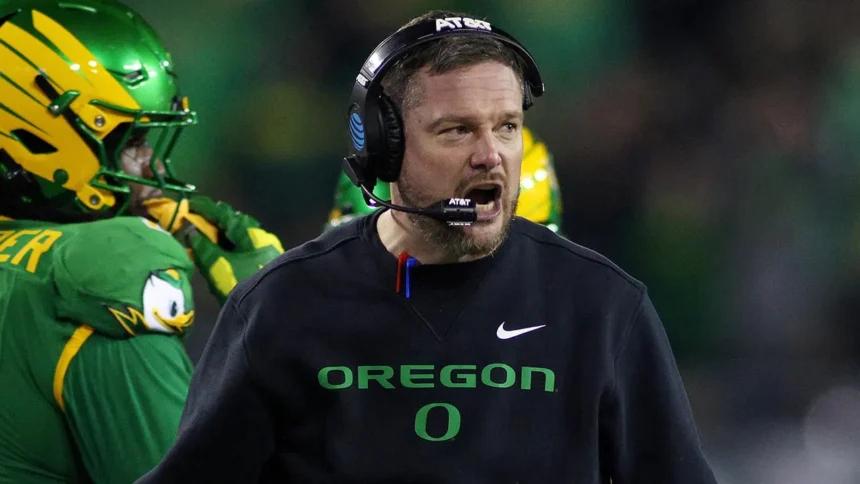
The College Football Playoff expansion was supposed to solve problems, ushering in a new era of fairness and inclusivity. But for Oregon Ducks head coach Dan Lanning, the new 12-team format has created a glaring, and in his view, illogical competitive discrepancy. As his No. 5 seeded Ducks prepare for a national quarterfinal clash with No. 4 Texas Tech, Lanning fired a direct shot at the system, questioning why a playoff game is being treated like a traditional bowl.
- The Heart of Lanning’s Complaint: A Playoff Without Home-Field Advantage
- Dissecting the Format: A Hybrid Model Stuck in the Past
- Beyond the Venue: Rivalries, Development, and the Bigger Picture
- Expert Analysis: Is Lanning Right, and Will the System Change?
- Conclusion: A Coach Fighting for Fairness in the New Playoff Era
The Heart of Lanning’s Complaint: A Playoff Without Home-Field Advantage
Appearing on the Bear Bets podcast, Lanning’s conversation naturally turned to the upcoming College Football Playoff quarterfinal matchup against the Red Raiders. While discussing the challenge, he zeroed in on the venue: the Orange Bowl in Miami Gardens, Florida—a neutral site over 2,000 miles from Eugene and nearly 1,500 miles from Lubbock.
“It’s a notion that Ducks head coach Dan Lanning had a hard time wrapping his head around,” and for good reason. His core argument is simple and resonates with competitive purists: higher seeds in a playoff should earn tangible advantages.
“We’re in the playoffs, right? You play to earn a seed,” Lanning implied, his frustration palpable. “The idea that a four-seed doesn’t get to host a five-seed in the quarterfinals… it just feels like we’re clinging to the old way when this is supposed to be the new, better model.”
Dissecting the Format: A Hybrid Model Stuck in the Past
Lanning’s critique exposes the awkward hybrid nature of the current CFP format. The system is caught between the old Bowl Alliance and a true, merit-based tournament. Here’s how it breaks down:
- First Round (On-Campus): Seeds 5-12 play at the home stadiums of the higher seeds (5-8). This rewards regular-season success with a true home playoff atmosphere.
- Quarterfinals (Neutral Sites): These games are slotted into the “New Year’s Six” bowl games (Orange, Sugar, Rose, etc.). The seeding determines matchups, but not location.
- Semifinals & National Championship (Neutral Sites): These continue the long-standing bowl/neutral site tradition.
The conflict arises in the quarterfinals. Texas Tech, by virtue of its No. 4 seed, avoided a first-round game. Its “reward” is a matchup against Oregon in a stadium that offers no discernible home-field edge, negating the benefit of its superior seed. For a coach like Lanning, whose Ducks just hosted and won a raucous first-round game in Autzen Stadium, this feels like a regression in the playoff structure.
“The Playoff format the way it is now” prioritizes bowl contracts and television logistics over competitive integrity at this critical stage. The result is a scenario where a team’s seeding becomes largely ceremonial after the first round, stripping away the earned privilege that is fundamental to any other sport’s playoff system.
Beyond the Venue: Rivalries, Development, and the Bigger Picture
Lanning’s podcast appearance wasn’t solely a venue vent session. He also touched on other key topics, providing a fuller picture of the Ducks’ landscape:
On the USC Rivalry: Lanning acknowledged the intensity of the matchup, emphasizing that its significance never wanes regardless of either team’s record. “It’s a game that defines seasons,” he noted, highlighting the recruiting battles and cultural stakes that make it a perennial highlight.
On Dante Moore’s Sophomore Season: The coach praised his quarterback’s growth, citing improved decision-making and command of the offense. “He’s playing with a veteran’s poise now,” Lanning said, suggesting Moore’s development is a central reason Oregon finds itself in the playoff hunt. This maturity will be tested under the bright lights of the Orange Bowl.
These points underscore that Lanning’ complaint isn’t born from fear of Texas Tech. It’s a principled stance about the structure of the sport’s premier event. He is preparing his team for a brutal battle, but he wants the system to match the competitive fire it’s designed to showcase.
Expert Analysis: Is Lanning Right, and Will the System Change?
From a pure sporting perspective, Lanning is unequivocally correct. In the NFL, NBA, MLB, and college basketball, higher seeds earn home-field/court advantage. It is the foundational reward for a superior regular season. The current CFP format grants this for only one round, then reverts to a television-driven bowl model.
Financial and traditionalist pressures are the opposing forces. The “New Year’s Six” bowls pay massive sums for their affiliations, and there is a powerful contingent within college football that cherishes the neutral-site, “event” nature of these historic games. Moving quarterfinals to campus sites would diminish these bowls’ prestige and likely require renegotiating billion-dollar contracts.
However, Lanning’s voice adds to a growing chorus of coaches and athletic directors who see the inconsistency. The prediction here is that pressure will mount. A likely compromise in future format discussions could be:
- Keeping Semifinals and the Championship at neutral sites as major events.
- Pushing the Quarterfinals to on-campus venues, truly making the first two rounds a reward for the top seeds.
This change would preserve some bowl tradition while aligning the majority of the playoff with standard competitive principles. For now, Lanning and the Ducks must navigate the system as it exists.
Conclusion: A Coach Fighting for Fairness in the New Playoff Era
Dan Lanning’s complaint is more than just coach’s grumbling; it’s a logical critique of a flawed system. As his Oregon Ducks head to the Orange Bowl to face Texas Tech, they do so in a game that is a quarterfinal in name but a neutral-site spectacle in practice. The inherent advantage Texas Tech earned by securing the No. 4 seed has been nullified by the format’s adherence to old bowl ties.
Lanning, a coach known for his meticulous and aggressive approach, has identified a strategic flaw in the playoff architecture itself. While his immediate task is to defeat the Red Raiders and advance, his public stance serves a larger purpose: pushing the powers of college football toward a model where the playoff is a true tournament, from start to finish. The first round proved the electric value of on-campus playoff games. Dan Lanning is simply asking why that competitive logic shouldn’t apply to the second round, too. In the new era of the CFP, his may be the defining voice for competitive equity.
Source: Based on news from Fox Sports.