Oriol Cardona Coll Shatters 54-Year Drought with Historic SkiMo Gold for Spain
The relentless snowstorm in Bormio seemed to erase all history, blurring the contours of the Italian Alps into a maelstrom of white. Yet, in the heart of the tempest, Oriol Cardona Coll carved a new, indelible line for Spanish sport. On Thursday, the 26-year-old from Barcelona surged to victory in the men’s sprint, claiming the inaugural Olympic ski mountaineering gold medal and, in a breathtaking parallel, ending Spain’s 54-year wait for a Winter Olympics gold medal. The last man to stand atop that podium was Francisco Fernandez Ochoa in Sapporo, 1972. A lifetime of winter longing was thawed in a blistering, breathless final climb.
A Storm Forged Champion: The Race That Made History
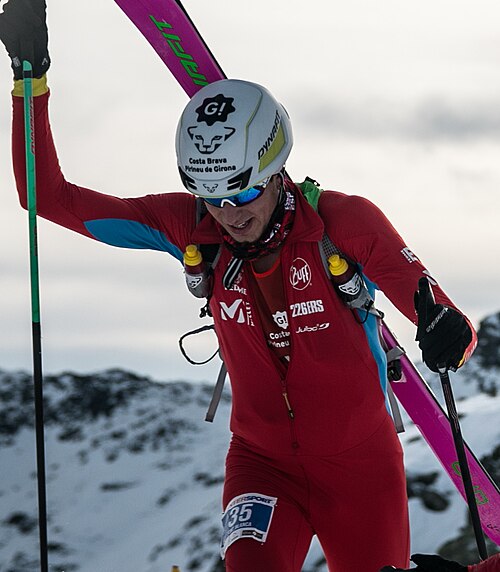
The debut of ski mountaineering (“SkiMo”) at the Olympics was never going to be a gentle introduction. Athletes faced a grueling, explosive circuit of climbing on skis with adhesive “skins” and harrowing descents, all while navigating mandatory transitions where every second lost fumbling with equipment is catastrophic. Add to this a punishing snowstorm that tested visibility and resolve to their absolute limits. Cardona Coll, a specialist in the sprint discipline, navigated the chaos with preternatural calm. After advancing through the heats and semifinal, he saved his masterpiece for the final.
From the starting gun, he applied pressure on the first climb, establishing a small but critical gap. His mastery in the transition zone—where athletes must remove climbing skins, stow poles, and convert equipment for descent—was a clinic in efficiency. “In conditions like these, the race is won or lost in transition,” noted veteran SkiMo analyst Klaus Bauer. “Cardona Coll’s movements were robotic in their precision. While others fought the elements and their gear, he was simply operating on a different plane.” He extended his lead on the downhill, and by the final climb to the finish, the history-making victory was assured. Russia’s Nikita Filippov, competing as a neutral athlete under the IOC’s sanctions, took silver, with France’s Thibault Anselmet earning bronze.
From Pawn to King: The Significance of Spain’s Golden Return
To understand the weight of this gold, one must look back to Sapporo, 1972. Francisco “Paquito” Fernandez Ochoa’s slalom victory was a miraculous outlier, a moment of alpine magic from a nation with scant winter sports tradition. For decades, Spain was the “one gold wonder” of the Winter Games. This victory, however, feels like the dawn of a new era rather than a repeat of a happy accident.
- Strategic Investment: Spain has strategically developed its SkiMo program, recognizing the sport’s natural fit for its mountainous regions and athletic culture.
- New Generation Icon: Cardona Coll, unlike the solitary figure of Ochoa, emerges as the leader of a legitimate Spanish winter sports movement.
- Cultural Resonance: The victory in a sport blending endurance, mountain skill, and technical prowess resonates deeply in a country with a rich climbing and cycling heritage.
“This is not a fluke,” declared former Olympic skier and Spanish broadcaster Blanca Fernandez Ochoa, sister of Paquito. “Oriol is the product of a system that saw an opportunity in a new sport and committed to it. He has the heart of a cyclist, the mind of a mountaineer, and now the title of an Olympic champion. He has broken a spell for all of us.”
Dual Debuts: Fatton’s Triumph and the Future of Olympic SkiMo
Cardona Coll’s golden moment was preceded by an equally stunning women’s race. Switzerland’s Marianne Fatton, not the pre-race favorite, executed a tactical masterclass to defeat France’s Emily Harrop. Her victory underscores the unpredictable, electrifying nature of SkiMo, where raw fitness must marry flawless technique under immense pressure. The sport’s Olympic debut was an unqualified success, offering the Games a fresh, visually dramatic, and deeply demanding discipline that connects directly with the modern ethos of mountain adventure sports.
The format proved perfect for television: short, intense races with constant positional changes, dramatic transitions, and the ever-present risk of a crash on a technical descent. The brutal weather in Bormio only amplified the drama, showcasing the athletes’ extraordinary versatility. The IOC’s decision to include SkiMo appears prescient, tapping into a growing global community and bringing a raw, elemental challenge to the Winter program.
Analysis & Predictions: What Cardona’s Gold Means for the Sport
Oriol Cardona Coll’s victory is a watershed with ripple effects far beyond the Spanish border. Firstly, it instantly elevates his status to that of a national sporting icon and will trigger massive investment and interest in SkiMo across Spain and other non-traditional winter sports nations. Countries with strong mountain cultures but limited alpine infrastructure may now see SkiMo as a viable path to Olympic relevance.
Secondly, the nature of his win—dominant in terrible conditions—marks him as the man to beat in future World Cup and World Championship events. However, the depth of the field suggests a fierce rivalry is brewing.
Key predictions for the future of Olympic SkiMo:
- Increased Professionalization: Expect nations to pour more resources into SkiMo programs, leading to faster times and even more technical precision.
- Format Expansion: The success of the sprint likely paves the way for the inclusion of the classic vertical and team relay events in future Games.
- New National Powerhouses: Look for nations like Italy, Switzerland, and France to redouble their efforts, while Spain and others build programs to challenge them.
- Cardona’s Legacy: This gold is just the beginning. Cardona Coll now carries the flag for a sport on the rise. His focus will shift to defending his crown and potentially conquering the longer, more endurance-based events.
Conclusion: A New Alpine Legacy Forged in the Storm
As the snow finally settled over Bormio, the significance of Oriol Cardona Coll’s achievement came into clear focus. He did more than win a race; he bridged a 54-year chasm, connecting the ghost of Paquito Fernandez Ochoa to a vibrant, new winter legacy for Spain. His gold medal, pulled from the heart of a storm in a sport making its grand debut, symbolizes the very essence of the Olympic spirit: the relentless pursuit of excellence against all odds, and the beautiful unpredictability of sport when new doors are opened.
The inaugural ski mountaineering Olympic champion has written his name in the history books twice over—as the first winner of his sport, and as the man who ended a nation’s long winter wait. The mountains of Bormio witnessed not just the birth of an Olympic discipline, but the coronation of a new king from an unexpected realm, proving once again that in the Olympic arena, legends can emerge from anywhere, especially from the storm.
Source: Based on news from Deadspin.
Image: CC licensed via es.wikipedia.org