Patriots’ Mike Vrabel Navigates the Storm: A Calculated Silence on the Russini Photos
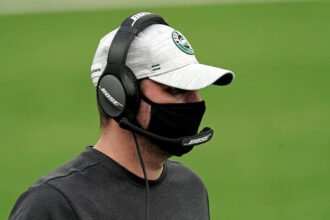
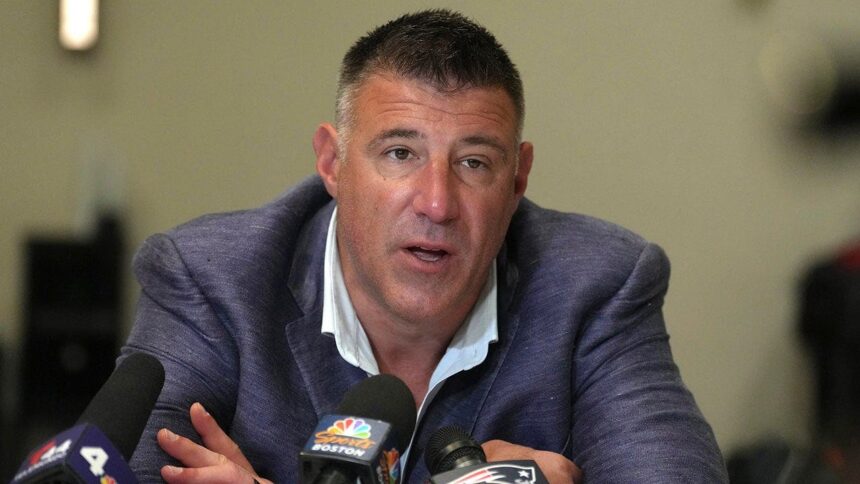
The New England Patriots’ offseason conditioning program is designed to build physical foundation, a quiet grind far from the glare of September. But on Tuesday, the weight room wasn’t the only place where strength was being tested. New head coach Mike Vrabel faced the media for the first time since a peculiar off-field story injected unexpected drama into Foxborough: the matter of the Dianna Russini photos.
The incident, which sparked fervent discussion on platforms like “The Hutton & Withrow Show” about potential tampering and the ethical use of media access, had lingered in the NFL ether for weeks. All eyes were on Vrabel—the famously competitive, no-nonsense leader—to break his silence. What followed was a masterclass in controlled messaging, a performance that revealed more in its omissions and tone than any explicit statement ever could.
The Unfolding of an Unusual NFL Saga
For those who missed the swirl of speculation, the controversy stemmed from photos published by then-ESPN reporter Dianna Russini. The images showed Vrabel, shortly after his surprising departure from the Tennessee Titans but before he was officially hired by the Patriots, appearing to be deeply engaged in football strategy discussions. The context and timing raised immediate eyebrows across the league.
Analysts like Jonathan Hutton and Chad Withrow dove into the implications, openly questioning whether this was a case of a reporter using her access to facilitate or expose premature negotiations—a scenario that brushes against the NFL’s strict anti-tampering policies. Was this savvy journalism or something more consequential? The league office reportedly made inquiries, leading to what Vrabel himself acknowledged were “difficult conversations” within the Patriots organization.
This set the stage for Tuesday’s media session. The football world waited for a denial, an explanation, or perhaps even an apology.
Vrabel’s Calculated Non-Answer: Reading Between the Lines
Vrabel, a former linebacker known for his tactical intelligence, did not deliver a straightforward soundbite. Instead, he offered a response meticulously crafted in the Patriots’ tradition of guarded public relations.
Key elements of Vrabel’s address included:
- No Admission, No Denial: He explicitly did not confirm or deny the nature of the conversations in the photos. This legal-adjacent phrasing avoids creating a definitive record that could be used against him or the team in any potential league investigation.
- Tone of Contrition: Observers noted an “underlying tone of contrition,” particularly when he discussed the internal fallout. He acknowledged the situation was a distraction, stating it led to those “difficult conversations” with staff and ownership, a nod to the internal cost of the incident.
- The Notable Lack of Apology: Crucially, there was no public apology to the league, other teams, or even the Titans. This is a significant distinction. Contrition for internal disruption is different from admitting guilt for an external violation. He expressed regret for the situation, not for specific actions.
- Focus on the Future: Like any seasoned coach, he quickly pivoted the narrative forward, emphasizing the current work with players and his excitement for the Patriots’ future. The message was clear: this chapter is closing.
This approach serves multiple purposes. It satisfies the media’s immediate query without fueling the fire. It shows accountability to his new team and fanbase for the distraction. And most importantly, it leaves the NFL with little concrete to pursue if no hard evidence of tampering exists beyond circumstantial photos.
Expert Analysis: The Broader Implications for Media and Teams
Vrabel’s handling of the press conference is a symptom of a larger, evolving tension in the modern NFL: the tripartite relationship between teams, agents, and the media. Insiders like Dianna Russini build careers on access and information. In an era where coaching hires are often telegraphed days in advance, the line between reporting news and inadvertently becoming a participant in the process can blur.
The incident raises critical questions:
- When does a reporter’s presence transition from observation to facilitation?
- How do teams navigate the “legal” gray areas of expressing interest in personnel who are technically under contract elsewhere?
- Is the NFL’s anti-tampering policy, in an age of instant communication and ubiquitous cameras, effectively enforceable?
Vrabel’s non-answer is perhaps the only safe answer in this environment. By not detailing the conversations, he protects himself, the Patriots, and even Russini from further scrutiny. It treats the photos as an unfortunate reality of the digital age rather than evidence of a conspiracy. For the Patriots organization, long accustomed to “The Patriot Way” of secrecy, this incident is a reminder that total control of the narrative is impossible in today’s media landscape.
Predictions: Lasting Impact or Fleeting Distraction?
So, what comes next? The long-term ramifications will likely be minimal on the field, but the episode leaves a subtle mark.
First, expect the NFL to quietly close any inquiry. Without a smoking gun or a complaining team (the Titans have not made any formal accusation), the league has little appetite to punish a flagship franchise and a respected coach over ambiguous photos.
Second, this reinforces Vrabel’s early challenge: establishing unwavering trust and a singular focus within the Patriots building. His acknowledgment of the “difficult conversations” was a necessary step in healing any internal rift. His success will be measured by how quickly this story disappears from the locker room’s consciousness.
Finally, for the media, this serves as a cautionary tale. Access is currency, but it comes with heightened scrutiny. The ethical boundaries of reporting in the player and coach movement “silly season” will be debated with renewed vigor.
Conclusion: A Storm Navigated, But Clouds Remain
Mike Vrabel’s first major test as Patriots head coach did not involve a playbook or a fourth-down decision. It was a public relations challenge born in the murky waters where NFL business, media strategy, and competitive ethics meet. His response—a blend of muted contrition, strategic silence, and a forward-looking pivot—was precisely calibrated.
He did not win a press conference in the traditional sense, but he may have successfully contained a potential crisis. The story now shifts from “what did he do?” to “how does he move on?” In the end, the legacy of the Dianna Russini photos will not be a league penalty or a formal scandal. It will be a footnote, a lesson in the modern complexities of NFL power dynamics, and the first demonstration of how Mike Vrabel, the coach, handles the non-football fires that inevitably flare up. For a Patriots organization in transition, that may be the most valuable offseason conditioning of all.
Source: Based on news from Fox Sports.