Penn State’s Roster Revolution: Campbell Welcomes 50 New Nittany Lions in Stunning Overhaul
The era of Matt Campbell at Penn State is no longer a concept; it is a tangible, 50-man reality. In a breathtaking display of roster reconstruction, the Nittany Lions have officially ushered in a wave of new talent, welcoming 39 transfers and 11 early-enrollee freshmen to campus. This massive influx, finalized as the winter transfer window closed, represents one of the most aggressive and complete single-cycle roster transformations in modern college football. It is a clear declaration: Campbell’s blueprint for Penn State is being installed not with incremental steps, but with a seismic shift in personnel and philosophy.
The numbers are staggering, but the strategy is precise. Nearly 40% of the new arrivals followed Campbell from Iowa State, creating an instant cultural and schematic foundation in Happy Valley. Combined with strategic flips from his former Cyclones recruiting class and key additions from other powerhouse programs, Penn State’s roster has been fundamentally reworked in a matter of months. The message is unambiguous—the competition for every starting job is wide open, and the 2025 season begins now.
The Transfer Portal Tsunami: Experience Meets Immediate Impact
While the term “transfer portal class” often implies supplementation, Penn State’s group of 39 is a cornerstone. The closure of the window on January 16th marked the end of the primary acquisition phase, and the Nittany Lions’ haul is poised to fill the lineup from day one.
The Iowa State Pipeline is the most critical storyline. Campbell didn’t just bring his playbook; he brought the players who mastered it. This provides an invaluable shortcut in installing his demanding systems.
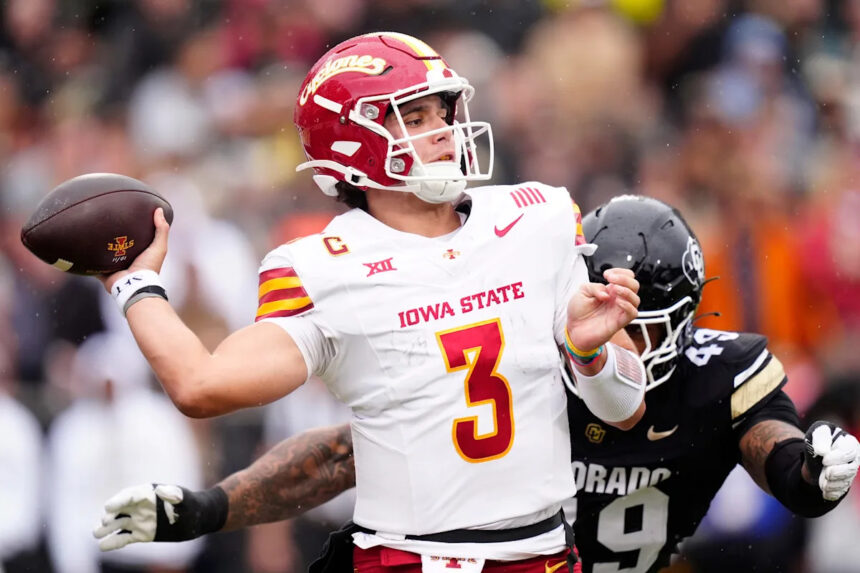
- Rocco Becht (QB): The likely frontrunner for the starting quarterback job, Becht brings proven Big 12 performance and an intimate knowledge of Campbell’s offense. His arrival stabilizes the most important position on the field.
- Carson Hansen (RB): A powerful, versatile back who fits the classic Campbell mold, Hansen is expected to be the workhorse in a reimagined rushing attack.
- Benjamin Bahmer (TE): A reliable security blanket and a capable blocker, Bahmer’s role as a “Y” tight end will be crucial in both the run and pass game.
- Marcus Neal Jr. (DB): A physical defensive back with starting experience, Neal will be a leader in a secondary undergoing significant change.
Beyond Ames, Penn State landed impact players from major conferences. Ohio State transfer running back James Peoples adds elite-level talent and depth to the backfield, while West Virginia linebacker Chris Fileppo brings a hard-nosed, Big 12-tested mentality to the heart of the defense. These additions signal that Penn State is a destination for players seeking a central role on a contender.
Recruiting Reboot: Flipping the Script and Building the Future
Campbell’s influence was felt even before he officially donned the blue and white headset. The early signing period in December saw Penn State secure just two high school prospects. The real action, however, was in the dramatic flipping of several Iowa State commits, a move that stunned the recruiting world and demonstrated Campbell’s powerful pull.
Key flips include offensive lineman Mason Bandhauer, quarterback Kase Evans, and athlete Amarion Jackson. These players, initially sold on Campbell’s vision at Iowa State, now form the nucleus of his first true freshman class at Penn State. They represent a long-term investment in the program’s culture—players who chose the coach and his system above all else.
This strategy, combined with the 11 early-enrollee freshmen now on campus, shows a dual-track approach: use the portal for immediate, scheme-specific starters while simultaneously recruiting high-school athletes molded to Campbell’s ideals from day one.
Expert Analysis: Decoding Campbell’s Blueprint
From a tactical standpoint, this roster overhaul is a masterclass in identity formation. Campbell’s teams at Iowa State were known for their physicality, precision, and exceptional development. By importing so many of his former players, he bypasses the typical year-one installation struggles. The locker room already has a built-in contingent that understands the standard of effort, film study, and practice intensity required.
The emphasis on the offensive and defensive lines within the transfer class cannot be overstated. Campbell is building from the trenches outward, a necessity for success in the Big Ten. Furthermore, securing a quarterback of Becht’s experience is the ultimate stabilizer. It allows the freshmen quarterbacks, like flip Kase Evans and signee Peyton Falzone, time to develop without the pressure of being thrown into the fire immediately.
There are, of course, challenges. Merging nearly four dozen new players with the returning Nittany Lions will be a delicate task for the coaching staff. Building chemistry and a unified “Penn State” identity, rather than an “Iowa State North” perception, will be paramount. However, the sheer volume of change indicates Campbell has the full backing of the administration to reshape the program in his image, without compromise.
Predictions and the Road Ahead for the New-Look Nittany Lions
The immediate prediction is one of intense competition. Spring practice in State College will be a true battle at almost every position. Returning players who expected starting roles will now have to fight to keep them against seasoned transfers who know the coach’s preferences intimately.
On the field, expect Penn State’s offensive identity to shift towards a more physical, run-centric approach with multiple tight ends, leveraging the skills of Hansen, Peoples, and Bahmer. Defensively, the influx of experienced defenders like Fileppo and Neal should help maintain the program’s traditionally high standards while adapting to new coordinator schemes.
While the transfer window is largely closed, the roster isn’t entirely static. A few committed players have yet to enroll, and movement could still occur from players on teams in the national championship game or from programs with late coaching changes. Additionally, the fate of the remaining Penn State players in the portal will finalize the roster’s outgoing side of the ledger.
Conclusion: A New Foundation is Pouring in Happy Valley
Matt Campbell’s first offseason at Penn State will not be remembered for subtle tweaks. It will be remembered for the wholesale roster transformation that brought 50 new players into the fold. This is not a rebuild; it is a rapid recalibration. By strategically leveraging the transfer portal to import his system’s veterans and aggressively flipping his previous recruiting class, Campbell has constructed a roster capable of competing immediately while laying a cultural foundation for the future.
The 2025 season will be the ultimate test of this bold strategy. The expectations are immense, but so is the talent influx. Penn State football has officially turned the page. The Campbell era, built on a completely reworked roster, is now undeniably underway. The message to the college football world is clear: Penn State is not waiting. The future arrived in a group of fifty.
Source: Based on news from Yahoo Sports.