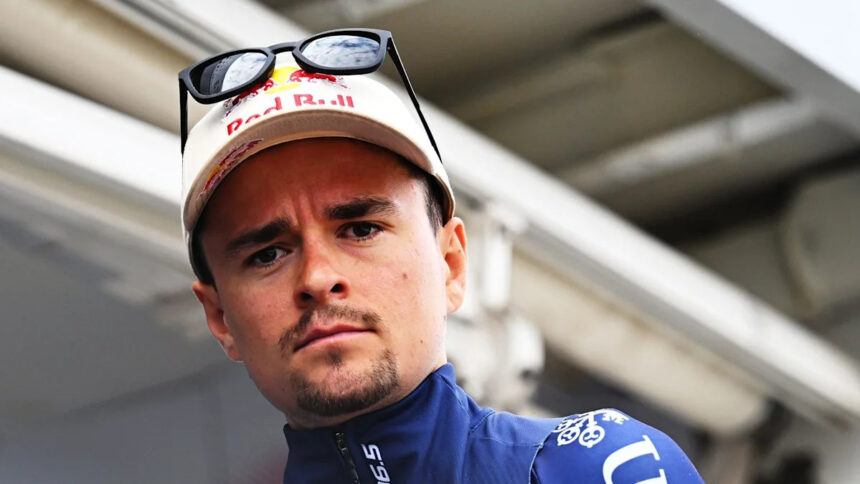
Tom Pidcock’s Catalunya Catastrophe: A Ravine Fall and a Stark Reminder of Cycling’s Razor Edge
The thin line between calculated risk and calamity in professional cycling is often no wider than a tire’s tread. For Tom Pidcock, the multifaceted British star, that line vanished in a heartbeat on a Catalan mountainside. What began as a routine descent during stage five of the Volta a Catalunya ended in a “horror” fall down a ravine, an incident so severe it forced his immediate withdrawal from the race and left the peloton collectively holding its breath. Pidcock’s shocking crash is more than a race report; it’s a visceral testament to the ever-present dangers lurking within the sport’s breathtaking beauty.
The Descent into Disaster: Reconstructing a “Horror” Crash
With 153.1km of brutal climbing from La Seu d’Urgell to La Molina/Coll de Pal already in the legs, the final descents offered a fleeting moment of respite. For a rider of Pidcock’s legendary bike-handling skills—honed on the mud of cyclocross and the rocks of mountain biking—these sections are typically a playground. But professional cycling is unforgiving. Pidcock’s crash occurred not on a technical switchback, but on a seemingly manageable corner. In his own chillingly matter-of-fact words: “I was drinking on the descent and misjudged a corner.”
The consequence was catastrophic. His Pinarello bike speared off the road, sending the Olympic mountain bike champion tumbling down a ravine fall. The isolation of the moment amplifies the terror. “I was far from the road and nobody knew I was there,” Pidcock recounted. Imagine the scene: a world-class athlete, alone, injured, and hidden from view after catapulting off the road at approximately 60km/h. That he could even reach his radio was the first small miracle. He would finish the stage, a grim exercise in survival, over 29 minutes behind stage winner Jonas Vingegaard, his body and ambitions in tatters.
Analysis: The Anatomy of a Near-Miss
Expert analysis of this incident must move beyond the simple cause of “misjudging a corner.” It exposes a chain of vulnerabilities inherent to modern stage racing:
- The Hydration Hazard: Pidcock cited drinking as a factor. At high speed, even a one-handed, momentary lapse in focus can distort the complex calculations of entry speed, apex, and exit line. It’s a universal risk every rider takes dozens of times a stage.
- The Margin for Error: Mountain roads have minimal runoff. There is no gravel trap, no air fence. The boundary between asphalt and abyss is often a literal edge. Pidcock’s withdrawal underscores that when these riders err, the consequences are geological, not merely abrasive.
- The “Lucky” Narrative: Pidcock stated he was “relatively OK” and “lucky.” In cycling’s culture of toughness, this is a common refrain. But “relatively OK” after a 60km/h plunge into a ravine likely means fractures, severe contusions, and concussion protocols. This language often masks the true physical and psychological trauma.
- Technology’s Limit: While radios enabled his rescue, advanced helmet technology and protective gear can only do so much against an uncontrolled fall down a mountainside. This crash was a blunt-force reminder of physics’ ultimate authority.
The Volta a Catalunya stage five will now be remembered not for the climbing duel between Vingegaard and Pogacar, but for the stark image it created of the sport’s peril.
Ripple Effects: Pidcock’s Season at a Crossroads
Tom Pidcock is not a specialist; he is a phenomenon. His 2024 calendar is a tapestry of high-stakes objectives across disciplines. This crash in Catalunya sends disruptive shockwaves through all of them:
Spring Classics Campaign in Jeopardy: The cobbled monuments, particularly the Tour of Flanders and Paris-Roubaix, were prime targets. These races demand not just fitness but immense physical resilience and confidence on treacherous terrain. Recovering from significant injuries in time for the early April dates is now a race against the clock.
Tour de France Ambitions Altered: Pidcock’s role at Ineos Grenadiers for the Tour was multifaceted: stage hunter in the mountains, aggressive descender, and a potential top-10 contender. A major crash disrupts the foundational training blocks essential for Grand Tour conditioning. His preparation is now reset, with recovery taking precedence over peak form.
Olympic Defense on Hold: As the reigning Olympic champion in mountain biking, all roads led to Paris 2024. The specific demands of MTB—explosive power, technical handling, and crash resilience—require specific, uninterrupted preparation. A setback of this magnitude puts the meticulous build-up to his title defense in serious doubt.
The immediate aftermath is a withdrawal from competition, but the longer-term impact is a forced recalibration of one of cycling’s most ambitious schedules.
Looking Ahead: Predictions for Recovery and Return
Predicting Pidcock’s path forward requires reading between the lines of typical team injury reports. Based on the violent nature of the accident:
1. The Psychological Hurdle: The physical wounds will heal to a schedule. More intriguing will be Pidcock’s psychological response. His brand is built on fearless descending and technical bravado. Reclaiming that instinctual edge after a traumatic, self-described “horror” fall is his greatest challenge. We may see a more measured rider in the immediate term.
2. A Revised Calendar: Expect a conservative approach from his team. The Ardennes Classics (Amstel Gold, Flèche Wallonne, Liège–Bastogne–Liège) may become a more logical, if less tailored, target than the cobbles. The Tour de France might shift from a GC-influencing role to a pure stage-hunting focus, reducing pressure.
3. The Paris Question: The Olympic MTB event is August 28th. Time is still on his side, but his preparation will be heavily truncated. His participation may hinge on forgoing a high-level Tour de France effort to prioritize mountain bike-specific training later in the summer.
One prediction is certain: Pidcock’s return to racing will be one of the most scrutinized comebacks of the season. The world will be watching not just his results, but his demeanor on the descents.
Conclusion: A Sobering Moment in a Speed-Obsessed Sport
Tom Pidcock’s terrifying plunge down a Catalan ravine is a jarring interlude in the 2024 season. It momentarily strips away the glamour of victories and jerseys, exposing the raw vulnerability that underpins professional cycling. His miraculous escape from more severe injury does not diminish the incident’s power as a cautionary tale. It highlights the relentless concentration required, where a single sip of water can cascade into a life-threatening crisis. As Pidcock begins his recovery, the peloton continues, a rolling testament to resilience. But for a day, the racing paused, reminded that the mountains they conquer can, in an instant, conquer them. Pidcock’s story is no longer about his withdrawal from the Volta a Catalunya; it is a sobering, universal lesson in the razor-thin margins that define the sport at its limit.
Source: Based on news from Yahoo Sports.