Achraf Hakimi to Face Trial: The Legal, Sporting, and Reputational Storm Ahead
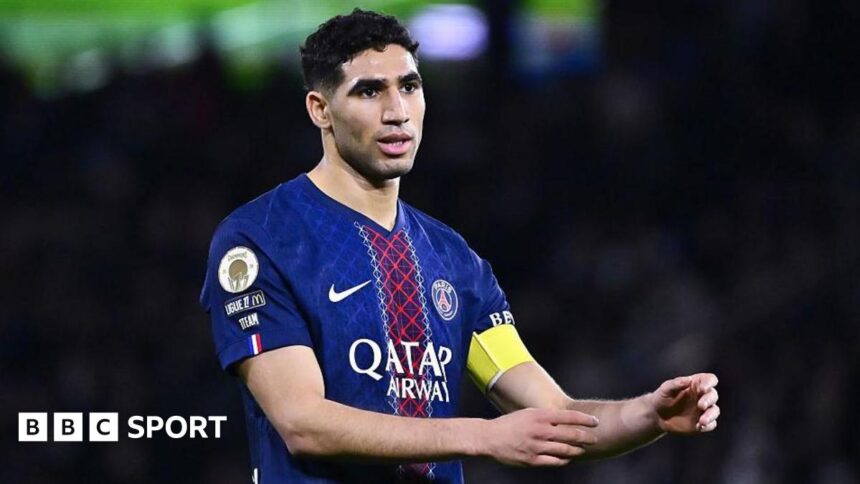
The world of football, accustomed to celebrating the dazzling footwork and on-field heroics of its stars, now finds itself grappling with a far more somber narrative. Paris Saint-Germain and Morocco defender Achraf Hakimi has confirmed he will face trial following a serious allegation of rape. This announcement, made via the player’s own social media, catapults a legal process into the harsh glare of the global media spotlight, setting the stage for a complex saga that intertwines the judicial system, elite sport, and the court of public opinion. The outcome will have profound implications far beyond the penalty box.
The Allegations and the Path to Trial
According to French judicial authorities, the case stems from an incident alleged to have occurred in February 2023. A 24-year-old woman accused Hakimi of raping her at his home in the Parisian suburb of Boulogne-Billancourt. The player, through his lawyers, has consistently and categorically denied any wrongdoing.
The public prosecutor’s office in Nanterre opened a preliminary investigation in March 2023. After over a year of evidence gathering, which reportedly included interviews and forensic analysis, the case has been forwarded for trial. This indicates that investigating magistrates believe there is sufficient evidence to proceed. Notably, under French law, a case can be sent to trial even without the consent of the accused or the plaintiff if magistrates deem the evidence warrants it.
Hakimi’s public response was a terse post on X (formerly Twitter): “Today, a rape accusation is enough to justify a trial.” This statement, while brief, speaks volumes. It reflects a stance of perceived injustice and hints at a vigorous defense strategy likely to challenge the credibility of the accusation and the judicial process itself. His legal team has previously stated he is “confident his innocence will be established.”
Navigating the Legal Labyrinth: Key Factors in the Case
The trial will be a meticulous examination of facts, testimonies, and evidence. Unlike high-profile cases in some other jurisdictions, French trials are typically held behind closed doors when involving sexual assault allegations to protect the privacy of the accuser. This means the dramatic, public courtroom showdown many might expect is unlikely.
Several critical elements will be central to the proceedings:
- Consent: As with all such cases, the core issue will be whether the sexual encounter was consensual. The prosecution will seek to prove beyond reasonable doubt that it was not.
- Forensic and Digital Evidence: Any physical evidence gathered during the investigation, along with digital records like messages, location data, or call logs, will be scrutinized by both sides.
- Witness Testimony: Accounts from individuals connected to either party before or after the alleged incident will be critical in establishing a timeline and context.
- Character References: While not definitive, aspects of both the accuser’s and the accused’s backgrounds may be presented, though French courts are generally strict about the relevance of such information.
The potential consequences for Hakimi are severe. In France, the crime of rape carries a maximum sentence of 15 years in prison. A conviction would not only mean a custodial sentence but would irrevocably end his career at the highest level.
The Club, The Country, and The Sponsorship Dilemma
While the principle of “innocent until proven guilty” remains paramount, the reality for a global sports icon is that the allegation itself triggers a parallel crisis in boardrooms and federation offices. Hakimi occupies a unique space as a key player for both a European superclub and an ascendant national team.
Paris Saint-Germain’s stance has been one of cautious distance. The club has acknowledged the legal process but has not suspended the player, who has continued to train and play. This reflects a common strategy in football: avoid prejudgment while monitoring developments closely. However, the intense media scrutiny and potential for sponsor discomfort create immense pressure. PSG, a brand with global aspirations, must weigh sporting necessity against reputational risk daily.
For Morocco, Hakimi is a national icon. His 93 caps for the Atlas Lions place him among the nation’s most-capped players, and he was a cornerstone of their historic run to the 2022 World Cup semi-finals. The Moroccan Football Federation has yet to comment extensively, likely awaiting a judicial outcome. The emotional investment of a nation in its hero adds a powerful, complicating layer to the situation.
Perhaps the most sensitive pressure point is commercial sponsorship. Hakimi has endorsement deals with major brands like Nike, and Ambassadors. These corporations have strict morality clauses and are hyper-sensitive to brand association. They will be conducting their own continuous risk assessments, and any move by a major sponsor to distance itself would be a significant blow, often preceding sporting sanctions.
Predictions and The Unfolding Narrative
Forecasting the outcome of a trial is fraught with difficulty, but we can anticipate the contours of the narrative in the months ahead.
Firstly, the legal process will be lengthy. A trial date may not be set for many more months, and appeals could extend the saga for years. This means Hakimi will likely continue playing under a persistent cloud of uncertainty, a testament to the slow grind of justice.
On the pitch, his performance will be microscopically analyzed for signs of strain. Every cheered goal or defensive error will be framed through the lens of his off-field troubles. Managers will face endless questions about his selection, creating an unavoidable distraction.
The court of public opinion is already fractured. Some will staunchly support the accuser, citing the courage required to come forward against a powerful figure. Others will rally behind Hakimi, viewing the case as a targeted attack or a misunderstanding. This polarization is a hallmark of such high-profile allegations in the social media age, where nuance is often lost.
Ultimately, the most significant prediction is one of lasting impact. Even if fully acquitted, the stain of the allegation may never completely fade from his public profile. A conviction, conversely, would represent a catastrophic fall from grace, a tragic end to a glittering career, and, most importantly, a profound failure of justice for the victim.
Conclusion: A Crossroads for Football and Justice
The trial of Achraf Hakimi is more than a celebrity scandal; it is a pivotal moment that sits at the intersection of legal accountability, sporting ethics, and cultural change. Football has a painful history of sidelining or mishandling allegations of violence against women. How this case is managed by all institutions involved—the judiciary, PSG, the Moroccan federation, and the media—will set a precedent.
It is a stark reminder that the speed and grace displayed on the pitch have no bearing on the deliberate, often painful, pursuit of truth in a courtroom. For Hakimi, the battle to clear his name and save his career is just beginning. For the football world, it is a test of its maturity and its commitment to principles that must transcend the beautiful game itself. The final whistle in this case is a long way off, and the result will resonate far longer than any match.
Source: Based on news from BBC Sport.