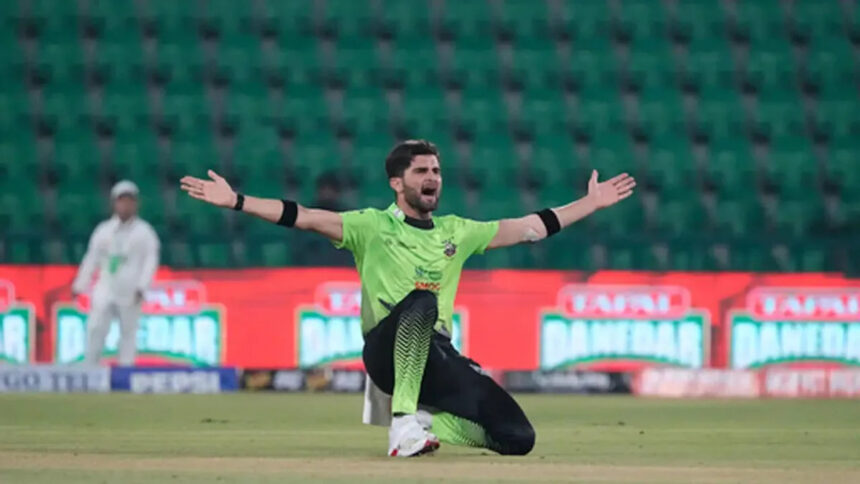
PSL Controversy: Shaheen Afridi Fined for Breaching Security Protocol
In a stunning move that blurs the lines between star power and team discipline, Lahore Qalandars have imposed a hefty fine of PKR 1 million on their marquee player and captain, Shaheen Shah Afridi. The penalty comes in the wake of a late-night hotel incident during the Pakistan Super League (PSL) that has sparked a major controversy over security protocols, player accountability, and the immense pressure on modern athletes. While the franchise has framed the fine as a “voluntary and proactive step,” the details of the breach paint a picture of a significant, willful violation that involved Afridi and overseas star Sikandar Raza escorting four unauthorized guests to a hotel room against explicit instructions. This incident is more than a simple disciplinary footnote; it is a litmus test for the PSL’s operational integrity and the fragile balance between player privileges and collective security in high-stakes tournaments.
The Incident: A Timeline of Protocol Breach
According to official reports from Lahore police and the franchise’s statement, the events unfolded with a clear series of refusals and subsequent defiance. The chain of command was bypassed, leading to a serious security lapse.
- The Request: A liaison officer initially approached the PCB manager seeking permission for four individuals, described as relatives of Sikandar Raza, to visit the Zimbabwean all-rounder in his room at the team hotel.
- The Refusal: In strict adherence to the PSL security protocols designed to protect players, officials, and the tournament’s integrity, the PCB manager denied the request.
- The Breach: Despite this official denial, at approximately 11:05 p.m., Shaheen Afridi and Sikandar Raza were observed by PCB and security personnel forcefully escorting the four guests into Raza’s room on the eighth floor.
- The Duration: The unauthorized visitors remained in the player’s room until 1:25 a.m., a period of over two hours, further compounding the violation.
The involvement of Muhammad Faisal, the DIG (Operations, Lahore), who formally notified the PSL CEO of the “serious violation,” underscores the gravity with which law enforcement viewed the incident. It was not merely an internal team matter but a potential compromise of a coordinated security apparatus.
Franchise Response: A Calculated Move of Damage Control
Lahore Qalandars’ official statement is a masterclass in nuanced crisis communication, attempting to strike a balance between enforcing discipline and protecting their most valuable asset. The franchise’s decision to fine Shaheen Afridi, reportedly the highest penalty ever imposed on a player by a PSL team, is undeniably significant. By labeling it “voluntary and proactive,” they aim to position themselves as an organization in control, one that prioritizes team discipline and accountability even when it involves their captain.
However, the statement’s careful wording reveals the tightrope they are walking. They “expressed sincere appreciation for the efforts of security personnel” and reiterated “full respect for all security protocols,” directly addressing the concerns of the PCB and police. Crucially, they attributed the incident to a “misunderstanding rather than any deliberate attempt to violate established procedures.” This is the most contentious point. The documented sequence—a formal refusal followed by the players’ direct action—strongly suggests a deliberate choice was made, challenging the “misunderstanding” narrative. Notably, the franchise statement completely omitted any mention of Sikandar Raza, focusing the disciplinary lens solely on their captain, Shaheen Afridi.
Expert Analysis: Leadership, Pressure, and the Star System
This controversy opens a window into the complex dynamics of franchise cricket. Shaheen Afridi is not just a player; he is the face of Lahore Qalandars, a national hero, and a leader under immense scrutiny. The fine, while substantial, raises questions about differential treatment. Would a lesser-known player have faced the same consequence, or a harsher one like suspension?
Cricket analysts point to the immense pressure on captain-cypher players in leagues like the PSL. They are expected to be tacticians, performers, and brand ambassadors, often navigating personal requests and obligations amidst a bubble-like environment. However, this incident highlights a critical failure in captaincy judgement. A team leader’s primary responsibility is to uphold the standards and rules of the unit. By personally circumventing security, Afridi inadvertently signaled that protocols are flexible for stars, a dangerous precedent for team culture.
The security angle cannot be overstated. High-profile leagues are soft targets, and protocols exist for life-and-death reasons. When players of this stature willfully bypass them, it undermines the entire security plan, endangers everyone in the vicinity, and exposes the tournament to massive liability. The police involvement indicates this was not seen as a trivial infraction but as a material risk.
Predictions and Ramifications: What Comes Next?
The fallout from this incident will likely extend beyond the PKR 1 million fine. Several key developments are on the horizon.
- PCB Scrutiny: The PCB, which has received a “detailed response” from the Qalandars, may choose to conduct its own inquiry or issue a separate sanction. They cannot be seen as weak on security matters.
- Captaincy Conundrum: While stripping Afridi of the Qalandars captaincy seems extreme, his leadership credentials have undoubtedly taken a hit. His authority within the dressing room may be subtly challenged, and his decision-making will be under a microscope.
- Precedent for the PSL: This sets a new benchmark for player discipline in the PSL. Other franchises will now look to this case when handling their own internal issues, potentially leading to a stricter league-wide environment.
- Player-Security Relations: The relationship between security details and star players may become more formal and tense. Personnel may be less inclined to exercise discretion, adhering to protocols with zero flexibility.
The silence on Sikandar Raza’s role is also telling. It suggests internal handling, but as an overseas professional, his contract and future participation in the PSL could be indirectly influenced by this mark on his record.
Conclusion: A Wake-Up Call for the PSL Ecosystem
The Shaheen Afridi fine is a watershed moment for the Pakistan Super League. It transcends the typical on-field controversy, striking at the heart of off-field professionalism and institutional strength. While Lahore Qalandars deserve some credit for taking tangible action, the incident reveals a troubling gap between the rulebook and the reality of player behavior. For the PSL to continue its growth as a world-class league, it must ensure that its security protocols are non-negotiable, irrespective of a player’s stature or social commitments.
Ultimately, this is a story about accountability in the age of sporting celebrity. Shaheen Afridi’s legacy as a cricketer is secure, but this episode serves as a stark reminder that true leadership is exercised in the shadows of the hotel corridor as much as under the bright lights of the stadium. The PKR 1 million fine is not just a financial penalty; it is the price of a lesson in responsibility that the entire league must now learn from. The hope is that this controversy strengthens the PSL’s operational framework, ensuring that the focus remains squarely on the cricket, protected by an unwavering commitment to safety and discipline.
Source: Based on news from Yahoo Sports.