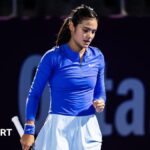
Raducanu’s Qatar Quest Cut Short: Illness Forces Early Exit in Doha
The highly anticipated return of Emma Raducanu to the Middle Eastern hard courts ended not with a bang, but with a whimper of profound disappointment. In her opening match at the Qatar TotalEnergies Open, the 2021 US Open champion was forced to retire due to illness against Colombia’s Camila Osorio, casting a fresh shadow over her carefully managed comeback season. The abrupt halt, with Raducanu trailing 6-0, 4-3, sent a ripple of concern through the tennis world, raising familiar questions about the physical resilience of one of the sport’s most electrifying yet fragile talents.
A Distressing Scene on Stadium Court
From the outset, something was clearly amiss. Raducanu, known for her explosive movement and clean ball-striking, looked out of sorts and physically compromised. Her usual potency was absent, replaced by uncharacteristic errors and a visible lack of energy. World No. 80 Osorio, a capable and tenacious opponent, capitalized mercilessly, racing through the first set without conceding a game. While Raducanu showed fleeting signs of resistance in the second set, the fight was clearly against her own body as much as her opponent. After a brief medical timeout, she attempted to continue but ultimately shook her head at 3-4 down, approaching the chair umpire to end the contest. The retirement due to illness marked another frustrating chapter in her post-Flushing Meadows narrative, where injuries and physical setbacks have been a persistent theme.
Key Moments of the Match:
- First Set Domination: Osorio exploited Raducanu’s clear physical limitations, winning the first set 6-0 in just 25 minutes.
- Brief Resistance: Raducanu showed grit to hold and break early in the second, suggesting a possible turnaround.
- Physical Decline: Movement became increasingly labored, leading to a medical assessment off-court.
- Inevitable Conclusion: The retirement call was a pragmatic, if disheartening, decision to avoid further risk.
Expert Analysis: Navigating the Comeback Conundrum
This latest setback must be analyzed through the dual lens of immediate concern and long-term management. Raducanu and her team have pursued a meticulously planned schedule in 2024, deliberately opting for a lighter tournament load to prioritize strength and conditioning. The Qatar Open first-round retirement disrupts that plan and highlights the delicate balance she must strike. Tennis analysts point to the immense physical demands of the modern WTA Tour, where the week-in, week-out grind can be brutal for any player, let alone one with Raducanu’s recent history of multiple surgeries.
“The concerning pattern isn’t the loss; it’s the manner of it,” notes a veteran sports physio familiar with high-performance tennis. “When illness or minor physical complaints consistently derail competition, it often points to an underlying systemic fatigue or an immune system under stress. Her body might still be in a heightened state of vulnerability post-surgeries, making it harder to fend off routine bugs that other players might shake off.” Furthermore, the psychological toll cannot be ignored. Each withdrawal chips away at competitive rhythm and the vital accumulation of match toughness, creating a cyclical challenge of building form without a stable foundation of health.
The Road Ahead: Predictions and Pivotal Decisions
The immediate question is the impact on her schedule. Raducanu is entered in the prestigious Dubai Duty Free Tennis Championships next week, a consecutive WTA 1000 event. Participation now seems highly unlikely, if not medically unwise. The smarter, albeit frustrating, path would be withdrawal and a focused period of recovery. The larger goal remains the Sunshine Double—the Indian Wells and Miami Open tournaments in March—where points and momentum are crucial for her ranking, which had been steadily climbing.
Critical factors for her 2024 season now include:
- Health First Protocol: Her team must reaffirm the “long game” strategy, even if it means skipping more events.
- Grass-Court Prioritization: With limited ranking points to defend this summer, Wimbledon and the UK grass-court swing offer a prime opportunity for a narrative shift.
- Continued Physical Development: The core focus must remain on building a body robust enough to withstand the tour’s rigors. This incident underscores that the process is ongoing.
Predicting Raducanu’s trajectory remains the sport’s great puzzle. The talent is undeniable and transcendent, as her New York fairytale proved. However, the illness in Doha is a stark reminder that her journey back to the top echelon is a marathon, not a sprint. Expect her camp to be ultra-conservative in the coming weeks, valuing long-term capacity over short-term gains.
A Test of Patience in a World Demanding Instant Success
Emma Raducanu’s story continues to defy easy categorization. The retirement against Camila Osorio is a setback, but within the broader context of her unique career, it is perhaps an expected bump on a rocky road. The tennis ecosystem, with its relentless calendar and intense scrutiny, is an unforgiving environment for a player rebuilding her physical base. This episode in Qatar is less a verdict on her potential and more a diagnostic check on her current state.
The true test lies in the response. The resilience Raducanu has shown in overcoming doubt, coaching changes, and major surgery will now be applied to managing this latest hurdle. For her fans and observers, the requirement is patience—a commodity often in short supply in professional sports. Her path will be nonlinear, punctuated by flashes of brilliance and frustrating interruptions like today.
In conclusion, while the scoreline from Doha reads as a comprehensive defeat, the real story is one of prudence over pride. By choosing to retire, Raducanu prioritized her long-term health over a single match, a mature if difficult decision. The Qatar Open exit is a chapter, not the climax, of her comeback tale. The tennis world still eagerly awaits the full, unfettered return of her mesmerizing game. But as today proved, everyone must wait for the most important voice in the process: the clear signal from her own body that it is truly ready to compete.
Source: Based on news from Sky Sports.
Image: CC licensed via commons.wikimedia.org