Emma Raducanu Returns: Wildcard Entry in Strasbourg Marks Crucial French Open Tune-Up
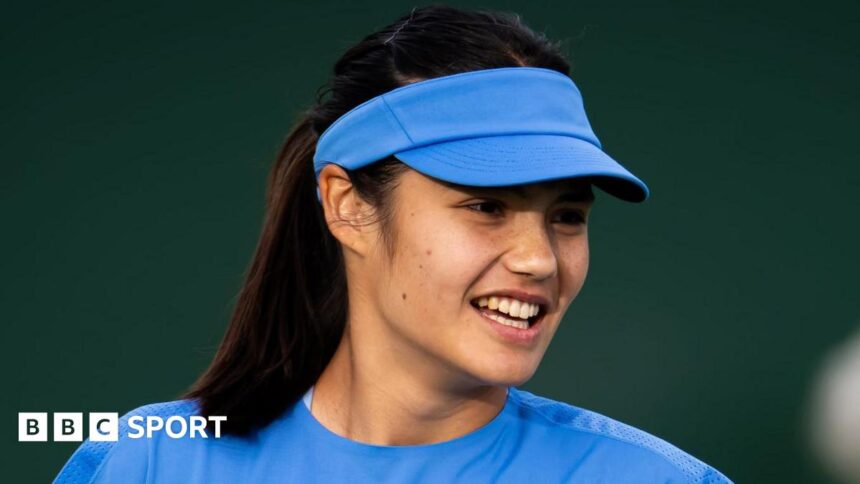
After a frustrating two-month absence from the WTA Tour, British number one Emma Raducanu is set to step back onto the competitive stage. The 23-year-old has accepted a wildcard entry into the Strasbourg International, a clay-court event that kicks off this Sunday. For Raducanu, this is more than just a tournament; it is a calculated gamble to salvage some rhythm ahead of the French Open, which begins at Roland Garros on 24 May.
The news comes as a relief to fans who have watched Raducanu’s promising season stall due to health issues. Her last competitive match was a third-round loss to American Amanda Anisimova at Indian Wells on 8 March. Since then, a post-viral infection has forced her to withdraw from multiple events, including the prestigious Italian Open in Rome earlier this month. Now, with just one week of preparation before the second Grand Slam of the year, the decision to play in Strasbourg is a high-stakes move.
The Long Road Back: Why Strasbourg Matters for Raducanu
Raducanu’s absence has been a significant talking point in the tennis world. After showing flashes of her 2021 US Open-winning form in early 2024, the momentum has been brutally interrupted. The post-viral infection that sidelined her is notoriously tricky for athletes, often causing lingering fatigue and a drop in cardiovascular fitness. Jumping straight into a Grand Slam without any match play would be reckless. Strasbourg offers a perfect, albeit urgent, solution.
The tournament, a WTA 500 event, provides a competitive field without the overwhelming pressure of a major. Here is why this specific event is the ideal launchpad:
- High-Quality Competition: Strasbourg always attracts a deep draw of clay-court specialists and top-50 players, ensuring Raducanu will face tough tests immediately.
- Short Travel & Familiarity: The event is geographically close to Paris, allowing for a smooth transition to Roland Garros without cross-continental travel fatigue.
- Practice Matches Under Pressure: Unlike practice sets, competitive matches in Strasbourg offer real-time pressure, crowd noise, and the tactical adjustments that cannot be replicated in training.
For a player of Raducanu’s calibre, the priority is clear: build physical resilience and regain competitive sharpness. She knows that winning the tournament is secondary. The primary goal is to walk onto Court Philippe Chatrier next week feeling like she has already played three or four matches on the dirt.
Seeding Woes and the Roland Garros Challenge
One of the most significant consequences of Raducanu’s enforced break is her seeding status—or lack thereof. Having missed the entire European clay-court swing prior to Strasbourg, she is set to miss out on a seeded position at the French Open. This is a brutal reality for the British number one.
Being unseeded at a Grand Slam is a double-edged sword. On one hand, it means she could draw a top-10 player in the very first round. On the other, it makes her a dangerous floater in the draw—a player that every seed wants to avoid. Expert analysis suggests that this could actually work in her favour if she finds form quickly. A first-round match against a nervous seed might be easier than facing a qualifier who has already won three matches.
However, the statistics are sobering. Since her 2021 US Open triumph, Raducanu has struggled to string together consecutive wins at majors. The lack of a seeding protection means she cannot afford a slow start in Paris. Every match will be a dogfight. The Strasbourg wildcard is her best chance to reset her momentum and prove that her body is ready for the rigours of best-of-three-set tennis over a fortnight.
Let’s break down the key factors for her success in Strasbourg and Paris:
- Physical Test: Can she play two or three matches in five days without a physical setback?
- Clay Adaptation: Her movement on clay has improved, but sliding and recovering from defensive positions will be under the microscope.
- Mental Fortitude: After two months away, handling the frustration of errors and bad bounces on clay will be critical.
Expert Analysis: What to Expect from Raducanu in Strasbourg
From a tactical perspective, Raducanu’s game is well-suited to clay—when she is healthy. Her variety, including slice backhands, drop shots, and the ability to construct points patiently, are assets on the slow surface. However, the key question is stamina. A post-viral infection can sap an athlete’s engine, and clay court rallies are the most physically demanding in tennis.
I expect her team to manage her workload carefully. She may not play every day, and if she wins a match, she might request a day off before the next round. The wildcard entry gives her flexibility. If she feels a niggle or fatigue, she can pull out of Strasbourg without major consequence. But the smarter play is to compete, even if she loses early. A single match in Strasbourg is worth more than a week of practice.
Her likely first-round opponent will be a qualifier or a lower-ranked player. This is a trap match. Raducanu has historically struggled against players who have already played multiple matches in a tournament. The key will be her serve. If she can get free points on her first serve, it will take pressure off her movement. If she is forced into long, grinding rallies from the first point, it will be a worrying sign.
Prediction: I see Raducanu winning one or two matches in Strasbourg. A quarterfinal run would be a massive success given the circumstances. Anything beyond that would be a bonus. The real test is not the trophy in France, but how she feels physically after three matches. If she walks away from Strasbourg with no pain and a few wins under her belt, her French Open chances improve dramatically.
The Bigger Picture: Raducanu’s Long-Term Trajectory
It is easy to forget that Emma Raducanu is still only 23 years old. The narrative around her career has been dominated by injuries and coaching changes, but the talent remains undeniable. This Strasbourg appearance is not just about the French Open. It is about building a foundation for the summer grass-court season and the hard-court swing in North America.
A strong performance in Strasbourg could be the catalyst that finally allows her to play a full, uninterrupted season. Consistency has been her biggest enemy, not opponents. Every time she builds momentum, an illness or injury stops her. The post-viral infection was another cruel twist, but it also forced her to rest. Sometimes, forced rest is exactly what a young body needs to reset.
The British number one is in a unique position. She has a Grand Slam title, a massive global following, and the financial security to take her time. But the clock is ticking on her prime years. She needs matches, and she needs them now. Strasbourg is the first step in a critical six-month period that will define whether she climbs back into the top 20 or remains a perennial wildcard story.
Strong Conclusion: A Calculated Risk with High Reward
Emma Raducanu’s return via a wildcard in Strasbourg is a story of resilience and strategic planning. It is not a glamorous comeback, but it is a smart one. By choosing a smaller event before the French Open, she is prioritizing match practice over ranking points. She is putting her health first while acknowledging that she cannot win Roland Garros without hitting competitive balls on clay.
The tennis world will be watching closely. Every forehand winner, every slip on the dirt, and every medical timeout will be dissected. But Raducanu has proven before that she thrives when expectations are low. In 2021, nobody expected her to win the US Open. In 2025, nobody expects her to win the French Open. That freedom could be her greatest weapon.
Whether she wins one match or five in Strasbourg, the victory is simply being back on court. The road to Roland Garros runs through eastern France this week, and Emma Raducanu is ready to drive it. For British tennis fans, that is the most exciting news in months. The comeback starts now.
Source: Based on news from BBC Sport.