Reader’s Corner: Remembering Gary Rowell and the Derby Day That Defined a Rivalry
The bond between a football club and its supporters is forged in shared history, but it is crystallized in singular, transcendent moments. For generations of Sunderland AFC fans, one name and one afternoon exist as a sacred piece of that lore: Gary Rowell and his hat-trick at St. James’ Park in 1979. More than just a victory, it was a story of audacious identity, teenage bravery, and a result that still echoes down the decades. This is a remembrance of that day, not just from the pitch, but from the precarious, unforgettable view of the enemy stands.
The Audacious Plan: Going Incognito in the Lion’s Den
To understand the magnitude of Rowell’s feat, you must first understand the terrain. The late 1970s was an era of raw, tribal football passion, where matchdays were as much about navigation as celebration. As a naïve teenager, my obsession with the Lads was matched only by a fear of the period’s notorious football hooliganism. The away trip to Newcastle wasn’t just a game; it was a perilous expedition.
The solution, proposed by my older, street-wise brother, was one of sheer bravado: go incognito amongst the home fans. The logic was chillingly simple. By blending in with the Magpies’ support, we could travel to and from the ground safely, avoiding the perilous journey back to Sunderland stations as marked men. Younger fans today, accustomed to all-ticket affairs, stringent segregation, and digital tracking, might find the mechanics astonishing:
- Pay at the gate was the standard. No purchase history, no memberships—just cash and turnstiles.
- Our “disguise” was minimal: neutral jackets over our shirts, muted celebrations, and a lifetime of learning to suppress our natural reactions.
- The goal wasn’t entertainment; it was survival and witness. We traded the communal joy of the away end for the tense, silent hope of simply seeing our team play.
We had planned for anonymity. We had not planned for history.
Gary Rowell’s Masterclass: A Hat-Trick Forged in Legend
February 24, 1979. St. James’ Park was a cauldron of Geordie expectation, and we were two silent, screaming islands in a black and white sea. What unfolded was a Sunderland performance of such stunning efficiency and ruthlessness it felt like a dream—or a nightmare, depending on your vantage point.
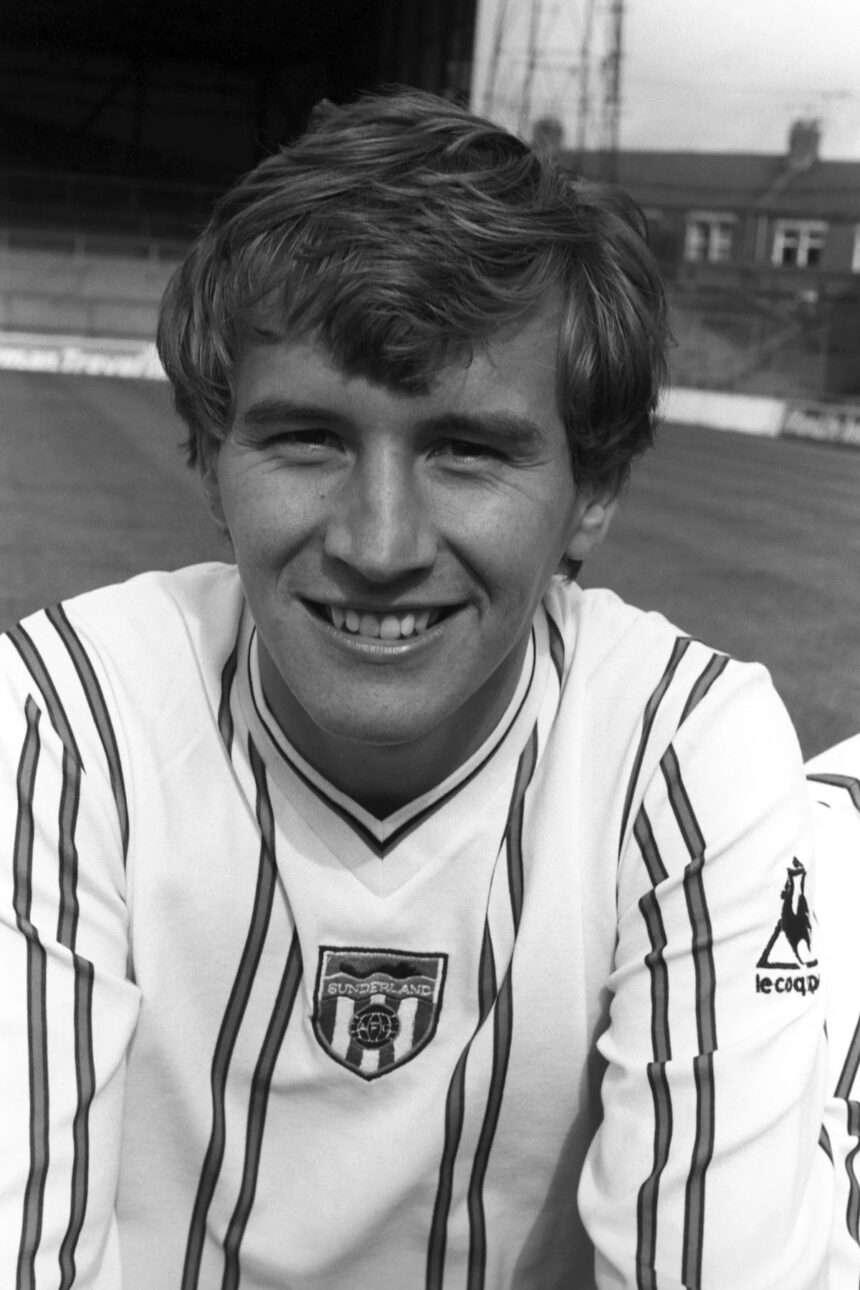
Gary Rowell, the homegrown forward from Seaham, delivered a striker’s clinic. His hat-trick wasn’t just about goals; it was about the exquisite pain it inflicted on the host supporters. Each finish was a calculated blow:
- A predatory instinct to be in the right place.
- A composure that sucked the noise from the vast terraces.
- A celebration in front of the Gallowgate End that is etched into Sunderland iconography.
The 4-1 scoreline flattered Newcastle. Sunderland, with Rowell as the talisman, were in devastating control. For us, trapped in the midst of swelling frustration and anger, each goal was an internal earthquake. The suppressed celebration became a physical ache—a need to erupt met with a survivalist’s restraint. Rowell wasn’t just scoring; he was making our dangerous masquerade exponentially more difficult with every ripple of the net.
The Agony and Ecstasy of a Silent Celebration
This is where the personal story intersects with the legendary one. The greatest moment for Sunderland was our moment of maximum peril. As the goals flew in, the mood around us curdled. The tactical genius of our plan began to unravel. Where we had hoped for a quiet, perhaps disappointing draw, we were now participants in a historic humiliation of our hosts.
Every clenched fist hidden in a pocket, every bitten tongue, every avoided eye contact was a testament to the power of the spectacle we were witnessing. We were living the ultimate football fan’s paradox: witnessing a legendary derby win while being utterly denied the communal catharsis. The final whistle brought not relief, but a new wave of anxiety. Escaping the ground, shuffling out with dejected Newcastle fans, required an Oscar-worthy performance of shared disappointment. The journey home was a silent, buzzing replay of Rowell’s goals, a secret joy that felt both illicit and profoundly powerful.
Legacy and Prediction: Why Rowell’s Day Still Resonates
So why does this specific game hold such power decades later? Expert analysis of derby matches often focuses on tactics and tables, but the true analysis is sociological. Rowell’s hat-trick did more than win three points. It established a permanent psychological landmark. For Sunderland, it is the benchmark for derby success. For Newcastle, it is a scar, a reminder of a past humiliation at the hands of a local boy.
The prediction for any future Sunderland-Newcastle clash is that this game will be referenced. It is the ghost in the machine. When a new hero emerges, they are measured against Rowell’s feat. The narrative isn’t just about winning; it’s about finding a player who can encapsulate the rivalry so completely. In the modern, globalized game, where derby days are still fierce but contexts have changed, the raw, tribal experience of 1979 seems almost ancient. Yet, its emotional truth—the desire to triumph in your rival’s backyard—is timeless.
Gary Rowell’s legacy is secure. He is not just a former player; he is a cultural touchstone. His name is shorthand for the ultimate fan fantasy. For those of us who were there, in whatever capacity, he also represents a shared secret, a story of youth, fear, and an unforgettable, silently-screamed joy.
Conclusion: More Than Just Three Goals
Remembering Gary Rowell’s hat-trick is about more than statistics. It is about the enduring power of football folklore. It connects generations: those who were there, those who have heard the tales, and those who will inherit them. It was a sporting moment that transcended sport, touching on themes of identity, risk, and tribal belonging.
Our reader’s personal story adds a priceless layer to the legend. It reminds us that football history is not just made by the players on the grass, but by the thousands of individual, heart-in-mouth experiences in the stands. The 1979 derby was Gary Rowell’s day, but in a small, terrifying, and exhilarating way, it was also ours. And that is why, over forty years later, the mere mention of his name brings a knowing smile and the vivid memory of a silent celebration heard louder than any roar.
Source: Based on news from Yahoo Sports.