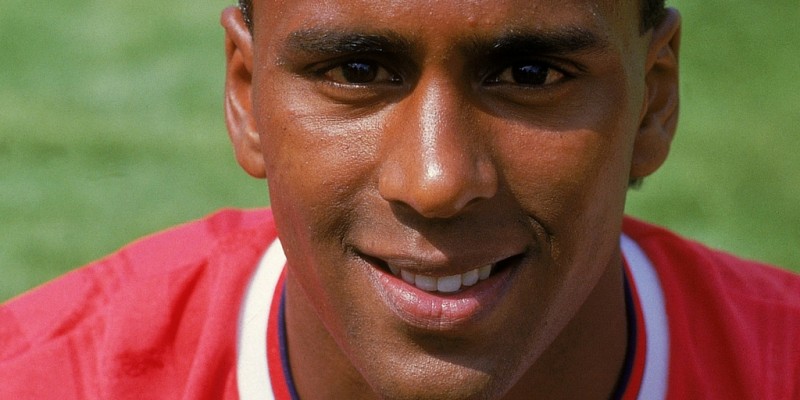
Remembering David Rocastle: The Heartbeat of Arsenal, 25 Years On
The photograph is faded now, the corners curled and fixed with yellowing Blu-Tack. But the memory is as vivid as ever. For a generation of Arsenal supporters, the first icon wasn’t a superstar bought for a record fee, but a homegrown boy with a dazzling smile and feet that danced to a rhythm only he could hear. Today, twenty-five years since we lost David Rocastle, the reverence for “Rocky” feels not like a relic of nostalgia, but a permanent, beating heart within the soul of Arsenal Football Club. His story is one of sublime talent, unbreakable spirit, and a legacy that transcends the cold calculus of statistics.
More Than a Number: The Irreplaceable Essence of Rocky
The bare facts of Rocastle’s Arsenal career are well-known: 228 appearances, 23 goals, a First Division title in 1989, and another in 1991. To the modern analyst, these numbers might seem modest. Robert Pires, a later inheritor of the famous number 7 shirt, would regularly match that goal tally in a single season. But to measure Rocky by numbers is to miss the point entirely. His value was immeasurable, etched not in spreadsheets but in the visceral reaction of the North Bank every time he received the ball.
Rocastle was the embodiment of a maverick winger with the heart of a warrior. He combined technical grace with formidable physicality. He could drop a shoulder, leave a full-back grasping at air, and deliver a pinpoint cross. Moments later, he would track back, execute a thunderous but fair tackle, and ignite a counter-attack. He played with a palpable joy, a cheeky grin never far from his lips, even in the heat of a derby. In an era of hard men and direct football, Rocky was an artist, but one who refused to be bullied. He was, in every sense, complete footballer.
- Technical Brilliance: Dribbling, close control, and vision that could unlock the tightest defence.
- Physical Power: Surprisingly strong, with a fierce competitiveness in duels.
- Tactical Intelligence: Adapted from a winger to a central midfielder under George Graham’s disciplined system.
- Emotional Connection: Played with a visible passion that forged an unbreakable bond with fans.
The 1989 Title: Rocastle’s Defining Symphony
To understand Rocastle’s iconic status, one must journey back to that immortal night at Anfield in 1989. With Arsenal needing to win by two clear goals to snatch the title from Liverpool, the pressure was astronomical. While Michael Thomas’s last-gasp goal is rightly legendary, the foundation for that historic moment was built on the relentless drive of players like Rocastle.
In that cauldron, Rocky was immense. Driving from midfield, carrying the ball with purpose, and refusing to let the occasion overwhelm him, he was the team’s creative catalyst and emotional leader. His performance encapsulated everything he was about: skill, courage, and an unwavering belief. He didn’t score that night, but his fingerprints were all over the triumph. It was the pinnacle of a team built in Arsenal’s image—resilient, talented, and together—and Rocastle was its most thrilling symbol.
A Legacy Beyond Tragedy: Why the Reverence Endures
It is a painful truth that Rocastle’s passing at the cruelly young age of 33 cemented his legend. The shock and grief felt by the football world were profound. Yet, to attribute his enduring reverence solely to tragedy is to do a disservice to his life and his art. The sadness amplifies the memory, but it does not create it. The love was already there, built over years of breathtaking performances.
Rocky represents a pure connection between club, community, and player. He was one of us. A Londoner who rose through the ranks, he understood what the badge meant. In today’s globalized football economy, that pathway and that deep-seated identification have become rarer, making his story even more precious. He also represents a specific, glorious era for Arsenal—the dawn of the George Graham success, a time of organic growth and fierce local pride.
Furthermore, his style of play is eternally romantic. In an age of pressing systems and data-driven roles, the maverick winger who plays by instinct is a dying breed. Rocastle’s game was about expression, surprise, and individual brilliance within a collective framework. Fans will always cherish that.
Rocky’s Spirit in the Modern Game
As we look at the current Arsenal, moulded by Mikel Arteta into a dynamic, pressing unit, can we see echoes of David Rocastle? The direct comparison is challenging, as the game has evolved dramatically. However, the spiritual attributes he embodied are precisely what Arteta seeks.
Imagine Rocastle in today’s setup. His blend of technical skill and physical robustness makes him a perfect fit for a modern, high-intensity attacking midfielder or inverted winger. His work ethic was never in doubt. Players like Bukayo Saka, with his humility, directness, and creative fearlessness, or the relentless energy of Gabriel Martinelli, carry a similar spirit of joyful commitment. They play for the shirt with a passion that Rocastle would recognize and applaud.
The challenge for Arsenal, and indeed for football, is to ensure that the values Rocky embodied—loyalty, passion, creativity, and connection—are not lost in the commercial machine. Honouring his memory is about more than a mural or a minute’s applause; it’s about fostering an environment where homegrown talent can flourish and play with the same fearless heart.
Conclusion: An Eternal Flame at Highbury and Beyond
Twenty-five years on, David Rocastle remains unforgotten. He is not a historical footnote, but a constant presence. His name is sung on the winds that swirl around the Emirates. His smile beams down from murals in Islington. For those who saw him play, he is a cherished memory of footballing joy. For those who discovered him later, he is a legend who defines what it means to be “Arsenal.”
The illustration from a childhood poster, the grainy footage of a mazy run, the stories passed down from father to son—these are the threads that keep his legacy alive. Rocky’s story is one of breathtaking peaks and profound loss, but above all, it is a story of love. Love for the game, love for the club, and the enduring, reciprocal love from the fans who saw in him not just a footballer, but one of their own. The statistics will never tell his story. But the echoes of his name on the terraces, forever, will.
Source: Based on news from Yahoo Sports.