Supreme Court Showdown: ‘Save Women’s Sports’ Activists React to Landmark Trans Athlete Hearing
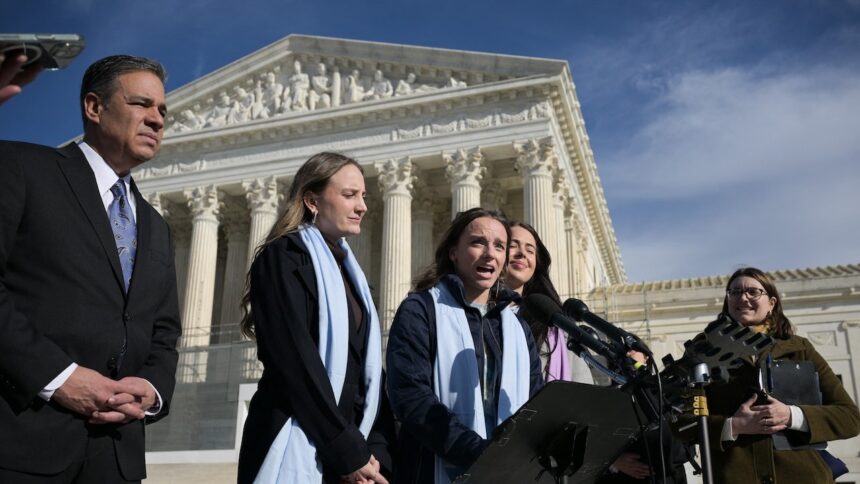
The hallowed halls of the United States Supreme Court became the latest arena in the nation’s culture wars on Tuesday, as the justices heard arguments in a landmark case that could determine the future of women’s sports. At the heart of the debate: state laws banning transgender athletes from competing on female sports teams. For the activists, legal teams, and female athletes who have championed the “Save Women’s Sports” movement, the hearing was a day of high stakes, measured optimism, and lingering frustration.
A Clash of Definitions: Biology vs. Identity in the Highest Court
The legal and philosophical divide was laid bare during oral arguments, centering on a fundamental question: How does the law define “sex”? John Bursch, an attorney for the Alliance Defending Freedom (ADF) representing the petitioners, argued forcefully for a biological definition. His position was a direct rebuttal to the argument presented by ACLU attorney Joshua Block, who contended that sex should not be rigidly defined by biology alone in the context of sports.
This core disagreement framed the entire hearing. “The ACLU’s attorney essentially argued that sex is not definable for purposes of sports,” Bursch told Fox News Digital following the arguments. “But Title IX and the 14th Amendment were built on the understanding that sex is a biological reality. To erase that is to erase the very reason for women’s sports categories.”
For the female athletes present, this was not an abstract legal theory. It was the bedrock of their cause. “They were talking about my body, my experience, and my opportunities,” said one collegiate runner affiliated with the case. “Hearing an attorney suggest that the biological differences that affect performance don’t matter felt like a dismissal of everything we’re fighting for.”
Confidence from the Bench: Reading the Justices’ Questions
Despite the tense exchange, a sense of cautious confidence emerged from the “Save Women’s Sports” legal team and its supporters. Their optimism stemmed not from a final ruling—which is expected by late June—but from the nature of the justices’ questions during the hearing.
Multiple conservative justices appeared skeptical of the argument that state bans are inherently discriminatory or unconstitutional. They probed the ACLU’s counsel on the states’ interest in maintaining fairness and safety in women’s athletics, a line of questioning that activists saw as favorable.
- Justice Samuel Alito questioned whether ignoring biological differences would effectively “destroy” women’s sports.
- Justice Brett Kavanaugh inquired about the legislative authority of states to address what they perceive as an emerging issue in athletics.
- Chief Justice John Roberts focused on the practical application of the law and the scope of its exemptions.
“The majority of the Court seemed to understand that this is about preserving equal opportunity, not denying it,” Bursch analyzed. “The questions indicated a recognition that when you ignore biology, women and girls bear the cost.” This sentiment was echoed by activists rallying outside the court, who interpreted the justices’ engagement as a sign that the legal defense of women’s sports as a separate category was gaining critical traction at the highest level.
Voices from the Front Lines: Athletes Express Unfinished Business
While the legal strategy may have found a receptive audience, a palpable undercurrent of dissatisfaction ran through the athletes and grassroots organizers. For them, the hearing, focused on legal technicalities and constitutional interpretations, could not fully capture the visceral reality of their fight.
Several athletes expressed that the human impact—the lost scholarships, podium spots, and team roster positions—risked being overshadowed by dense legal doctrine. “We heard a lot about statutes and precedents, which are important,” said a former high school coach turned activist. “But I kept thinking about the specific girls in my state who trained their whole lives, only to be sidelined. That story needs to remain central.”
Furthermore, some activists were far from satisfied with the hearing’s conduct and scope. They argued that the media narrative and the ACLU’s framing often mischaracterizes their movement. “This is not about exclusion; it’s about protection,” one rally attendee emphasized. “We are protecting a category of competition created precisely because of physical differences. The hearing today danced around that simple athletic truth.”
Their reaction underscores a key dynamic: even a potential legal victory at the Supreme Court may not feel like a complete resolution for a movement driven by personal experience and a deep-seated belief in the integrity of female athletic competition.
The Road Ahead: Predictions and Lasting Implications
As the nation awaits the Court’s decision, legal experts and activists are parsing every word from the bench to predict the outcome. The prevailing prediction among court watchers is that the Supreme Court will side with the states and uphold the bans, likely by a 6-3 or 5-4 margin. Such a ruling would be a monumental victory for the “Save Women’s Sports” movement, providing a powerful federal judicial endorsement of state-level efforts.
However, the implications extend far beyond a single ruling:
- A National Standard: A ruling in favor of the bans would embolden more states to pass similar legislation and potentially strengthen existing laws against legal challenges.
- Title IX’s Future: The decision could trigger a significant re-examination of Title IX’s application, potentially cementing a biological definition of sex for athletic purposes across the country.
- Continued Polarization: Regardless of the outcome, the deep cultural and ideological divide on this issue ensures it will remain a flashpoint in schools, sports governing bodies, and political campaigns.
“This case was never just about sports,” concluded a legal analyst familiar with the arguments. “It’s about how our society defines equality, biology, and fairness in law. The Court’s ruling will set a precedent that ripples into classrooms, locker rooms, and future civil rights debates for decades.”
Conclusion: A Defining Moment for Fairness in Athletics
Tuesday’s Supreme Court hearing was more than a legal proceeding; it was a national referendum on the meaning of women’s sports. For the “Save Women’s Sports” activists, the day reinforced their core conviction that biology is not bigotry, and that equality sometimes requires separate categories to ensure meaningful competition. The cautious optimism from their legal team is tempered by the athletes’ raw insistence that their lived reality must inform the law.
The justices now hold the power to reshape the athletic landscape. Their upcoming decision will either validate a wave of state laws aimed at preserving a biological boundary in sports or strike them down as a form of discrimination, deferring to a more fluid definition of identity. One thing is certain: the final whistle in this legal battle will not silence the passionate debate over fairness, identity, and the future of female athletes in America.
Source: Based on news from Fox Sports.