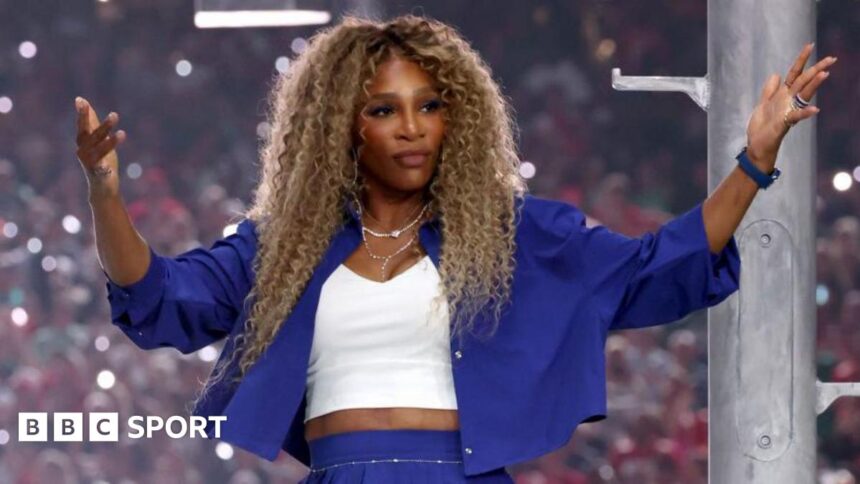
Serena Williams’ Enigmatic Return to Testing Pool Fuels Comeback Speculation
The world of tennis thought it had said its final, tearful goodbye to a legend on the floodlit stage of Arthur Ashe Stadium in 2022. Serena Williams, an athlete who transcended sport, seemed to have authored the perfect closing chapter to her unparalleled career with an emotional “evolution” away from the game. Yet, in a move that has sent shockwaves from the practice courts of Florida to the hallowed grounds of Wimbledon, the 44-year-old icon has deliberately left the door to a return cracked open, refusing to extinguish the flame of possibility and sending the tennis world into a frenzy of speculation.
The Paper Trail: From Retirement Filing to Testing Pool Return
The first concrete clue emerged not on a court, but from an administrative filing. In December, the International Tennis Integrity Agency (ITIA) confirmed a seismic piece of news to the BBC: Serena Williams was officially back on the registered list for the drug testing pool. This is not a casual decision; it’s a procedural necessity for any athlete intending to compete at the professional level. To be clear, inclusion does not mandate a return, but it is an absolute prerequisite for one. It signals intent, or at the very least, a desire to preserve the option.
This action directly contradicted her earlier, more definitive statements. Following the initial reports, Williams stated she was “not coming back.” However, the recent paper trail suggests a nuanced shift in her position. The narrative truly pivoted during a recent appearance on the Today Show. When asked directly about the potential for a comeback, Williams, with a knowing smile, declined to rule it out. This strategic ambiguity is classic Serena—controlled, powerful, and keeping everyone guessing.
- Key Fact: Serena has not played a competitive match since her third-round loss to Ajla Tomljanovic at the 2022 US Open.
- Key Fact: Her return to the ITIA registered testing pool is a mandatory step for any potential professional comeback.
- Key Fact: Her public stance has evolved from “not coming back” to not ruling it out.
Decoding the Motives: Why Would Serena Consider a Return?
For an athlete with 23 Grand Slam singles titles, a Golden Slam, and nothing left to prove, the motivation for a return would be deeply personal and uniquely compelling. Experts point to several potential driving forces beyond the simple lure of competition.
First is the unfinished business of Margaret Court’s all-time record of 24 major singles titles. Serena’s quest for that elusive 24th became a central storyline in the latter part of her career. While she has consistently stated her happiness with her legacy, the competitor within may still feel the pull. Second, is the example of athletes like Tom Brady and Kim Clijsters, who have redefined the timeline of athletic prime and post-motherhood success. Serena, who has often spoken about the challenge of balancing motherhood with elite sport, may see a path to competing on her own, radically reshaped, terms.
Furthermore, the current landscape of women’s tennis, while fiercely competitive, lacks a single dominant hegemon. The sight of new champions rising may have reignited a spark. Could the ultimate challenge for the greatest of all time be to return and test her game against a new generation, not to reclaim a throne, but to simply see if she can? The motivation would be pure sport, stripped of the weight of legacy—a potentially liberating concept.
The Realistic Pathway: What Would a Williams Comeback Look Like?
Let’s be unequivocal: a full-scale return to the WTA Tour grind is highly improbable. The weeks of travel, the daily physical toll, and the commitment required are likely at odds with her life as a venture capitalist, designer, and mother. However, a targeted, limited schedule comeback built around the sport’s biggest stages is a narrative that fits.
Wimbledon and the US Open stand as the most likely targets. The grass of the All England Club, where she has won seven titles, is a surface that rewards power and skill over relentless movement. The hard courts of Flushing Meadows, the scene of her six US Open triumphs and her farewell, would offer a storybook symmetry. Imagine the scene: a wild card entry, a first-round match under the lights, and the entire tennis world watching to see if the magic remains.
The physical challenge cannot be understated. At 44, recovery is slower, and the power-hitting baseline game of today’s tour is relentless. Her training would need to be meticulously calibrated. Yet, Serena’s power and serve were peerless. If she could regain even 80% of her movement and match sharpness, her game alone could be disruptive. The larger question is the mental fortitude required to face potential early-round losses—a new experience for a player who spent decades expecting to win every time she stepped on court.
Expert Analysis: The Impact on Tennis and Legacy
From a sporting perspective, a Serena Williams comeback, even for one tournament, would be the story of the decade. It would instantly overshadow every other narrative in the sport. Ticket demand would shatter records, television ratings would skyrocket, and the buzz would introduce the game to a new generation. For the players, it would be a surreal mix of intimidation and inspiration—facing a living legend across the net.
Regarding her legacy, the risks are minimal. Serena Williams’ legacy is unassailable. A comeback that didn’t yield a title would not diminish her 23 majors or her impact. In fact, it could enhance it, showcasing a breathtaking love for the game and competitive fire that knows no age. It would be a powerful statement about an athlete’s right to define their own career arc, on their own timeline. She would be not just competing, but challenging the very notion of when an athlete’s story must end.
However, some analysts caution about the “final farewell” effect. The beauty of her 2022 US Open exit was its emotional resonance. A return that ends with a less storybook result could, for some, soften that perfect ending. Yet, Serena has never been one to conform to traditional scripts.
Conclusion: The Ball Is in Her Court
Serena Williams, the master strategist, has executed a perfect drop shot onto the court of public opinion. By filing the paperwork and refusing to shut the door, she has control of the narrative. The speculation itself is a testament to her enduring power. The tennis world is now on notice, watching her every move, analyzing every social media post from her training sessions.
Will she launch a targeted assault on Wimbledon one more time? Will she seek a final dance at the US Open? Or is this simply an athlete’s way of preserving choice, a symbolic step to keep a part of her identity alive? Only Serena knows. But by not ruling it out, she has already changed the conversation. She has reminded us that in the story of Serena Williams, the final word has never belonged to the critics, the odds, or the calendar. It has always belonged to her. And for now, that word is a tantalizing, electrifying, and perfectly ambiguous “maybe.”
Source: Based on news from BBC Sport.