Shocking Ban or Correct Call? The Ukraine Skeleton Slider’s Disqualification Explained
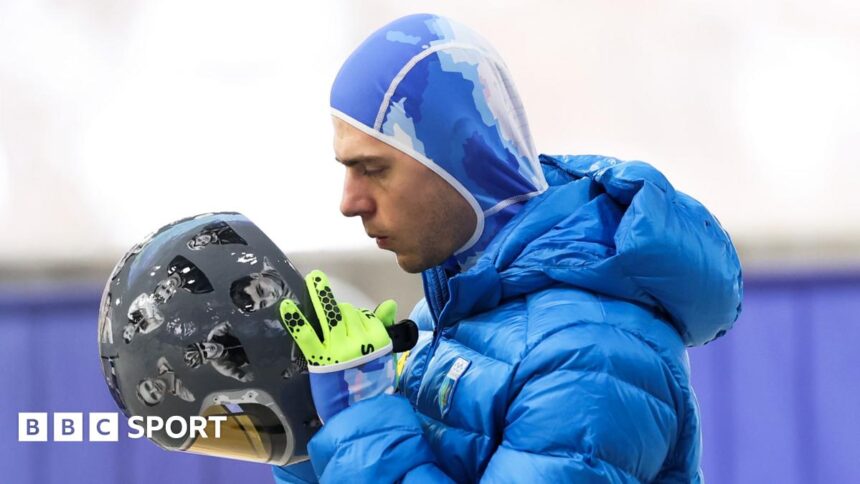
The crisp, alpine air of Cortina d’Ampezzo was thick with more than just winter chill this week. In a dramatic pre-competition showdown, the Milan-Cortina 2026 Winter Olympics faced its first major controversy as Ukrainian skeleton athlete Vladyslav Heraskevych was banned from competition. The reason? A helmet. Not just any helmet, but one emblazoned with a powerful, poignant tribute to Ukrainian athletes who have died during the ongoing Russian invasion. The International Olympic Committee’s (IOC) decision to disqualify the flagbearer for refusing to remove it has ignited a fierce global debate: was this a shocking overreach of bureaucratic power, or a correct, if painful, adherence to the foundational rules of the Games?
The Helmet That Spoke Volumes
Vladyslav Heraskevych is no stranger to using his platform for a message. At the Beijing 2022 Games, he famously held up a sign reading “No War in Ukraine” after his run. For Cortina 2026, his method was more personal, more permanent. The custom-designed helmet featured the faces and names of fallen Ukrainian sports figures—coaches, athletes, promising talents—whose lives were cut short by the war. For Heraskevych, this was not a political slogan, but a memorial, a piece of his nation’s heart carried onto the track.
He wore it during practice runs, a silent, rolling tribute. However, the IOC swiftly intervened. Citing Rule 50 of the Olympic Charter, which prohibits political, religious, or racial propaganda at Olympic sites, the governing body informed Heraskevych on Tuesday that the helmet was not permitted. What followed was a tense, two-day standoff. The athlete, backed by the Ukrainian Olympic Committee, stood firm. The IOC held its line. On Thursday morning, the ultimate sanction was delivered: disqualification.
Rule 50: Protection or Gag Order?
To understand the IOC’s position, one must dissect the often-controversial Rule 50. Its intent, as stated by the IOC, is to protect the neutrality of the Olympic field and ensure the focus remains on athletic achievement, not the conflicts of the outside world. The Games, the argument goes, are a rare sanctuary where geopolitics should be set aside.
However, critics argue the rule is applied with staggering inconsistency and a profound lack of moral clarity. They point to a history of permitted expressions:
- Historical Protests: The iconic Black Power salute of 1968, now celebrated, was a clear breach of the rules of its time.
- Geographic Displays: Athletes from Kosovo or Taiwan compete under banners that are inherently political.
- Symbolic Gear: Ukrainian and other athletes have previously worn black armbands or patches for “peace” without sanction.
This creates a murky landscape. Is a memorial for the dead “political propaganda,” or a universal human expression of grief and remembrance? The IOC’s judgment in this case drew a hard line, framing the helmet not as a somber tribute but as a violation of its core regulations. “The rules are clear and apply equally to all,” an IOC statement reiterated, emphasizing that exceptions would undermine the charter’s integrity.
Expert Analysis: A Fault Line in Modern Sport
Sports governance experts are divided. “The IOC is in an impossible position,” notes Dr. Elena Rossi, a professor of Olympic history. “If they allow Heraskevych’s helmet, they must then adjudicate every subsequent request—a Tibetan flag, a Palestinian symbol, a Uyghur memorial. Their fear is the Games devolving into a stage for global grievances, which is a legitimate operational concern.”
Yet, human rights advocates and communications specialists see a catastrophic misstep. “This isn’t propaganda; it’s testimony,” argues journalist and analyst Marko Tomic. “By banning a memorial to war victims, the IOC has made a value judgment that the abstract principle of neutrality is more important than the concrete reality of lives lost. They have, perhaps unintentionally, politicized the act of remembrance itself.” The decision risks portraying the IOC as tone-deaf and rigid, prioritizing protocol over a basic human response to a humanitarian crisis acknowledged by the UN and most member states.
Furthermore, the public relations impact is severe. The narrative is no longer about Heraskevych potentially breaking a rule, but about the IOC banning an athlete honoring his dead compatriots. In the court of public opinion, that is a losing battle.
Predictions: Ripple Effects for Milan-Cortina 2026 and Beyond
The disqualification of Vladyslav Heraskevych is not an isolated incident; it is a precedent that will cast a long shadow over the Milan-Cortina Games and the future of athlete expression.
- Increased Scrutiny: Every piece of equipment, every gesture by Ukrainian and other athletes from conflict zones will now be microscopically examined by officials and media alike.
- Silent Protests: Athletes may resort to more subtle, harder-to-regulate forms of protest—specific nail art, cryptic tattoos, or post-competition press conference statements that explode on social media.
- Charter Reform Pressure: This case will become a central exhibit in the growing movement, led by athlete commissions, to reform Rule 50. The demand will be for clearer, more humane guidelines that distinguish between hate speech or divisive propaganda and personal, dignified acts of commemoration or social justice.
- Legacy for Heraskevych: Ironically, Heraskevych’s impact may be far greater as a disqualified symbol than as a competitor. He has globalized the story of Ukraine’s lost athletes in a way a fourth-place finish might not have.
Conclusion: A Tragic Collision of Principle and Reality
So, was the ban shocking or correct? The answer depends entirely on one’s vantage point. From a strict, legalistic interpretation of the Olympic Charter, the IOC’s action was technically correct. Rules were known, warnings were given, consequences were applied uniformly.
Yet, in the broader context of human emotion, war, and the Olympic movement’s own stated values of “building a peaceful and better world,” the decision feels profoundly shocking and morally bankrupt. It highlights a fatal flaw in the modern Olympic framework: its desperate attempt to remain an “apolitical” island in an inherently political world. In seeking to silence a tribute to the dead, the IOC has amplified a message it wished to suppress and sparked a necessary, painful conversation about what the Games truly stand for in an age of conflict. The real tragedy is that the silence on the Cortina skeleton track now speaks louder than any helmet ever could.
Source: Based on news from BBC Sport.