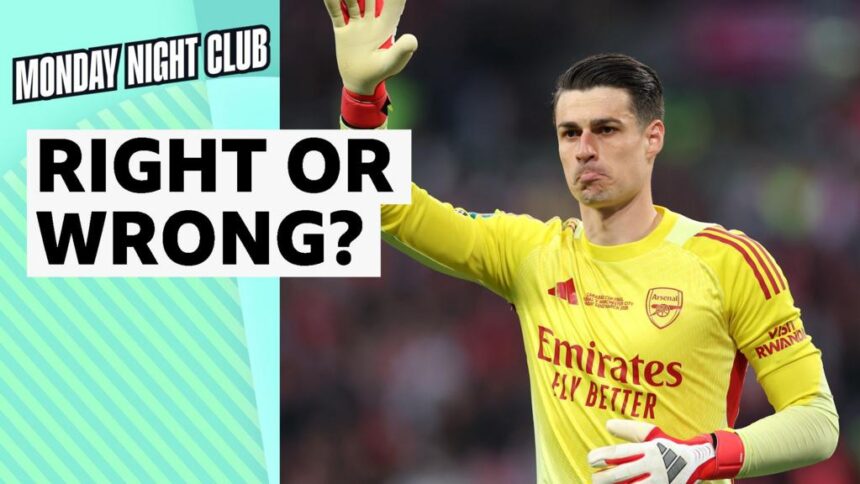
Arteta’s Goalkeeper Gamble: Did Raya Over Arrizabalaga Cost Arsenal the Cup?
The final whistle at Wembley signaled more than just Manchester City’s Carabao Cup triumph. It ignited a fierce, lingering debate that cuts to the very heart of modern football management: the selection dilemma. In Arsenal’s 1-0 defeat, manager Mikel Arteta’s decision to start Kepa Arrizabalaga over the on-loan David Raya became an immediate focal point for pundits and fans alike. Was it a justified nod to cup competition loyalty, or a critical tactical misstep that handed City the initiative? This is not merely a question of who stood between the posts, but a profound examination of philosophy, psychology, and the razor-thin margins that define elite sport.
The Case for Kepa: Logic, Loyalty, and Lingering Questions
On the surface, Arteta’s selection of Kepa Arrizabalaga followed a clear, established pattern. The Spaniard had been the designated goalkeeper for Arsenal’s entire Carabao Cup run, a common practice for managers aiming to balance squad morale with competition demands. To drop him at the final hurdle would have been a brutal psychological blow, potentially undermining a player whose confidence has been famously fragile in the past.
Furthermore, Kepa’s technical profile is not without merit. His shot-stopping reflexes on his line are often exceptional, and his distribution, particularly short passing, aligns with Arteta’s desire to build from the back. The argument for continuity was strong. Yet, this logic collided with the stark reality of the occasion and the opponent. This was not an early-round tie against lower-league opposition; this was a final against the most relentless pressing machine in world football, orchestrated by Pep Guardiola.
The lingering questions were undeniable. Throughout his career, Kepa has been scrutinized for a perceived lack of commanding presence in the penalty area and a susceptibility in aerial duels—precisely the areas where City applies immense pressure. His tendency to stay rooted to his line on crosses creates uncertainty for his own defenders and opportunity for opponents. In a game where one set-piece could decide everything, this was a glaring, pre-match vulnerability.
The Raya Rationale: A Tactical Profile Built for the Pressure Cooker
Contrast Kepa’s profile with that of David Raya. While also an able shot-stopper, Raya’s primary strengths are the attributes many believe Kepa lacks. He is, fundamentally, a sweeper-keeper and aerial dominator. His advanced starting position and willingness to claim crosses relieve pressure on his defense and disrupt opposition plans. Against a City side that pins teams back and floods the box with deliveries, Raya’s proactive style could have been a vital pressure valve.
Beyond aerial command, Raya’s distribution is more varied and ambitious. He possesses the capability to break lines with long, raking passes, a weapon that could have transitioned Arsenal from defense to attack in an instant, potentially bypassing City’s midfield press. This was not just about stopping goals; it was about initiating attacking sequences and providing a different, perhaps more effective, tactical pathway against a specific foe.
Arteta’s own history is telling. His pursuit and eventual signing of Raya was a deliberate move to evolve his team’s style. By choosing Kepa in the final, he arguably stepped back from his own strategic evolution at the moment it was most needed. The decision felt like choosing the safe, sentimental option over the bold, tactical one.
The Wembley Reality: Where Theory Met the Pitch
The match itself played out like a case study supporting the pro-Raya argument. While Kepa was not directly at fault for City’s goal—a well-worked move finished by Aymeric Laporte—the patterns of play were revealing.
- City’s sustained pressure in Arsenal’s final third was constant.
- Crosses and set-pieces were a primary weapon, with Arsenal’s box under frequent aerial assault.
- The need for a goalkeeper to relieve pressure through assertive collection or quick distribution was paramount.
Kepa did not make a glaring error, but his performance was passive. He was a reactor, not an instigator. In a game of such fine margins, the absence of a proactive, calming, and commanding presence in Arsenal’s goal was palpable. The psychological impact on the back four, knowing their goalkeeper would likely stay on his line, cannot be underestimated. It breeds hesitation and invites further pressure, exactly what City feasts upon.
This is where the debate on shows like the Monday Night Club gains traction. As pundits like Rory Smith and Chris Sutton dissected the choice, the core of their argument often centered on this: did Arteta pick the goalkeeper best suited to win this specific game, or did he prioritize a broader, more abstract principle of squad management?
The Aftermath and Arteta’s Unenviable Legacy Choice
The fallout from this decision extends far beyond a single piece of silverware. It has thrown Arsenal’s entire goalkeeping hierarchy into sharp relief and poses a significant challenge to Arteta’s man-management.
Kepa’s confidence, having been entrusted with the final and lost, is now in a curious place. Does he retain his cup role? Raya, presumably signed to be the long-term number one, has now seen his manager bypass him for the season’s biggest game to date. The message is mixed at best.
Looking forward, Arteta faces a defining choice. He must now unequivocally decide his philosophical direction:
- Commit to the Raya model: Embrace the proactive, sweeping style as the non-negotiable future, even if it means bruising egos and accepting short-term turbulence.
- Retreat to the known quantity: Stick with Kepa based on experience and seniority, potentially capping the tactical ceiling of his team.
This is more than a selection headache; it is a legacy-defining crossroads. The most successful modern managers—Guardiola, Klopp, Arteta’s own mentor—are defined by their unwavering commitment to a system. They select players who are functional cogs in that machine, not based on sentiment.
Verdict: A Decision That Defined the Defeat
In the cold light of day, the evidence is compelling. While Kepa Arrizabalaga did not lose the cup final with a howler, Mikel Arteta’s decision to start him over David Raya was a significant, pre-match tactical concession. It was a choice that addressed squad harmony but overlooked the specific, brutal demands of facing Manchester City. In opting for a reactive goalkeeper against the most proactive team in the land, Arteta inadvertently handed City an advantage before a ball was even kicked.
The true cost was not in a single mistake, but in the cumulative, silent erosion of confidence at the back and the forfeiture of a potential tactical weapon in build-up play. In a match decided by the finest of margins, such a calculated gamble backfired. For a manager whose entire project is built on meticulous detail and progressive ideology, this felt like an uncharacteristic and costly step back into convention. The Carabao Cup may be gone, but the lesson from Wembley must be etched into Arteta’s blueprint: in the biggest moments, philosophy cannot be sacrificed on the altar of precedent.
Source: Based on news from BBC Sport.