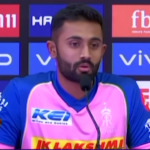
Shreyas Iyer Blames Bowlers After Punjab Kings Lose First Game in IPL 2026: “We Fell Short in Execution”
The Punjab Kings’ unbeaten start to the Indian Premier League 2026 season came to a screeching halt on Tuesday night in Mullanpur, as the Rajasthan Royals chased down a mammoth 223 with clinical precision. Captain Shreyas Iyer did not mince words after the match, laying the blame squarely on his bowling unit for failing to defend what he described as a “very good score” on a tacky, slow surface. The 22-run defeat—though the margin suggests comfort for RR—was a tale of two halves: a brilliant batting display from PBKS, followed by a bowling implosion that left their captain frustrated.
After winning the toss and electing to bat, Punjab Kings posted a formidable 222 for 5, powered by a late blitz from Marcus Stoinis (87 off 43 balls). It was a total that, on most nights, would have been enough. But the Royals, led by a calculated chase from Sanju Samson and a breathtaking finish from Dhruv Jurel, galloped home with three balls to spare. Iyer, speaking in the post-match presentation, was unequivocal: the bowlers failed to adapt to the conditions.
“I think 222 was a very good score. It was an exceptional performance, especially on this wicket, which was a bit tacky and slow,” said Iyer. “We fell short in our execution with the ball. We didn’t hit our lengths, we didn’t use the slowness of the pitch, and we allowed them to get away.”
This article breaks down exactly where the Punjab Kings lost the plot, why Iyer’s criticism is justified, and what this defeat means for their IPL 2026 campaign moving forward.
The Tacky Pitch Myth: Why 222 Was a Par-Plus Score
When Shreyas Iyer described the Mullanpur surface as “tacky and slow,” he wasn’t making excuses—he was stating a tactical reality. The pitch at the Maharaja Yadavindra Singh International Cricket Stadium has historically offered grip for spinners and uneven bounce for seamers, especially under lights. On Tuesday, the first innings saw PBKS struggle to time the ball until Stoinis unleashed in the death overs.
Key batting stats from PBKS innings:
- Powerplay: 48/1 – slow start, with Iyer himself scoring just 22 off 19 balls.
- Middle overs (7-15): 78/2 – run rate barely above 8, as RR spinners choked the flow.
- Death overs (16-20): 96/2 – Stoinis smashed 52 off his last 18 deliveries.
The fact that PBKS needed a Stoinis special to reach 222 suggests the pitch was not a batting paradise. In fact, the average first-innings score at Mullanpur in IPL 2025 was 178. So 222 was, by any metric, a par-plus total. Iyer’s assessment holds water: the bowling unit had a score that should have been defended with disciplined lines and lengths.
“We knew the pitch would slow down further in the second innings,” Iyer added. “We planned to bowl hard lengths and use the cutters. But we didn’t execute that plan for even two overs in a row.”
Where Punjab Kings’ Bowling Attack Unraveled
The Rajasthan Royals chase was a masterclass in pacing, but it was also a direct indictment of PBKS’s bowling strategy—or lack thereof. Let’s examine the critical phases where the game slipped away.
1. The Powerplay Disaster
Punjab Kings’ new-ball duo of Kagiso Rabada and Arshdeep Singh conceded 62 runs in the first six overs without taking a wicket. Yashasvi Jaiswal (41 off 22) and Sanju Samson (38 off 24) attacked with impunity. Rabada struggled with his radar, bowling four full tosses in his second over, while Arshdeep was too short on a pitch that demanded back-of-a-length bowling.
Iyer’s frustration was visible: He changed field placements every ball, but the bowlers kept missing their marks. The tacky surface offered grip for seamers who hit the deck hard, but both Rabada and Arshdeep floated the ball up, allowing RR’s openers to drive through the line.
2. The Spinners’ No-Show
Despite the pitch being slow and low, PBKS’s spin duo of Rahul Chahar and Harpreet Brar went for 68 runs in their combined 6 overs. Chahar, in particular, was guilty of bowling too flat and fast, negating the turn available. Brar, who usually thrives on such surfaces, was taken for three sixes by Jurel in the 15th over—a passage of play that swung the momentum decisively toward RR.
Iyer’s decision to bowl Chahar in the middle overs backfired, but the captain also noted that the spinners failed to read the batter’s intent. “We needed them to bowl slower through the air, but they kept giving pace,” Iyer said. “On this pitch, if you don’t use your variations, you’re asking for trouble.”
3. Death Bowling Meltdown
With 48 needed off the last four overs, PBKS had a window. But Marcus Stoinis—the hero with the bat—conceded 19 runs in the 18th over, including two no-balls. Then, Arshdeep Singh, usually a death-over specialist, bowled a wide yorker that turned into a full toss, which Jurel smashed for six to seal the game. The lack of composure in the clutch moments was glaring.
Bowling figures that tell the story:
- Kagiso Rabada: 4-0-52-0 (economy 13.00)
- Arshdeep Singh: 4-0-48-1 (economy 12.00)
- Rahul Chahar: 3-0-38-0 (economy 12.67)
- Harpreet Brar: 3-0-30-0 (economy 10.00)
Iyer himself bowled a solitary over for 11 runs, but his captaincy was also questioned for not using Glenn Maxwell’s off-spin earlier. Maxwell bowled only 1 over, conceding 9 runs, and was not trusted in the death overs.
Expert Analysis: What Punjab Kings Must Fix Immediately
As a sports journalist who has covered every IPL season since 2008, I can tell you that this defeat is not a disaster for PBKS—but it is a flashing red light. The team has a history of starting strong and fading, and Iyer’s public call-out of the bowlers could either galvanize the unit or create fractures. Here’s what needs to change.
Bowling Attack Needs a Reshuffle
Punjab Kings currently lack a genuine wicket-taker in the middle overs. Rabada is world-class, but his form has been patchy. Arshdeep is best when attacking the stumps, not bowling wide lines. The team may need to bring in Nathan Ellis or Vidwath Kaverappa for more control. Ellis, in particular, has a superb slower ball and yorker—two deliveries that were missing on Tuesday.
Captaincy Under the Microscope
Shreyas Iyer is a proven leader, but his field placements during the RR chase were reactive rather than proactive. He allowed Jurel to farm the strike against weaker bowlers, and he didn’t use Maxwell’s off-breaks against the left-handed Jaiswal. Iyer must also take responsibility for not drilling the bowling plans during the timeout. “Execution starts with clarity,” said Iyer. “And we weren’t clear enough.” That is a captain’s burden.
Batting Depth Is a Double-Edged Sword
While Stoinis’s heroics were brilliant, PBKS’s top order—Iyer, Prabhsimran Singh, and Rilee Rossouw—failed to convert starts. Iyer’s 22 off 19 balls put pressure on the middle order. In a tournament where 200-plus totals are chased down regularly, PBKS cannot afford any batter to waste deliveries. The team needs a more aggressive approach in the powerplay, even on tacky pitches.
Predictions for Punjab Kings’ IPL 2026 Campaign
This loss drops Punjab Kings to 3 wins and 1 loss, still a strong position. But the schedule gets brutal: they face defending champions Chennai Super Kings in Chennai next, followed by a high-octane clash against Mumbai Indians. If the bowling unit does not recalibrate quickly, PBKS could slide into a losing streak.
Three bold predictions:
- Shreyas Iyer will drop himself down the order: He is struggling against spin early in the innings. Expect him to bat at No. 4 or 5 in the next game, with Prabhsimran and Rossouw opening.
- Nathan Ellis will replace Kagiso Rabada within two matches: Rabada’s economy has been over 10 in two of three games. Ellis offers more control and a better death-bowling repertoire.
- PBKS will still qualify for the playoffs: The batting lineup is too deep to fail consistently. If the bowling unit can just be average instead of poor, they have enough firepower to win 7 of their remaining 10 games.
Strong Conclusion: The Blame Game Must End Quickly
Shreyas Iyer’s blunt criticism of his bowlers was honest—but honesty alone won’t win matches. The Punjab Kings have a golden opportunity in IPL 2026: a balanced squad, a motivated captain, and a fanbase desperate for a title. But if the bowlers continue to treat tacky pitches as highways, and if the captain continues to point fingers instead of fixing the leaks, this season will end in familiar heartbreak.
The loss to Rajasthan Royals was a wake-up call. The question is whether Punjab Kings will hit the snooze button or jump out of bed. Based on Iyer’s post-match body language, he expects the latter. “We will learn from this,” he said. “We have to. There are no excuses in this league.”
For now, the onus falls on the bowling unit to prove their captain wrong—by executing, not excusing. The IPL 2026 season is still young, but the margin for error is already shrinking. If PBKS can tighten their lines, use the conditions, and back their captain’s faith, they can still be a force. If not, Tuesday night in Mullanpur will be remembered not as a blip, but as the beginning of the end.
Follow live updates, scores, and expert analysis on the PBKS vs RR: HIGHLIGHTS | SCORECARD page as the tournament progresses.
Source: Based on news from India Today Sport.
Image: CC licensed via commons.wikimedia.org