Return of the Bear: Russian and Belarusian Flags to Fly at Paralympics Amidst Lingering Tension
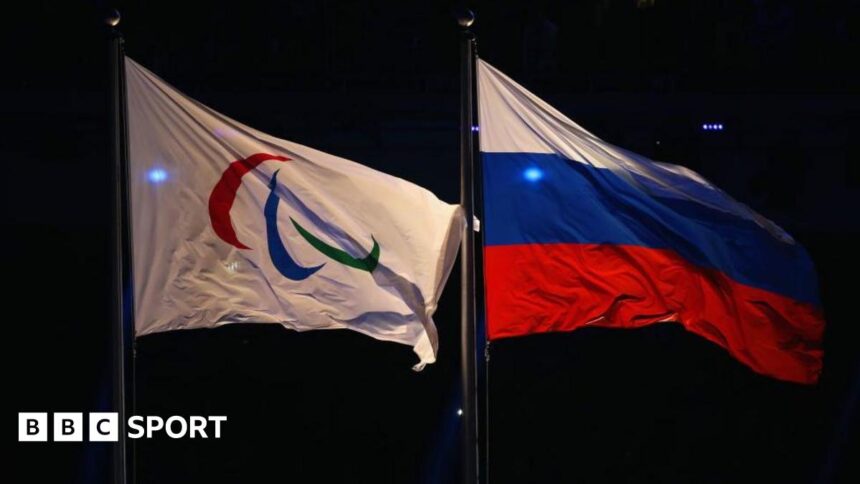
The Paralympic stage, a global arena built upon the pillars of resilience, inclusion, and the transcendent power of sport, is set for a politically charged return. For the first time since the 2014 Sochi Games, the Russian flag will be unfurled at a Paralympic event. In a decision that continues to reverberate through the world of international sport, the International Paralympic Committee (IPC) has cleared the way for six Russian and four Belarusian athletes to compete under their national flags at the upcoming Winter Paralympics. This move, reversing a blanket suspension enacted after Russia’s 2022 invasion of Ukraine, marks a seismic shift in the complex relationship between geopolitics and athletic competition, promising a Games overshadowed as much by symbolism as by sporting achievement.
A Timeline of Suspension and Reintegration
The path to this moment has been fraught with controversy and incremental change. The immediate aftermath of the 2022 invasion saw an unprecedented unified response from much of the sporting world. The IPC, alongside countless other federations, moved swiftly to suspend Russian and Belarusian athletes from competition. This was not merely a gesture; it was a concrete isolation intended to mirror diplomatic condemnations.
By 2023, a nuanced, and to many, contentious, compromise emerged: the neutral athlete status. Competitors from the two nations were permitted to return, but strictly as “Neutral Paralympic Athletes,” devoid of national symbols, anthems, or colors. Their presence was a shadow of national representation, a concession to the principle of athlete inclusion while maintaining a form of punitive sanction. The IPC’s September announcement to restore national status, therefore, did not come in a vacuum. It was the next step in a gradual normalization, argued by the IPC as a necessary alignment with its foundational principles, yet criticized by others as a premature concession to sporting superpowers.
- 2022: Full suspension of Russian and Belarusian Paralympic Committees after invasion of Ukraine.
- 2023: Introduction of strict neutral status for eligible athletes.
- September 2023: IPC lifts ban, allowing return under national flags pending sport-by-sport approval.
- 2024: Six Russian, four Belarusian athletes cleared for flag representation at Winter Paralympics.
The Fractured Landscape of International Sport Governance
Perhaps the most telling aspect of this saga is the stark division it has revealed within the architecture of global sport. The IPC’s overarching policy shift met immediate and significant resistance at the federation level. The individual governing bodies for the six Paralympic winter sports—World Para Alpine Skiing, World Para Nordic Skiing, World Para Biathlon, and World Para Snowboard—collectively decided to keep their own bans in place. This created a regulatory patchwork where the IPC said “yes,” but the specific sport authorities said “no.”
The consequence? While ten athletes will march under their flags, they will do so in a severely limited competitive field. They are eligible only for events where medals are not at stake, such as open ceremonies or specific exhibition-style competitions, or in events with exceptionally small fields. They are barred from world championship events and the awarding of medals in most standard races. This schism highlights a critical tension: the IPC’s role as a broad governing body versus the autonomy of specialized federations. The federations’ stance sends a powerful message that, for them, the conditions for full reintegration have not been met, maintaining a form of sporting sanction even as the door is cracked open.
Expert Analysis: Principle, Politics, and Precedent
“This is a classic, almost impossible, dilemma for the Paralympic movement,” notes Dr. Anya Petrova, a sports sociologist specializing in geopolitics. “On one hand, the IPC is bound by its own charter to promote non-discrimination and the right of all eligible athletes to compete. A prolonged, blanket ban becomes harder to justify legally and philosophically over time. On the other, sport is never truly separate from society. Reinstating national symbols is perceived, especially by Ukrainian athletes and many Western nations, as a form of legitimization.”
The expert analysis points to several key factors driving the IPC’s decision. The looming 2024 Paris Olympics, where Russian and Belarusian athletes will compete as neutrals, created pressure for parallel handling. Furthermore, the IPC likely sought to avoid lengthy legal battles at the Court of Arbitration for Sport (CAS). However, the federations’ rebellion underscores a different priority: maintaining the integrity of their sport’s world championships and protecting the athlete experience for competitors from nations opposing the war.
The impact on Ukrainian athletes cannot be overstated. Competing on the same field, let alone a podium, with athletes representing the flag of a nation invading their homeland presents an profound emotional and ethical burden. It transforms the Paralympic village from a sanctuary into a potential arena of silent protest and immense psychological strain.
Predictions for the Games and Beyond
The upcoming Winter Paralympics will be a litmus test for this new, fractured model of participation. We can anticipate several clear outcomes:
- Heightened Media Scrutiny: Every appearance of a Russian or Belarusian athlete in uniform will be a major story, potentially diverting attention from the sporting achievements of other nations.
- Symbolic Protests: Subtle or overt gestures from athletes—turning backs during introductions, wearing symbolic pins or colors—are likely, particularly from Ukrainian and allied competitors.
- Political Repercussions: Several National Paralympic Committees may issue statements of condemnation, and there is a risk of diplomatic incidents surrounding the events where these athletes compete.
- A New Normal? This “partial flag” model may become the uneasy compromise for the foreseeable future in Paralympic sport, a permanent halfway house between full exclusion and full inclusion.
The long-term precedent is murky. Does this set a template for reintegrating nations facing international sanctions through sport? Or does it demonstrate the ultimate inability of sports bodies to maintain a unified front against geopolitical aggression? The federations’ resistance shows that the IPC’s authority is not absolute, suggesting future conflicts may be decided sport-by-sport, creating an inconsistent and politically charged landscape.
Conclusion: A Victory Hollowed by Conflict
The return of the Russian and Belarusian flags to the Paralympic stage is a chapter in an ongoing story, not its conclusion. For the ten athletes involved, it may feel like a hard-won victory for their identity and years of sacrifice. Yet, their participation will be hollowed by the circumstances—competing in a constrained format, under the weight of global controversy, and likely facing a cool reception from many peers.
Ultimately, the IPC’s decision reflects the agonizing struggle to balance its humanitarian ideals with the grim realities of world politics. The lingering tension within the sporting bodies themselves proves that the wounds of the invasion remain fresh. These Paralympics will not be remembered for the six Russian athletes who competed under their flag, but for the profound and unresolved question their presence poses: Can the power of sport truly be a unifying force when the world outside the arena is so bitterly divided? The flags will fly, but the silence that may greet them will speak volumes.
Source: Based on news from BBC Sport.