Struggling Frank Trapped in a Gilded Cage at Joyless Tottenham
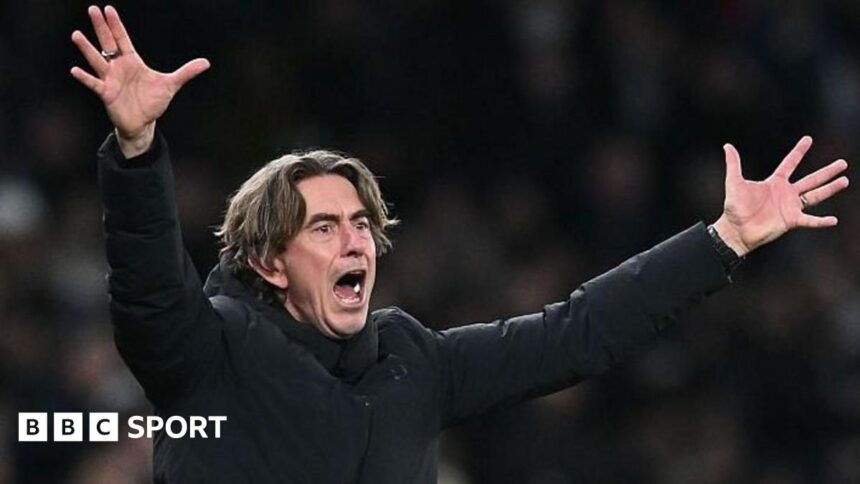
The final whistle at the magnificent Tottenham Hotspur Stadium did not signal the end of a contest, but the start of an inquest. As the sound of loud, lingering boos echoed around the 62,000-seat arena following a 1-1 home draw with Sunderland, it was a noise that spoke volumes. It was not a targeted fury at manager Thomas Frank, but a broader, more profound groan of discontent—a soundtrack of a club adrift in its own gilded cage. For Frank, the man in the technical area, the draw felt like another turn of the key, locking him deeper into a role that promises prestige but delivers purgatory.
The Illusion of Control and the Reality of Stagnation
For 45 minutes, the narrative seemed comfortingly familiar. Tottenham held sway, controlling possession and territory against a disciplined but limited Sunderland. The goal, when it came, was a rarity but a welcome one: defender Ben Davies, with only his eighth Premier League strike in 244 appearances, converting from close range. It was functional, effective, and utterly joyless. This was not the explosive, high-pressing football that defined Frank’s overachievement at Brentford, nor was it the free-flowing attacking spectacle Spurs fans have craved for years. It was simply transactional football, a chore to be completed.
This is the core of Frank’s imprisonment. The cage is gilded with world-class facilities, a massive budget, and global prestige. Yet, the constraints are palpable:
- A Squad of Misfitting Parts: Inheriting a lopided squad, Frank is trying to implement a cohesive system with players recruited for disparate philosophies.
- The Weight of Expectation vs. Reality: The demand is for Champions League football and trophies, but the project feels years away from that level of consistency.
- The Ghost of Styles Past: He is constantly measured against the fleeting highs of the Pochettino era and the pragmatic, trophy-winning approach of Conte, satisfying neither romantic nor realist factions of the support.
The second-half performance laid bare the fragility of the first. Spurs retreated, initiative was ceded, and the predictable fragility resurfaced. Sunderland, growing in belief, found a late, deserved equalizer. It was a script fans have read too many times: dominance without a killer instinct, control without conviction, a lead without security.
Functional Over Thrilling: A Philosophy at Odds with Identity
Thomas Frank earned his reputation as a shrewd tactician and a master of culture-building. At Brentford, he was the architect. At Tottenham, he feels like a tenant, unable to knock down walls and rebuild to his design. His attempts to instill organization and a clear structure are evident, but they have come at the cost of spontaneity and flair.
The team is functional rather than thrilling, a damning indictment for a club whose identity is historically tied to entertainment and attacking verve. The disconnect is visceral. Fans watch a team that seems to play with the handbrake on, fearful of mistakes rather than inspired by possibility. Key creative talents appear stifled, their instincts subdued by a cautious tactical framework. Frank is trying to build a stable foundation, but the supporters are staring at the soulless scaffolding and wondering where the spectacle went.
This creates an impossible tension. Every dropped point at home, especially to mid-table or lower opposition like Sunderland, is framed not as a bad day at the office but as proof of a failing project. The joyless experience at the stadium is no longer about results alone; it’s about the aesthetic poverty of the performance. The football is not providing an escape, it’s becoming a weekly reminder of stagnation.
The Unenviable Position: Managerial No-Man’s Land
Frank now occupies a perilous space in the Premier League’s managerial landscape. He is not new enough to be granted patience as a project-builder, nor is he experienced or successful enough at this level to command unconditional faith. He is in managerial no-man’s land.
The board, having pursued him diligently, is likely reluctant to pull the trigger so soon, fearing the optics of another failed appointment. Yet, their silence can feel like a vote of no confidence. The players, a group with varying levels of commitment and quality, are responding with professionalism but not with passion. The performances lack the intensity that suggests they are fully buying into the Frank doctrine. This leaves the manager exposed, trying to preach a long-term vision in a environment that demands short-term fixes.
Points dropped from winning positions have become a grim trademark, underscoring a mental and tactical softness he has yet to eradicate. Each instance tightens the bars of his cage. He cannot fully implement his ideology without time and trust, but he cannot earn that time without results that inspire joy—a commodity in desperately short supply in N17.
What Comes Next for Frank and Spurs?
The path forward is fraught. The January transfer window offers a potential lifeline, but it is also a pitfall. Frank will demand signings that fit his specific profile—likely hard-working, tactically intelligent players over pure galacticos. If the board fails to deliver, his position becomes untenable. If they deliver and results don’t improve, the blame lands squarely back on his coaching.
Prediction is a dangerous game, but the trajectory is clear. Thomas Frank is fighting a battle on two fronts: to win football matches, and to win over a disillusioned fanbase with a style of play. Currently, he is losing on both counts.
- Short-Term Prediction: The pressure will mount with every non-victory. The atmosphere will remain brittle, and rumors of available managers will swirl. Frank’s survival may depend on a spark—an unexpected win against a top rival or a brief, thrilling run of form.
- Long-Term Outlook: Without a dramatic and swift change in both results and performance aesthetics, the conclusion seems inevitable. The gilded cage will open, but only to release him. The project, billed as a new dawn, risks becoming another false start in the post-Pochettino era.
The tragedy for Thomas Frank is that his qualities are undeniable. He is a fine coach. But at Tottenham Hotspur, a club where the emotional currency is as important as the points total, being a fine coach is not enough. You must be a shaman, an alchemist who can transform gold-plated pressure into golden moments. Right now, trapped in the grandeur of his surroundings, Frank looks less like an alchemist and more like a man slowly being buried by the very riches he was supposed to wield.
Source: Based on news from BBC Sport.