Tudor’s Fury at ‘Home Referee’ Ignites Spurs’ Relegation Firestorm
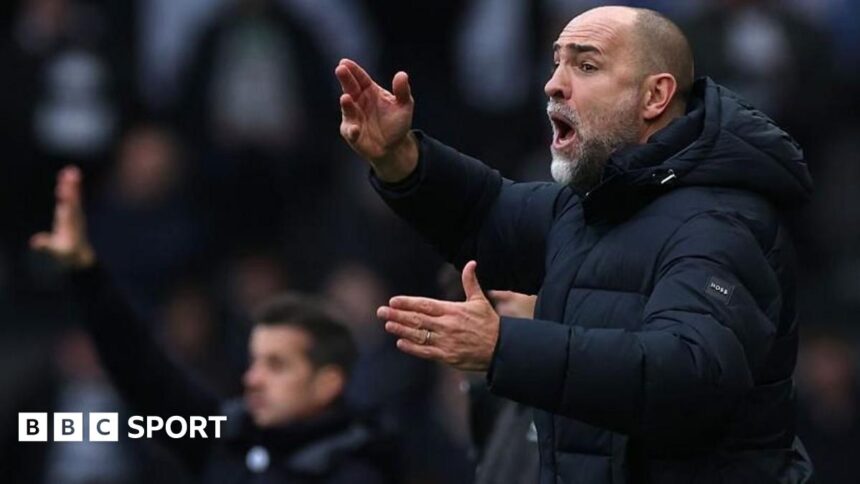
The air at Craven Cottage crackled with more than just the spring chill. It was thick with the palpable fury of Igor Tudor, a man watching not just a match slip away, but perhaps an entire season. Tottenham Hotspur’s 2-1 defeat to Fulham wasn’t merely a setback; it was a crisis magnified by a volcanic post-match outburst that laid bare the desperation and perceived injustice engulfing North London. In a blistering indictment of the officiating, Tottenham’s interim manager didn’t just question a decision—he declared war on the referee’s competence and integrity, plunging Spurs deeper into a “big emergency.”
A Push, A Goal, and a Manager’s Meltdown
The flashpoint arrived in the 42nd minute. As Fulham’s Harry Wilson prepared to shoot, a tangle in the box between Raul Jimenez and Spurs defender Radu Dragusin went unpunished. Wilson scored. Play continued. For Tudor, this was not a moment of defensive frailty but an act of grand larceny, enabled by the man in black.
“He was a home team referee,” Tudor seethed post-match, his words dripping with contempt. “He doesn’t understand football.” The Croatian’s accusation was twofold: bias and incompetence. He didn’t stop there. He singled out Fulham’s Raul Jimenez, accusing the striker of “cheating” by deliberately pushing Dragusin to create the space for Wilson’s decisive strike. This wasn’t gamesmanship or tactical fouls; in Tudor’s eyes, it was fraud, and the referee was a willing accomplice.
The fallout from this moment is multifaceted. It exposes the raw nerve of a club in freefall, the immense pressure on an interim boss, and the age-old debate about the Premier League’s officiating standards. For Spurs fans, it was a familiar feeling of injustice. For neutrals, it was a spectacular glimpse into a pressure cooker at bursting point.
Expert Analysis: More Than Just a Bad Call?
While Tudor’s rage is understandable from an emotional standpoint, a cooler analysis reveals a more complex and troubling picture for Tottenham. Focusing solely on the referee, however contentious the call, risks obscuring the deeper systemic issues plaguing the squad.
Tactical Fragility and Identity Loss: Under multiple managers this season, Spurs have been a paradox: sporadically brilliant but chronically fragile. The team lacks a defined defensive structure. The midfield, once a powerhouse, is often bypassed, leaving a vulnerable backline exposed. Tudor, known for his disciplined, high-intensity approach, has struggled to imprint this philosophy mid-crisis. The goal at Fulham wasn’t an isolated error; it was a symptom of a team that loses concentration and physical duels at critical moments.
The Leadership Vacuum: Harry Kane’s departure left a void that extends far beyond goals. The team lacks a vocal, commanding presence on the pitch to settle nerves and dispute decisions *in the moment*. This leadership gap often leaves players looking lost and managers feeling isolated, fueling post-match explosions like Tudor’s.
The Psychological Weight: Tottenham are now squarely in a relegation battle—a sentence that would have been unthinkable in August. Every decision against them feels monumental, every defeat catastrophic. This “big emergency” mentality, as Tudor called it, breeds panic and erodes the clear thinking needed to grind out results.
Was it a foul by Jimenez? Many pundits agree there was a clear push. Should it have been given? By the strictest letter of the law, likely yes. But elite teams find a way to overcome these setbacks. Currently, Spurs do not.
The Road Ahead: Predictions for a Club in Crisis
Tudor’s explosive comments have set the tone for a tumultuous run-in. The implications are severe.
- FA Sanctions Incoming: Tudor’s comments were a direct, public attack on a referee’s impartiality and understanding of the game. A hefty fine and a touchline ban are almost certain. This leaves Spurs potentially without their manager on the sideline for crucial fixtures.
- Us-Against-The-World Mentality: Tudor will likely use this to galvanize his squad, painting them as victims of a system. This can be a powerful short-term motivator but is unsustainable. It risks breeding paranoia and distracting from the fundamental work needed on the training ground.
- Relegation Probability: The table makes for grim reading. Spurs are in the bottom three, with teams around them showing more fight. Their remaining fixtures are a gauntlet. The prediction is bleak: unless there is an immediate and dramatic turnaround in both mentality and performance, Tottenham Hotspur will be relegated.
- Summer Exodus: Relegation would trigger a fire sale of top talent. Even if they survive, the club’s reputation is tarnished. The project has failed spectacularly, and a long, painful rebuild awaits.
A Concluding Whistle on Trust and Turmoil
Igor Tudor’s fury was more than just a rant about a single decision. It was the explosive manifestation of a season’s worth of frustration, fear, and failure. By labeling the referee a “home team” official who “doesn’t understand football,” he crossed a line that will have consequences, but he also shouted what the Spurs faithful feel: a profound loss of trust.
Trust in the officials, yes, but more damningly, trust in the team’s ability to navigate its way out of danger. The “cheating” accusation against Jimenez is a sidebar to the main event: Tottenham are cheating themselves with substandard performances. The emergency is not fabricated; it is very real. The referee did not cause Spurs’ defensive disorganization or their lack of attacking cohesion. Those are homegrown problems.
As the storm of Tudor’s comments clears, the cold, hard reality remains. Tottenham’s fate is still in their own hands, but those hands have been letting them down all season. The fury of their manager is justified in emotion, but salvation will only come from cold, hard facts delivered on the pitch. The time for blaming others is over. The time for heroes, if any are left in this battered squad, is now.
Source: Based on news from BBC Sport.