Teenager Mayzee Davies Returns to Wales Squad as Olivia Clark Sidelined for Crucial World Cup Qualifiers
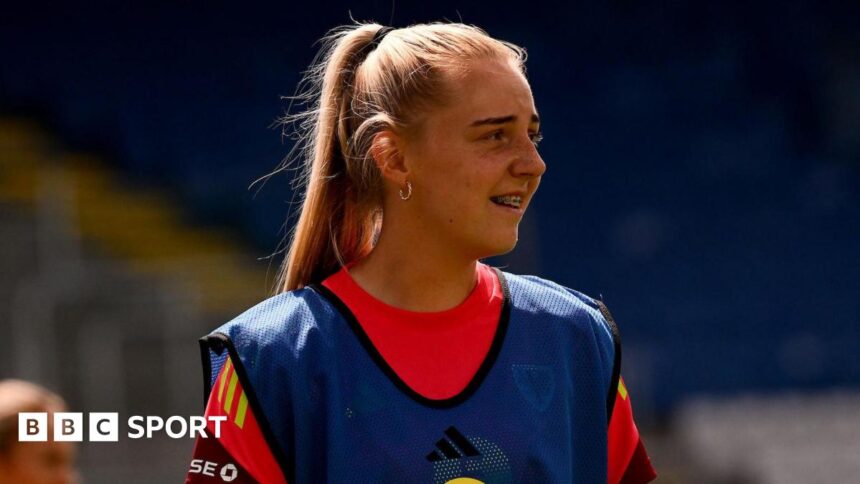
The road to the 2025 FIFA Women’s World Cup is paved with both comebacks and casualties. For the Wales national team, this month’s pivotal qualifying double-header against Albania is underscored by a poignant narrative of resilience and reshuffled resources. In a significant boost, Manchester City’s teenage defender Mayzee Davies has been recalled after an agonising 11-month absence, while the squad must absorb the notable absence of Leicester City’s reliable goalkeeper, Olivia Clark. The contrasting news from head coach Rhian Wilkinson’s camp sets a compelling stage for a critical fortnight in Wales’ footballing journey.
A Long-Awaited Return: Mayzee Davies’ Journey Back
For Mayzee Davies, the past year has been a testament to patience, pain, and perseverance. The 19-year-old’s last appearance in the famous red shirt ended cruelly on the training pitch, an anterior cruciate ligament (ACL) injury sustained while on international duty halting her promising trajectory. ACL injuries are a formidable adversary, often requiring a minimum of nine months of gruelling rehabilitation and casting a shadow of uncertainty over any player’s future, let alone a teenager’s.
Davies’ recall is not a sentimental gesture. It is earned. Her milestone moment came this week, featuring for Manchester City’s under-21 side against Brighton, a crucial step in proving her match fitness and competitive sharpness. Wilkinson, known for her developmental eye, has clearly seen enough to believe Davies can contribute. “Seeing Mayzee back on the pitch is a huge positive for us, not just as a player but for the spirit of the group,” a source close to the setup noted. “She’s fought an incredibly tough battle, and her character is as impressive as her talent.”
Her return bolsters Wales’ defensive options with a player whose pre-injury form had marked her as one of the nation’s most exciting young prospects. Her comfort on the ball, athleticism, and versatility across the back line offer Wilkinson valuable tactical flexibility.
Navigating the Goalkeeping Conundrum: Olivia Clark’s Absence
If Davies’ return is a boost, the confirmed absence of Olivia Clark is a undoubted blow. The Leicester City shot-stopper, a mainstay in recent campaigns, sustained an injury during Wales training last month and has not featured for her club since. Her consistent performances in the Women’s Super League and commanding presence have made her a key pillar of Wales’ defensive solidity.
Clark’s absence forces a reshuffle and presents a significant opportunity. The goalkeeping duties are now likely to fall into the capable hands of either:
- Laura O’Sullivan (Cardiff City Ladies): The experienced campaigner, with a wealth of caps, offering stability and know-how.
- Sophie Whitehouse (Watford): A talented keeper pushing hard for a starting role, known for her sharp reflexes.
- Alice Griffiths (Southampton): The younger option, representing the future of the position.
This situation tests Wales’ squad depth. While Clark’s shot-stopping and distribution will be missed, it is a chance for another to step up and cement their claim in a high-pressure qualifying environment. How this rejigged last line of defence communicates and performs will be a key subplot against Albania.
Tactical Implications and Squad Dynamics
Rhian Wilkinson’s selection decisions reveal a coach balancing immediate needs with long-term development. The inclusion of Davies, even if initially from the bench, signals a commitment to reintegrating a top talent at a crucial time. Wales’ defensive unit, potentially featuring the likes of Hayley Ladd, Rhiannon Roberts, and Lily Woodham, now has an injection of youthful energy and a different profile.
Conversely, the World Cup qualifying double-header format—with matches home and away in quick succession—makes Clark’s absence more pronounced. Managing player load and maintaining consistency across two games is challenging, and a settled goalkeeper is often the bedrock of such campaigns. Wilkinson will need to instill absolute confidence in her chosen number one, ensuring the defensive unit remains organised and impenetrable.
The matches against Albania are, on paper, must-win fixtures for Wales to keep pace with the group’s top seeds. Therefore, the squad must adapt quickly. Davies’ return could allow for a more progressive formation or provide essential cover, while the new goalkeeper will be tasked with launching attacks and providing a calm presence.
Expert Analysis: What This Means for Wales’ Qualifying Hopes
From a strategic perspective, the Davies-Clark news creates a nuanced scenario. “The psychological lift of having a player like Mayzee back cannot be overstated,” commented former Wales international turned analyst, Claire O’Connor. “She represents the vibrant future of this team. Her teammates will be thrilled for her, and that positive energy can translate onto the pitch.”
“However, losing Olivia Clark is substantial. Goalkeepers are orchestrators. Her understanding with her defenders is built over time. The key for Wilkinson will be to use the training camp to build that same rapport at speed. Albania will look to test any potential uncertainty early.”
The prediction here is one of cautious optimism. Wales, with the passionate home support behind them, should have too much quality for Albania across two games. The Davies narrative provides an inspiring backdrop, and the team has shown remarkable resilience under Wilkinson. The likely outcome is two hard-fought victories, but the defensive record—potentially now with a new goalkeeper—will be scrutinised more than ever. Clean sheets will be the benchmark for success in these fixtures.
Conclusion: A Story of Two Halves
As the Wales women’s national team assembles for its critical World Cup qualifiers, the squad embodies the dual realities of elite sport: the triumph of recovery and the frustration of injury. Mayzee Davies’ return from her ACL ordeal is a victory in itself, a young career back on track at the international level. Her presence enriches the squad’s talent pool and spirit.
Simultaneously, navigating the absence of Olivia Clark is the immediate challenge. It is a test of the squad’s depth and the next player’s readiness to seize their moment on the qualifying stage. For head coach Rhian Wilkinson, managing these parallel narratives—welcoming back one key talent while recalibrating due to the loss of another—defines this camp. The response will not only shape these two matches but will also reveal the character and adaptability of a team determined to write its own history and secure a coveted spot on the world’s biggest stage.
Source: Based on news from BBC Sport.