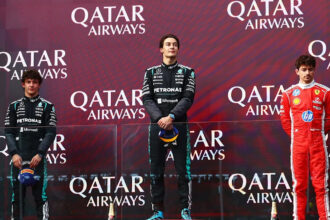
The F1 Show Verdict: Are Ferrari Already in Trouble After the Miami GP?
Formula 1’s travelling circus rolled into the glitz of Miami, and while the Ferraris looked fantastic under the Florida sunshine, the performance on track has left the Tifosi feeling blue. After a weekend that promised much but delivered little, the question on everyone’s lips is brutally simple: is Ferrari’s 2026 campaign already in trouble?
On the latest episode of The F1 Show podcast, veteran analyst Karun Chandhok and legendary commentator David Croft dissected a Miami Grand Prix that exposed the Scuderia’s deepest vulnerabilities. Their verdict? It’s not panic stations yet, but the warning lights are definitely flashing red. Let’s break down the key takeaways from their expert discussion and what it means for the most iconic team in the sport.
The Miami GP: A Weekend of Missed Opportunities
To understand the concern, we have to look at the raw data from the Miami International Autodrome. Coming off a promising showing in China, where Charles Leclerc and Carlos Sainz looked genuinely competitive, Ferrari arrived in Miami with a package of upgrades. Yet, the result was a stark regression.
- Qualifying Disappointment: Neither driver could break into the front row. Leclerc managed P3, but was a full half-second off the pace of Max Verstappen’s Red Bull.
- Race Day Struggles: The SF-24 showed alarming tyre degradation, particularly on the medium compound. Leclerc dropped back from the leaders, unable to hold off the charging McLarens and even the Mercedes of Lewis Hamilton.
- Strategic Errors: The team’s decision to box early for hard tyres backfired, leaving the drivers vulnerable in traffic and unable to mount a late charge.
As Karun Chandhok pointed out on the podcast, “The issue in Miami wasn’t just one thing. It was a compound problem. The car doesn’t have the peak grip of Red Bull, and it eats its rear tyres faster than McLaren. When you combine that with a sub-optimal strategy, you get a P3 and P4 that felt like a defeat.”
This isn’t just about a single bad race. This is about a trend. Ferrari started 2025 looking like the second-fastest team. By Miami, they looked like the fourth-fastest team. That trajectory is terrifying for a team that is supposed to be building momentum toward the massive regulation change in 2026.
Why 2026 Is the Real Concern (Not Just 2025)
The core of the F1 Show discussion centered on the 2026 power unit regulations. In 2026, the sport will introduce a radically new engine formula, shifting to a 50/50 split between internal combustion and electric power. This is Ferrari’s biggest opportunity and their greatest existential threat.
David Croft raised the alarm: “The worry for Ferrari isn’t that they’re losing to Red Bull in 2025. Everyone is losing to Red Bull. The worry is that they are losing the development race. The 2026 engine is frozen for years. If you get that wrong, you are in the wilderness for a decade.”
Here is why Miami specifically hints at deeper trouble for the 2026 project:
- Chassis vs. Engine Imbalance: The SF-24 is a high-downforce car that works well in slow corners but suffers on straights and under braking. The 2026 cars will be lighter but also have less drag. Ferrari’s current philosophy may not translate well.
- Power Unit Development: Rumors persist that Ferrari’s 2026 PU is struggling to match the peak horsepower of the Mercedes and Red Bull Powertrains. In Miami, Ferrari was losing time on the long straights, a worrying sign for a power-sensitive future.
- Resource Allocation: Every hour spent fixing the 2025 car’s tyre wear is an hour not spent on the 2026 chassis and engine integration. The team is caught in a classic F1 trap: fight for this year or sacrifice it for the future?
Chandhok added a sobering statistic: “Look at the engine modes. Ferrari has always been the benchmark for power. In Miami, they were getting outdragged by the Aston Martin with a Mercedes engine. That’s a red flag for the 2026 project.”
Expert Analysis: The Leadership Question
Beyond the car, the podcast zeroed in on the human element. Fred Vasseur took over as Team Principal in 2023 with a mandate to bring stability. But after an initial honeymoon period, cracks are appearing.
David Croft was direct: “Ferrari’s problem is structural. They have the drivers—Leclerc is a generational talent. They have the budget. But they lack a clear technical vision. When you listen to the engineers, they talk about ‘optimizing’ the car, not ‘dominating’ with it. That’s a loser’s vocabulary.”
The comparison to Red Bull is stark. While Christian Horner and Adrian Newey have a clear, ruthless direction, Ferrari seems to be hedging its bets. The decision to sign Lewis Hamilton for 2025 is a massive statement, but it also creates a strange dynamic. Hamilton is a 7-time champion, but he is joining a team that is currently on the back foot. Will his arrival galvanize the engineers, or will it create a power struggle with Leclerc?
Karun Chandhok offered a more nuanced view: “Hamilton’s arrival is a double-edged sword. It forces Ferrari to be perfect. You cannot give Lewis a car that eats tyres in 10 laps. He will demand answers. That pressure could either break the team or forge them into champions. Right now, based on Miami, I’m leaning toward ‘break.’”
The key takeaway from the podcast is that Ferrari’s trouble isn’t just about lap times. It’s about culture. In Miami, the pit wall looked hesitant. The driver radio messages were tense. That is the hallmark of a team that has lost its confidence.
What Ferrari Must Do to Save 2026
So, is Ferrari doomed? Not necessarily. The 2026 regulations are a reset button. But the reset only works if you have the right foundation. Based on the F1 Show analysis, here is Ferrari’s urgent to-do list:
- Stop the 2025 Bleeding: They cannot afford to let McLaren and Mercedes pull away. They need to fix the tyre degradation immediately. A demoralized team cannot build a championship car for 2026.
- Commit to a 2026 Philosophy Now: The technical team must decide if they are going for a high-downforce, low-drag, or balanced concept. Dithering is death. They need to pick a path and stick to it.
- Empower Fred Vasseur: The Frenchman needs full authority to make changes, even if it means firing underperforming engineers. The days of “Ferrari politics” must end.
- Use Hamilton’s Brain: Even before he drives the car, Lewis Hamilton’s feedback on simulation and development is invaluable. Ferrari must integrate him into the 2026 project immediately, not wait until 2025.
David Croft concluded the podcast segment with a stark warning: “Ferrari has the most passionate fanbase in the world. But passion doesn’t win championships. Engineering discipline does. If they don’t get their house in order by September, when the 2026 design is frozen, they will be playing catch-up for years. Miami was a warning shot. I hope they heard it.”
Conclusion: A Fork in the Road for the Scuderia
The Miami Grand Prix was not a disaster in the traditional sense. Ferrari still scored points. They still finished in the top five. But in the high-stakes world of Formula 1, stagnation is a crisis. The F1 Show podcast with Karun Chandhok and David Croft painted a picture of a team that is dangerously adrift.
Are Ferrari in trouble after Miami? The short answer is yes. Not because they lost to Red Bull, but because they are losing the war of ideas. The 2026 engine regulations represent the biggest technical shift in a generation. If Ferrari enters that era with a flawed chassis, an underpowered engine, and a confused leadership structure, the Tifosi will be in for a very long winter.
The next three races—Imola, Monaco, and Barcelona—will be the true test. If Ferrari brings another upgrade package and still struggles, the panic will be justified. For now, the warning lights are flashing. The question is whether the team in red has the will to fix the engine before the engine dies completely.
One thing is certain: The 2026 season cannot come soon enough for Ferrari. But if they don’t start getting it right right now, 2026 will look a lot like 2025: full of promise, but empty of trophies.
Source: Based on news from Sky Sports.
Image: CC licensed via www.hippopx.com