The Great Reversal: Unpacking the IOC’s Landmark Ban and the Future of Women’s Sport
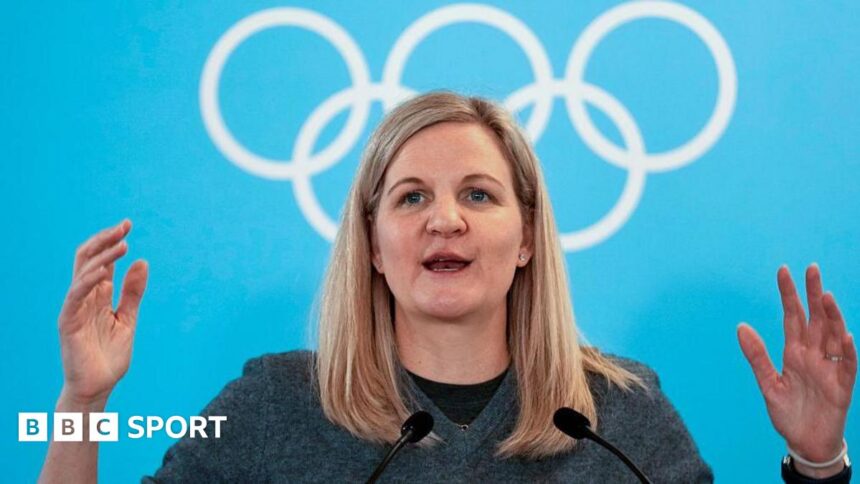
The landscape of elite athletics has been irrevocably shifted. In a decisive move that marks a stark departure from its previous stance, the International Olympic Committee, under the leadership of its newly elected President Kirsty Coventry, has instituted a sweeping ban. The policy prohibits transgender women, as well as athletes with Differences in Sex Development (DSD) who have experienced male puberty, from competing in the female category at the Olympic Games. This monumental decision, framed as a necessary step to protect fairness, safety and integrity, ends years of sport-by-sport ambiguity and ignites a fiery global debate. It raises profound questions about the very principles of inclusion, biology, and the future of women’s sport on the world’s biggest stage.
From Delegation to Decree: The IOC’s Pivotal About-Face
To understand the seismic nature of this decision, one must revisit the recent past. Just five years ago, the IOC’s position was one of deliberate non-intervention. In 2021, then-President Thomas Bach articulated a philosophy of decentralization, stating, “This is a question where there is no one-size-fits-all solution. It differs from sport to sport.” The subsequent Framework on Fairness, Inclusion and Non-Discrimination reinforced this, explicitly noting the IOC was “not in a position to issue regulations that define eligibility criteria for every sport.” The guiding principle was that athletes should not be presumed to have an automatic advantage.
President Kirsty Coventry’s announcement, coming just one year into her tenure, represents a 180-degree turn. The shift from a delegated, case-by-case model to a universal, biology-centric rule signals a fundamental reassessment of the evidence and the political and ethical pressures surrounding the issue. The IOC has effectively concluded that the potential for an unfair or disproportionate competitive advantage derived from male puberty—in terms of muscle mass, bone density, and cardiopulmonary capacity—is so significant and persistent that it necessitates a blanket policy to preserve the integrity of the female category.
Key Questions Erupting from the Fallout
The new policy does not settle the debate; it supercharges it. Several critical questions now dominate discussions among sports federations, athletes, and human rights organizations.
- What Defines “Fairness” in Elite Sport? The core conflict pits inclusion against competitive integrity. Critics of the ban argue it prioritizes a specific biological definition of fairness over identity and opportunity, potentially violating principles of non-discrimination. Proponents contend that fairness in women’s sport is predicated on a protected category for biological females, and that ignoring the physiological impacts of male puberty undermines that foundation.
- Is a “Universal Solution” Actually Possible or Just? By moving away from the sport-specific model, the IOC asserts that the advantage conferred by male puberty is universal across athletic disciplines. This will be fiercely contested. Does the same physiological argument apply equally to equestrian events, archery, and weightlifting? Some will argue the blanket ban is an overcorrection that fails to account for the nuanced demands of different sports.
- What is the Future for DSD Athletes? The policy groups transgender women and DSD athletes together under the same “male puberty” criterion. For DSD athletes like Caster Semenya, who have been the subject of long-running eligibility battles, this represents a hardening of the existing World Athletics stance. It raises ethical questions about the medical interventions athletes might feel compelled to undergo to lower naturally occurring testosterone and qualify.
- Where Do Transgender Athletes Go From Here? The most immediate impact is on transgender women aspiring to Olympic competition. The policy suggests the exploration of an “open category,” but such a concept is logistically complex and, to many, stigmatizing. The decision effectively halts their participation in female elite sport, prompting urgent discussions about alternative pathways.
Expert Analysis: The Rationale and the Repercussions
Sports scientists aligned with the decision point to a growing body of research suggesting that even after testosterone suppression, certain physical advantages gained during male puberty are retained. “The IOC is drawing a line based on the best available evidence,” states Dr. Alistair Brown, a physiologist specializing in athletic performance. “The female category is a protected class in sport for a reason. This decision is an attempt to fortify that boundary with a clear, if controversial, biological marker.”
Conversely, sports ethicists and sociologists warn of profound repercussions. “This is a devastating blow to transgender inclusion and sets a precedent that could trickle down to recreational and youth sports,” argues Professor Maya Chen, author of *Sport and Social Justice*. “By framing this solely as an issue of competitive advantage, the IOC risks legitimizing discrimination under the banner of fairness. The message it sends to transgender athletes globally is that they are not welcome.”
The legal landscape is also set to become a battleground. The policy will likely face immediate challenges at the Court of Arbitration for Sport (CAS) and potentially in national courts under human rights legislation. The outcome of these challenges will determine the policy’s ultimate durability.
Predictions for the Paris 2024 Games and Beyond
The immediate effect of this policy will be felt on the road to the Paris 2024 Olympics. International Federations (IFs) must now align their rules with the IOC’s mandate, leading to a wave of uniform policy adoptions. We can expect:
- A More Homogeneous Field in Women’s Events: The presence of transgender and high-profile DSD athletes in women’s track and field, swimming, and other contested sports will disappear, creating a competitive landscape the IOC defines as “protected.”
- Intensified Scrutiny and Verification Processes: Implementing this ban will require robust and sensitive eligibility verification mechanisms, raising concerns about privacy and the potential for invasive testing of all female athletes.
- The “Open Category” Experiment: Some sports may pilot open or universal categories, though participation and public interest in these nascent divisions remain major unknowns.
- Political and Diplomatic Tensions: Nations with more progressive transgender rights laws may clash with the IOC, potentially leading to calls for boycotts or the formation of alternative, inclusive competitions.
Conclusion: A Line Drawn, A Canyon Opened
The IOC, under Kirsty Coventry, has made a historic and polarizing choice. By instituting a blanket ban, it has chosen a definitive interpretation of fairness—one rooted in biological sex development over gender identity. In doing so, it has brought a tumultuous chapter of sport-by-sport confusion to a close, only to open a deeper, more contentious one. The decision is a victory for those who believe the integrity of women’s sport was under existential threat. It is a profound loss for the movement toward full transgender inclusion in athletic life.
The fallout from this decision will extend far beyond the podium. It will play out in courtrooms, in the halls of sports federations, and in the lives of countless athletes whose Olympic dreams have been either protected or dashed. The IOC has drawn a clear line, but in the process, it has revealed a canyon of complex ethical, scientific, and social disagreement that will define the future of sport for generations to come. The quest for a perfect balance between inclusion and fairness continues, but the path forward is now governed by a stark new rule.
Source: Based on news from BBC Sport.