The Olympic ‘Skimo’ Favourite Who Could Have Competed for Great Britain
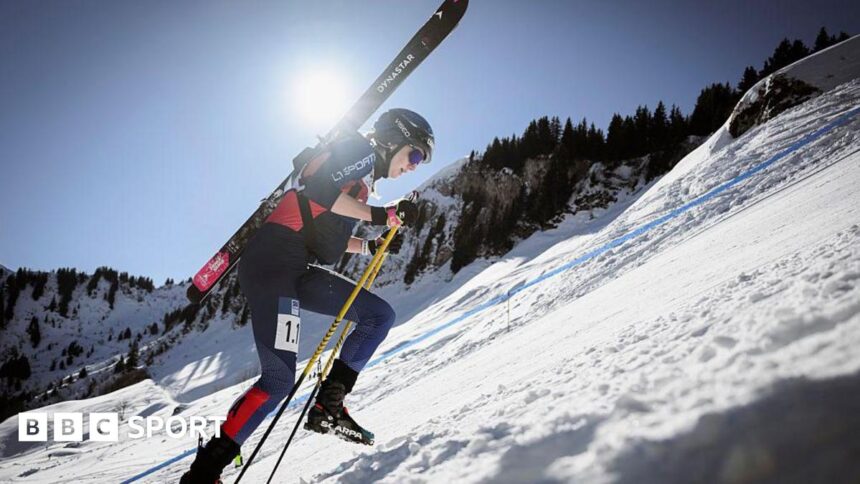
This Thursday, on the pristine slopes of the Italian Alps, a new chapter in Winter Olympic history will be written. Ski mountaineering – or ‘skimo’ – makes its high-stakes debut, a brutal ballet of lung-busting uphill climbs and white-knuckle descents. All eyes are on one athlete: Emily Harrop, the French three-time world champion and overwhelming favourite for gold. Yet, as she stands poised to claim a historic first Olympic medal, a fascinating subplot emerges. The woman who jokes she was “born with bindings on her feet and poles in her hands” carries a passport that tells a different story. In a parallel sporting universe, the anthem playing for a British-born champion could have been God Save the King.
From Alpine Roots to a Cross-Channel Conundrum
Emily Harrop’s story is deeply rooted in the French Alps. Her parents, both mountain guides, instilled in her a profound connection to the peaks of the Haute-Savoie region. Her childhood was a training ground, her playground the vertiginous terrain that would become her professional canvas. This authentic, almost mythical origin story is the bedrock of her identity as a French sporting star. However, the narrative contains a crucial, often overlooked, twist: Harrop was born in London.
Her British birthright opened a potential pathway to representing Great Britain, a nation with a rich winter sports history but no established skimo tradition. For British Winter Olympic officials, an athlete of Harrop’s calibre represents a once-in-a-generation opportunity. Securing a talent like Harrop could have instantly catapulted Team GB into medal contention in a new sport and provided a foundational figure to inspire a whole new discipline domestically. The allure is clear: a ready-made champion to lead a legacy programme.
Yet, the heart of an athlete is not governed by passport logistics. For Harrop, the choice was elemental. Her sporting soul is unequivocally French. The mountains that forged her, the federation that nurtured her, and the culture that defines the sport for her are all tricolour. “My heart, my training, my entire life is here in the Alps,” Harrop has stated. This decision underscores a modern Olympic reality: nationality in sport is increasingly a complex blend of birthplace, heritage, and chosen identity.
Anatomy of a Skimo Champion: Why Harrop is the Woman to Beat
To understand why Emily Harrop stands atop the list of favourites, one must appreciate the savage demands of ski mountaineering. The Olympic event is a sprint format, a 20-25 minute explosion of effort that includes:
- A lung-searing uphill climb on skis with adhesive ‘skins’ attached for grip.
- A transition zone where athletes must remove skins and convert gear for descent.
- A technical, often icy, downhill run on lightweight equipment on unprepared slopes.
- A second climb and descent, repeating the agonizing cycle.
Harrop’s dominance stems from a rare and complete mastery of all three disciplines: climbing efficiency, flawless transitions, and fearless descending. Her three world championship titles are not flukes; they are testaments to a comprehensive skillset honed since childhood. Experts point to her mental fortitude as a key differentiator. “In skimo, the race is often won or lost in the transition zone and in the mind,” notes former world cup skier and analyst, Marco Sullivan. “Harrop possesses a preternatural calm under extreme physical duress. She makes fewer errors when her lactate threshold is maxed out, and that’s the mark of a true champion.”
Her main rivals, like Switzerland’s Marianne Fatton and Italy’s own Alba De Silvestro, will have the advantage of competing on familiar snow and with fervent home support. However, Harrop’s experience on the global stage, particularly her ability to perform when labelled the favourite, makes her the prohibitive favourite for Olympic gold.
The GB What-If: A Lost Opportunity or a Distant Dream?
The tantalising prospect of Harrop in GB kit forces a reckoning with the state of British ski mountaineering. Unlike France, Switzerland, or Italy, the UK has no natural alpine infrastructure to foster a world-class skimo programme. The sport here is a niche pursuit, driven by passionate clubs and individuals, often training on the fringes of Scottish ski resorts or using roller skis on tarmac.
Had Harrop chosen to represent Britain, the impact would have been seismic, akin to Lizzy Yarnold’s effect on skeleton. It could have provided:
- Immediate medal credibility and Olympic visibility for a fledgling sport.
- Critical funding from UK Sport, often contingent on medal potential.
- A inspirational figurehead to attract a new generation of athletes.
However, this scenario always resided in the realm of fantasy. Without the foundational ecosystem—the mountains, the daily high-altitude training, the deep cultural immersion—Harrop simply would not be the athlete she is today. Her excellence is a direct product of her French environment. For Team GB, the focus must be on a longer, more organic build. The goal for Milan-Cortina is not medals, but qualification and gaining experience. The real harvest from skimo’s Olympic inclusion may be seen in 2030 or 2034, as young British athletes inspired by the spectacle begin their own journeys.
Podium Predictions and Lasting Legacy
As the start gun fires on Thursday, the prediction from the cognoscenti is unanimous: Emily Harrop will be on the podium. The colour of the medal around her neck is the only question. Gold is the expectation. She will face fierce challenges, particularly from the technically brilliant Fatton and the motivated home favourite De Silvestro, but Harrop’s consistency and big-race pedigree give her the edge.
Beyond the immediate result, her victory would resonate on multiple levels. For France, it would be a story of alpine tradition culminating in Olympic validation. For the sport of ski mountaineering globally, a charismatic and dominant champion like Harrop provides the perfect launchpad into the mainstream sporting consciousness.
And for Great Britain, her story serves as a poignant reminder of the complex, globalized nature of modern sport. It is a tale of what might have been, but also a clarion call for investment in the raw, homegrown talent that may one day emerge from the UK’s own mountain communities. The union jack may not fly for her this time, but her Olympic journey will undoubtedly be watched with a unique mix of admiration and wistful curiosity by British winter sports fans.
Conclusion: A Champion Forged in the Alps
When Emily Harrop straps on her skis for the Olympic debut of ski mountaineering, she carries the weight of expectation and history. She is the embodiment of a sport, a product of its most perfect environment. Her likely triumph will be a French celebration, earned through a lifetime of sacrifice in the thin air of the high mountains. The British chapter of her story is a brief footnote, a curious twist of fate that highlights the divergent paths an athlete’s career can take. Ultimately, her legacy will be that of a pioneer—the first Olympic champion in ski mountaineering, a title forever etched in the record books. And while the flag on her uniform will be French, her achievement belongs to the sport itself, a stunning testament to human endurance and a love for the mountains that knows no borders.
Source: Based on news from BBC Sport.