The Sentimental Gamble: How Arteta’s Goalkeeping Loyalty Cost Arsenal the Carabao Cup
The weight of a trophy drought is a heavy burden for any manager, but it can manifest in subtle, often subconscious ways. In the high-stakes theatre of a Wembley final, where cold logic is supposed to reign supreme, the heart can sometimes whisper a dangerous suggestion. For Mikel Arteta, a manager famed for his ruthless, data-driven precision, that whisper led to a pivotal, and ultimately costly, moment of sentimentality. Arsenal’s defeat to Manchester City in the Carabao Cup final will be dissected for many reasons, but at its core lies one haunting decision: the choice to start Kepa Arrizabalaga over David Raya.
The Uncharacteristic Sentiment Behind the Selection
Mikel Arteta has built his Arsenal revolution on a foundation of uncompromising standards. He has exiled big-name players, made brutal selection calls, and fostered a culture where sentiment is a luxury. This is why his decision to field Kepa, the established cup goalkeeper throughout the competition, felt so jarring. With the club’s first major trophy since 2020 on the line, this was the moment for the strongest available XI, not for honoring a peripheral competition promise.
Arteta’s loyalty to Kepa was a rare departure from his own doctrine. The narrative of a “cup goalkeeper” earning his final is a romantic one, but it clashes with the modern reality of elite sport. The move was interpreted as a reward for service, a nod to continuity, and perhaps an emotional hedge against disrupting the squad’s harmony. Yet, in doing so, Arteta inadvertently created a glaring juxtaposition with his opposite number.
Pep Guardiola, no stranger to big calls, started his own cup keeper, James Trafford. The difference, however, was stark. Trafford delivered a commanding, error-free performance, a solid foundation for City’s victory. This contrast turned Arteta’s selection from a minor footnote into the central plot point of the final’s narrative.
Wembley’s Cruel Spotlight: A Costly Error Unfolds
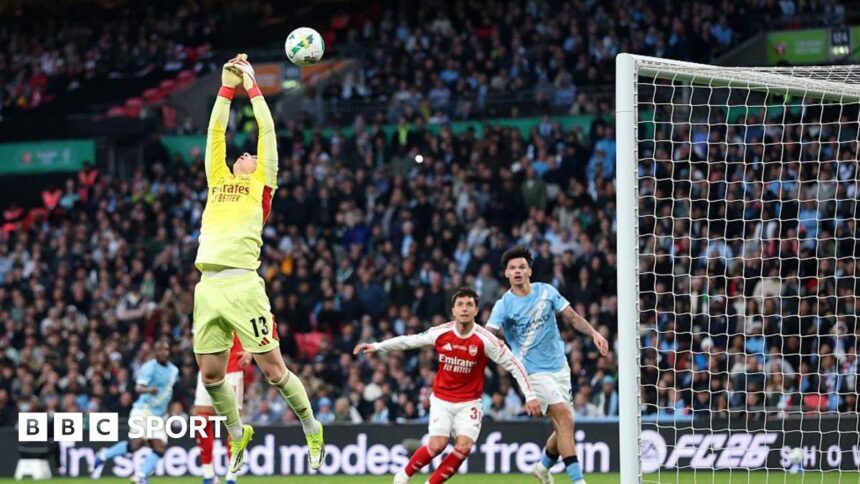
The inherent risk of any selection is that it will be judged by events. For Kepa, the judgment arrived with brutal swiftness. In the 23rd minute, Rayan Cherki’s inswinging cross from the City right was dangerous but manageable. What followed was a moment of pure goalkeeping nightmare.
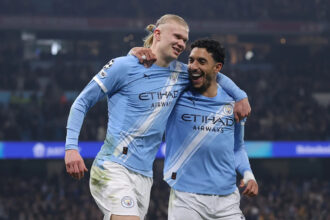
Kepa’s error was fundamental. As he moved to claim the ball, it slipped through his fingers, bouncing awkwardly into the six-yard box. The lurking Nico O’Reilly, displaying a striker’s instinct, needed no second invitation, nodding the loose ball into an empty net. The goal was a gift, a seismic shift in momentum born from a simple mistake.
The psychological impact was immediate and devastating:
- Arsenal’s confidence shattered: A tightly-contested final was suddenly tilted entirely in City’s favor.
- City’s momentum ignited: Guardiola’s side, previously probing, now smelled blood.
- Kepa’s aura evaporated: Any pre-match confidence in the goalkeeper was irreparably broken.
Just four minutes later, O’Reilly powered in a second, and the contest was effectively over. The chain reaction started by that one moment of fallibility was complete. There is no hiding place for a goalkeeper at Wembley, and similarly, no hiding place for a manager when a premeditated decision backfires so spectacularly.
Expert Analysis: The Ripple Effect of a Tactical Misstep
Beyond the error itself, Arteta’s call had deeper tactical and psychological ramifications. David Raya is not just Arsenal’s first-choice goalkeeper; he is the on-field conductor of Arteta’s build-up philosophy. His distribution, his comfort with the ball at his feet, and his command of the penalty area are integral to how Arsenal play from the back.
By opting for Kepa, Arteta subtly altered his own team’s rhythm. The outfield players, so accustomed to Raya’s specific passing lanes and timing, were operating with a different tempo. While not the direct cause of the goals, this alteration contributes to a fractional lack of synchronicity—a luxury you cannot afford against a side like Manchester City.
Furthermore, the decision sent conflicting messages. Arteta preaches that every match is a final, that standards cannot drop. Yet, by not selecting his best available goalkeeper for the actual final, he inadvertently undermined that very principle. It introduced a variable of doubt where absolute certainty was required. In a game of fine margins, this sentimental side of Arteta introduced a preventable variable of risk.
Looking Ahead: Repercussions and the Road to Redemption
The fallout from this defeat will resonate at London Colney. Arteta is too intelligent a manager not to engage in brutal self-reflection. The Kepa experiment in major finals is almost certainly over. David Raya’s status as the unequivocal number one, in all competitions that matter, will be set in stone.
For Kepa, the future looks bleak at Arsenal. Such high-profile errors in showpiece events are difficult to recover from, and his role will likely diminish further. This episode will reinforce Arteta’s natural ruthlessness, likely leading to a summer move for the Spaniard and a search for a new backup who genuinely pushes Raya.
Predictions for Arsenal’s season now carry a new urgency:
- Premier League Focus: The title race becomes an absolute, non-negotiable priority. All energy must be channeled here.
- FA Cup Approach: Should Arsenal progress deep, expect Raya to start every game. The “cup keeper” concept is dead.
- Psychological Test: How Arteta and his squad rebound from this self-inflicted wound will define their mental fortitude.
The Carabao Cup final will now serve as a permanent case study within the club—a painful reminder that in the pursuit of ending droughts, you cannot drink from the cup of sentiment. It was a trophy lost not just to Manchester City’s excellence, but to a rare lapse in the manager’s own stringent code.
Conclusion: A Harsh Lesson in the Price of Loyalty
Mikel Arteta’s project at Arsenal has been built on clear-eyed vision and calculated decisions. His costly error was not made during the 90 minutes at Wembley, but in the team sheet he submitted an hour before kickoff. In choosing loyalty to a player over the unemotional demands of the occasion, he gifted Manchester City an initiative they never relinquished.
The image of Kepa’s despair as the ball squirmed free will be etched alongside the sight of City lifting the trophy. It is a poignant symbol of how fine the line is between sentiment and success at the highest level. For a manager who has eradicated so much softness from Arsenal, this was a solitary, but profoundly expensive, moment of weakness. The road to redemption is now paved with a simple, hard lesson: in the quest for silverware, there is no room for a sentimental heart, especially when it beats in the chest of the one man who cannot afford to let it.
Source: Based on news from BBC Sport.