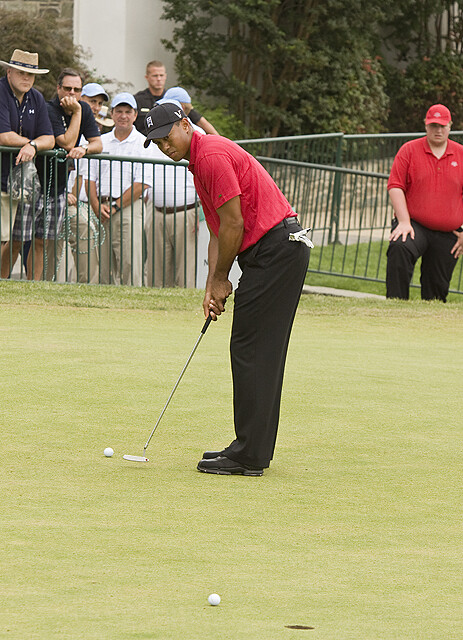
Tiger Woods Granted Permission for Overseas Treatment Amid DUI Case
In a move that underscores the profound intersection of celebrity, privacy, and personal health, a Florida judge has granted Tiger Woods permission to leave the United States to enter an intensive, inpatient treatment program. This legal decision, coming just one day after Woods pleaded not guilty to misdemeanor DUI charges, shifts the narrative from the courtroom to the clinic, revealing a stark battle for wellness playing out under the world’s relentless gaze. The ruling by Martin County Judge Darren Steele, based on a compelling motion from Woods’ attorney, highlights a desperate search for a sanctuary where treatment can proceed without the crippling weight of public exposure. This isn’t merely a legal footnote; it’s a pivotal chapter in the saga of an athlete whose every struggle is magnified, suggesting that for Tiger Woods, the path to recovery may be one he can only walk in shadow.
A Legal Motion Rooted in Medical Necessity
The formal request, submitted by Woods’ attorney Douglas Duncan, presented a clinical argument far removed from typical legal maneuvering. It painted a picture of a treatment landscape within the United States that had become untenable for the golf legend. The core of the argument hinged on a complex clinical presentation requiring a level of specialized, integrated care that his team asserts cannot be safely or effectively delivered domestically. The reason cited is not a lack of quality American facilities, but rather an inescapable environment of scrutiny.
“His privacy has been repeatedly compromised,” the motion stated, pointing to ongoing medical scrutiny and public exposure as active impediments to healing. These factors, the filing argued, create “significant barriers to his care and would result in setbacks and an inability to fully engage in treatment.” The judge’s approval acknowledges that the standard conditions of release or domestic treatment options are insufficient, legally framing Woods’ need for seclusion as a medical imperative. This establishes a precedent where the defendant’s health crisis is severe enough to warrant an exception, placing his intensive, highly individualized and medically integrated program ahead of the immediate legal proceedings.
Between the Crash and the Court: A Timeline of Turbulence
The motion for overseas treatment is the latest development in a swift and serious sequence of events following Woods’ single-vehicle crash in Jupiter, Florida. The incident, which resulted in charges of misdemeanor driving under the influence with property damage and refusal to submit to a urinalysis, set off a chain reaction that has moved from the roadside to the global spotlight with dizzying speed.
- Friday (Crash): Woods is found asleep at the wheel of his damaged SUV in a residential area, leading to his arrest and subsequent release from custody.
- Tuesday (Arraignment): Woods enters a written plea of not guilty to all charges through his attorney, a standard legal procedure in such cases.
- Tuesday (Statement): Woods releases a public statement, taking responsibility for his condition but attributing it to an “unexpected reaction” to prescribed medications, not alcohol.
- Wednesday (Motion Granted): Judge Steele approves the request for Woods to travel internationally for inpatient treatment, pausing the legal process for his health intervention.
This condensed timeline reveals a strategy focused on addressing the root health issue head-on, even as the legal process unfolds in parallel. The urgent need for a level of care abroad suggests his team is treating the situation with acute seriousness, aiming for rehabilitation beyond the scope of the pending charges.
Expert Analysis: The Unbearable Weight of the Spotlight
From a sports journalism and psychological perspective, this development is revealing. The explicit citation of privacy breaches as a barrier to effective care is a powerful indictment of modern celebrity culture. “What we are witnessing is the recognition by the court that Tiger Woods exists in a uniquely pressurized ecosystem,” notes Dr. Elena Martinez, a sports psychologist unaffiliated with the case. “For an individual dealing with potential issues of pain management, dependency, or psychological trauma, the constant threat of exposure isn’t just distracting—it’s clinically counterproductive. It can trigger anxiety, shame, and hypervigilance, all of which are antithetical to the vulnerability required for successful treatment.”
The choice of an overseas facility is particularly telling. It represents a literal and figurative distancing from the environment where Woods is simultaneously icon, athlete, patient, and defendant. In a foreign country, with stricter privacy laws or more remote locations, the facility can offer a comprehensive inpatient treatment bubble simply unattainable in the U.S., where paparazzi helicopters and insider leaks are part of the daily calculus. This isn’t about luxury; it’s about creating a viable therapeutic environment. The legal system’s accommodation of this need underscores the severity of the situation as presented by his medical team.
Predictions: The Long Road Ahead for Tiger Woods
The immediate future for Tiger Woods is now clearly segmented into two parallel tracks: health and litigation. His journey through this medically integrated program will be private, but its outcomes will very publicly shape what comes next.
Short-Term (Next 3-6 Months): Woods will be immersed in treatment, likely focusing on pain management protocols, psychological counseling, and holistic wellness. The legal case will remain in a holding pattern, with status hearings possibly conducted virtually. The success of this phase won’t be measured in public statements, but in the stability he demonstrates upon re-emergence.
Mid-Term (6-12 Months): Legal resolutions will come to the fore. A plea deal, potentially involving dismissal or reduction of charges upon completion of treatment and community service, is a probable outcome. His return to public life will be gradual, likely centered on his TGR Ventures business and foundation work long before a potential return to competitive golf is considered.
Long-Term (Golf and Legacy): The question of a competitive return is now more complex than ever. At 50, with a fused back and now this significant personal hurdle, the odds are longer. His legacy, however, is entering a new phase. This chapter will be remembered not for a trophy, but for a very human struggle with pain and privacy. How he navigates this recovery could redefine his public persona in a more relatable, if tragic, light.
Conclusion: A Sanctuary Sought, A Battle Acknowledged
The image of Tiger Woods being granted leave to seek treatment abroad is a potent symbol of a man fighting on two fronts: one against his personal demons, and another against the unblinking eye of fame. The judge’s ruling is more than a legal formality; it is an implicit acknowledgment that for Tiger Woods, the arena of recovery requires walls that America can no longer provide. This story has transcended sports gossip or legal briefs. It has become a case study in the cost of global celebrity and the profound human need for a safe space to heal. As he departs for an unknown facility to engage in a treatment program deemed too sensitive for his homeland, the world is left with a sobering reminder. Even for the most iconic and resilient of champions, some battles cannot be won under the bright lights. They require the quiet, distant dark, where the only score that matters is the hard-fought victory of one day over the last.
Source: Based on news from Deadspin.
Image: CC licensed via www.flickr.com