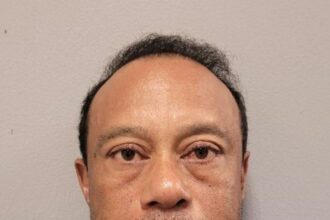
Tiger Woods Arrested for DUI Following High-Speed Rollover Crash in Florida
The narrative of Tiger Woods, a story long defined by miraculous comebacks and crushing setbacks, has taken another dark and dangerous turn. The 15-time major champion, whose physical resilience has been the subject of global fascination, is now facing a different kind of peril after a harrowing single-vehicle crash led to his arrest on Friday afternoon in Jupiter Island, Florida. This incident, involving a high-speed rollover that mangled his luxury SUV, adds a troubling legal and personal chapter to the legend of one of sports’ most complex figures, raising urgent questions about his future both on and off the golf course.
A Chaotic Scene on Jupiter Island: The Crash Details
According to the Martin County Sheriff’s Office, the incident unfolded shortly after 2:00 p.m. in the quiet, affluent enclave where Woods resides. Sheriff John Budensiek provided a detailed and alarming account. Woods was operating his Land Rover at a high speed in a posted 30-mph zone on a two-lane road. The situation escalated when Woods attempted to overtake a truck that was hauling a pressure-washing trailer.
The driver of the truck, aware of the SUV rapidly approaching from behind, instinctively edged toward the shoulder to create space. However, the maneuver proved insufficient. Woods’ vehicle collided with the trailer, a violent impact that sent the Land Rover careening. The SUV tipped onto its driver’s side and proceeded to scrape along the pavement for a considerable distance before grinding to a halt, a twisted heap of metal resting on its side.
In a stroke of fortune amidst the chaos, no injuries were reported—neither to Woods nor the driver of the truck. Demonstrating a chilling calm, Woods, who was alone in the vehicle, managed to extricate himself from the wreckage by crawling out through the passenger-side door before first responders arrived on the scene.
The Legal Reckoning: Charges and Implications
While the physical aftermath was miraculously minimal, the legal consequences are just beginning. Tiger Woods was arrested at the scene and is currently facing multiple non-felony charges. The charges, as confirmed by authorities, include:
- Driving under the influence (DUI)
- Property damage
- Refusing to submit to a lawful test
The charge of refusing a test, often an automatic administrative penalty in many jurisdictions, complicates the legal picture and typically implies the suspension of driving privileges. This arrest marks a stark and serious departure from Woods’ 2017 incident, where he was found asleep at the wheel in a different location and charged with DUI after a recorded encounter with police that was later attributed to an unexpected reaction to prescription medications. The context here—a high-speed, daytime collision resulting in a rollover—presents a more severe scenario with greater potential for catastrophe.
Legal experts suggest that while these are non-felony charges, the combination of property damage and the refusal to test could lead to significant penalties, including hefty fines, mandatory substance abuse education, community service, and a prolonged license suspension. The court of public opinion, however, may deliver its own lasting verdict.
Expert Analysis: The Tiger Woods Paradox
To understand the weight of this event, one must view it through the lens of Woods’ arduous and very public journey over the past decade. Sports psychologists and crisis communication analysts point to what they call the “Tiger Woods Paradox”: the unparalleled competitive grit that fuels historic comebacks on the golf course seemingly at odds with a pattern of off-course decision-making that invites profound personal risk.
“We have watched Tiger Woods defy medical science with his fusion surgeries and will his broken body to a Masters victory,” notes Dr. Alisha Carter, a sports behavior specialist. “That same individual, however, appears to have persistent lapses in judgment away from competition. This incident isn’t an athletic injury; it’s a choice. The narrative is no longer about pain management, but about accountability and personal responsibility. The Martin County Sheriff’s Office report paints a picture of reckless endangerment that endangered not only his life but the life of an innocent bystander.”
This analysis highlights the central tension. The focus has shifted from his surgically-repaired back and leg to his decision-making behind the wheel. The rollover crash becomes a potent metaphor—a physical manifestation of a life that, despite incredible control within the ropes of a golf course, can still spiral violently out of control outside of them.
Predictions for Legacy and Career
The immediate and long-term fallout from this arrest will ripple across multiple domains of Woods’ life.
- Golf Career Impact: While his competitive schedule was already severely limited by his physical condition, this incident casts a deep shadow over his participation in non-playing roles. His presence at PGA Tour events, whether as a player or a future captain of the U.S. Ryder Cup team, will now be accompanied by this fresh and damaging headline. Sponsorship discussions, which had cooled but remained possible for a figure of his stature, are likely frozen indefinitely.
- Legacy and Public Perception: Woods had meticulously, and successfully, rebuilt his public image post-scandal and post-injuries into one of an elder statesman and inspirational figure. This arrest severely damages that reconstruction. The tale of the determined champion is now competing with the headline of a man arrested for DUI following a chaotic rollover crash.
- The TGR Foundation: Woods’ charitable work with youth through his TGR Foundation represents a core part of his identity. The organization will now face difficult questions and may need to distance its educational mission from the personal conduct of its founder, a challenging and unfortunate necessity.
Ultimately, the path forward is murky. Previous comebacks had a clear roadmap: rehabilitate the body, refine the swing, conquer the course. This latest setback requires a different kind of rehabilitation—one that addresses personal conduct and public trust. The greatest challenge Tiger Woods now faces may not be a 500-yard par-5, but the long and difficult journey toward demonstrating that this dangerous pattern has been irrevocably broken.
Conclusion: A Crossroads Beyond the Course
The mangled Land Rover on its side in Jupiter Island is more than a traffic accident scene; it is a stark symbol of a legacy at a precarious crossroads. Tiger Woods has stared down putts to win major championships and overcome surgeries that would have ended lesser athletes’ careers. Yet, the battle he now confronts is of a profoundly different nature. It is a legal and personal struggle that no amount of competitive fire or physical therapy can easily fix. The world watched in awe as he rose from a different kind of wreckage at the 2019 Masters. The question now is whether he can muster the same strength to navigate a recovery that has nothing to do with golf, and everything to do with choices, consequences, and the hope for a safer, more responsible chapter ahead. The fairway to redemption this time is unclear, and the stakes, as this high-speed rollover crash terrifyingly demonstrated, could not be higher.
Source: Based on news from Yahoo Sports.