Tiger Woods’ Legal Team Battles Subpoena for Prescription Records in High-Stakes DUI Case
The legal saga surrounding Tiger Woods’ Memorial Day DUI arrest has entered a new, intensely private phase. While the world has seen the jarring bodycam footage of a disoriented Woods struggling through field sobriety tests, a fresh courtroom battle is now raging over what remains unseen: the golf legend’s prescription drug history. In a move signaling a vigorous defense, Woods’ attorney is aggressively fighting a prosecution subpoena for these confidential medical records, setting the stage for a complex legal duel that pits privacy rights against the pursuit of justice.
The Incident and the Unseen Evidence: Beyond the Bodycam
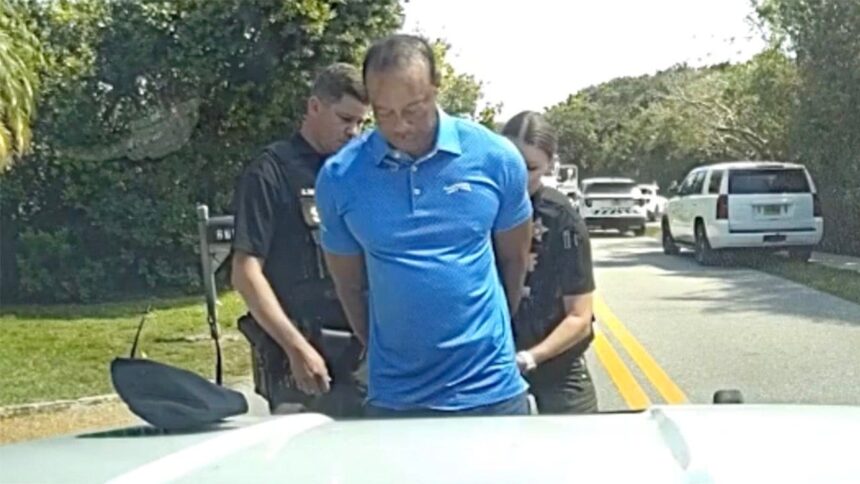
On the morning of March 27, Tiger Woods’ Range Rover was discovered overturned on its driver’s side on a Florida roadway, following a two-vehicle collision. The encounter, captured in police bodycam footage, showed a world-famous athlete in a profoundly vulnerable state. Woods was visibly impaired, telling officers he had no idea where he was and struggling with basic coordination tests. He was subsequently arrested and charged with driving under the influence. Crucially, no alcohol was detected on his breath, immediately shifting the focus to prescription or other drugs.
Prosecutors are now seeking to build their case by peering into Woods’ medical history. A court filing revealed plans to issue a subpoena to “seek copies of any and all prescription medication on file” for Woods from January 1 through the date of his arrest. This timeline suggests investigators are looking to establish a pattern of medication use, potentially crucial for proving impairment under Florida law.
The Legal Battlefield: Privacy vs. Prosecutorial Power
Woods’ attorney, Douglas Duncan, is mounting a formidable challenge to this subpoena. This fight is a textbook example of a pre-trial legal skirmish with significant implications. Legal experts point to several core arguments the defense is likely employing:
- Patient-Doctor Confidentiality: Arguing that the records are protected by privilege and that the prosecution’s request is an overly broad “fishing expedition.”
- Relevance and Scope: Challenging whether *all* prescriptions over a nearly three-month period are relevant, as opposed to medications specifically known to cause impairment or those filled immediately before the incident.
- Fourth Amendment Protections: Contending that compelling the release of deeply personal medical data constitutes an unreasonable search and seizure.
“This is a classic defense maneuver in DUI cases involving prescriptions,” says a former Florida state prosecutor who requested anonymity. “The defense wants to limit the evidence to only what the prosecution can independently prove—like the toxicology results from the urine test Woods submitted. By fighting the subpoena, they force the state to justify exactly why they need these records, potentially narrowing the scope or even having them excluded entirely.”
Expert Analysis: The Stakes for Woods and the State’s Case
The outcome of this subpoena fight could dramatically alter the trajectory of the case. For the prosecution, Woods’ prescription records are a potential goldmine. They could:
- Corroborate the presence of drugs found in his system via toxicology.
- Demonstrate he was taking medications in a manner not as prescribed.
- Show he was aware of the impairing side-effects of his prescriptions.
Conversely, for the defense, keeping these records sealed is paramount. Beyond the obvious desire to limit evidence, there is a monumental concern for personal privacy and public image. Tiger Woods’ health struggles, from his multiple back surgeries to his very public admission of past prescription medication misuse, are well-documented. A detailed list of his current prescriptions would expose not just his physical vulnerabilities but could fuel a media frenzy far beyond the courtroom.
Sports law analyst, Dr. Meredith James, notes: “This isn’t just about a DUI. For an athlete of Woods’ stature, whose brand and endorsements are tied to discipline and recovery, the uncontrolled release of private medical data could have catastrophic commercial consequences. His legal team isn’t just defending against a charge; they’re managing a crisis that impacts his entire legacy and livelihood.”
Predictions and Potential Outcomes
How will this play out? Legal experts foresee a few likely scenarios:
1. A Compromise is Reached: The most probable outcome is a negotiated settlement. The judge may order an in-camera review, where the records are examined privately by the judge, who then decides what, if any, information is relevant and must be turned over to prosecutors. This protects Woods from a public dump of his data while giving the state a path to potentially admissible evidence.
2. The Subpoena is Quashed or Narrowed: If the defense successfully argues the request is overly broad, the judge could deny the subpoena entirely or limit it to a specific drug category or a much shorter timeframe, severely hampering the prosecution’s ability to establish a pattern.
3. The Subpoena is Upheld: If the judge rules the records are directly relevant and the state’s need outweighs Woods’ privacy concerns, the defense may face a difficult choice: comply or consider a plea deal to avoid the records becoming public evidence at trial.
Given Woods’ statement attributing the incident to “an unexpected reaction to prescribed medications,” his legal strategy appears to be one of mitigation rather than outright denial of impairment. Fighting the subpoena allows him to control the narrative, potentially setting up a defense that acknowledges the DUI but frames it as an unintentional, medical mishap rather than reckless behavior.
Conclusion: A Case Defining More Than a Charge
The legal tussle over Tiger Woods’ prescription records transcends a single DUI charge. It highlights the delicate and often contentious intersection of celebrity, privacy, and the justice system. The bodycam footage provided a shocking, public glimpse of his downfall; the prescription records would offer an intrusive, clinical blueprint of his struggles. As his attorney battles the subpoena, the core question remains: how much of a person’s private medical history must be sacrificed to prove a public offense?
This case will undoubtedly set a precedent for how high-profile DUI cases involving prescriptions are handled in the future. Whether through a closed-door compromise or a public ruling, the decision will not only shape Tiger Woods’ path forward but will also reaffirm or redraw the boundaries of privacy for every individual who enters the judicial arena. The final score in this legal contest will be measured not in strokes, but in the delicate balance between transparency and the right to be left alone.
Source: Based on news from Fox Sports.