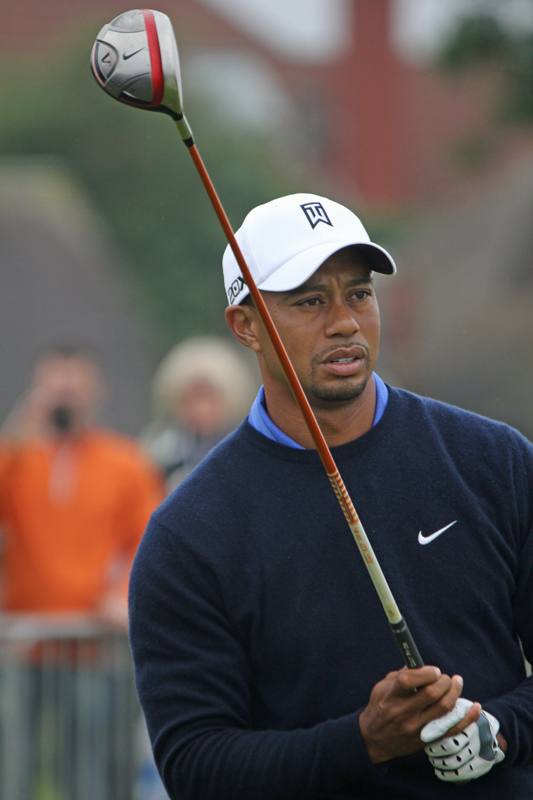
Tiger Woods Enters Not Guilty Plea, Announces Step Back from Golf to Seek Treatment
In a dual announcement that reverberated through the worlds of sports and celebrity news, Tiger Woods has taken his first public steps to address the legal and personal fallout from his May 2024 rollover crash. Through his attorney, the golf legend pleaded not guilty to misdemeanor charges in a Florida court. Almost simultaneously, Woods released a deeply personal statement announcing he is “stepping away” from professional golf to seek treatment, framing the decision as a critical move toward a “lasting recovery.” This one-two punch of legal strategy and personal vulnerability marks a pivotal, somber chapter for the 50-year-old icon, whose battles with injury and adversity have become as much a part of his narrative as his 15 major championships.
The Legal Landscape: Understanding the Charges and the Plea
On Tuesday, Woods’ legal team formally entered a plea of not guilty to two charges stemming from the single-vehicle accident in Jupiter, Florida. According to court documents, the charges are:
- Misdemeanor Driving Under the Influence (DUI) with Property Damage
- Refusal to Submit to a Urinalysis
This legal maneuver, while standard, sets the stage for what could be a protracted process. The not guilty plea allows Woods’ defense attorneys time to review evidence, negotiate with prosecutors, and potentially seek a pre-trial resolution. Legal experts note that charges of this nature, while serious, often result in a plea deal that may include diversion programs, especially for a first-time offender in this context. The charge of “refusal to submit” typically carries an automatic administrative penalty, separate from the criminal case, often a license suspension.
The rollover crash itself, which left Woods’ Genesis SUV severely damaged but the golfer with non-life-threatening injuries, initially seemed like another tragic chapter in his long history of physical ailments. However, the subsequent revelation of DUI charges shifted the narrative, introducing questions about impairment that Woods’ statement and current treatment-seeking action now directly, if implicitly, address.
A Statement of Accountability and a Path to Recovery
Tiger Woods’ public statement, released just hours after his court filing, was notable for its tone of sober responsibility and clear intent. It stands in stark contrast to the typically anodyne statements issued by celebrity publicists in times of crisis.
“I know and understand the seriousness of the situation I find myself in today,” Woods wrote. This opening line acknowledges the gravity without delving into legal specifics, a careful dance between personal accountability and legal prudence. The core of his message was the announcement of a deliberate retreat: “I am stepping away for a period of time to seek treatment and focus on my health. This is necessary in order for me to prioritize my well-being and work toward lasting recovery.”
The choice of words is significant. This is not framed as a simple break or a physical rehabilitation hiatus. The phrase “seek treatment” strongly implies a dedicated, structured program, while “lasting recovery” suggests a focus on long-term wellness beyond any immediate legal or physical predicament. Woods is clearly attempting to frame this period not as a punishment or a hiding, but as a proactive, health-focused necessity. He concludes by committing to return “in a healthier, stronger and more focused place, both personally and professionally,” explicitly linking his future in golf to his success in this personal journey.
Expert Analysis: The Intersection of Legacy, Health, and Crisis Management
From a sports journalism and crisis management perspective, this two-pronged approach is a textbook, if belated, strategy. “The synchronization of the not guilty plea and the treatment announcement is masterful in its intent,” observes Dr. Elena Martinez, a sports psychologist and commentator. “The legal team handles the courtroom, while Tiger himself addresses the court of public opinion with a message of health and humility. It reframes the conversation from ‘What did he do?’ to ‘What is he doing to get better?'”
This incident forces a re-examination of Woods’ already complex legacy. His historic comeback to win the 2019 Masters after multiple spinal surgeries was a story of pure athletic grit. His current situation introduces a more human, more vulnerable layer. The physical toll of his career is well-documented—the countless surgeries, the fused ankle, the chronic pain. Experts speculate that managing that pain may be a central part of the current narrative, though Woods’ statement wisely avoids specifics.
“The life of an elite athlete after 50, especially one with a catalog of injuries like Tiger’s, is a monumental challenge,” says veteran golf analyst Ben Cole. “The cocktail of pain, pressure, and the psychological weight of maintaining a legacy can be overwhelming. His statement isn’t just about this incident; it’s a recognition that his overall system—physical and mental—needs a comprehensive overhaul if he is to have any quality of life, on or off the course.”
Predictions: What’s Next for Tiger Woods and the Game of Golf?
The immediate future for Tiger Woods is clear: a period of intense, private treatment and a slow navigation of the legal process. The longer-term outlook, however, is shrouded in uncertainty.
- The Legal Path: A pre-trial resolution is highly likely. Woods may ultimately enter a plea to a lesser charge or enter a diversion program that includes monitoring, community service, and mandatory treatment—which he is already proactively seeking. This could allow him to put the legal matter behind him by year’s end.
- The Golf Career: The notion of a competitive return is now a distant question. Prior to this, his competitive schedule was already a handful of majors per year, dictated entirely by his physical capability. Now, mental and emotional well-being are the paramount concerns. A return to the PGA Tour seems improbable in the next 12-18 months, if ever. His role may permanently shift to that of a ceremonial player, a course designer, and a foundational pillar of the TGL virtual league.
- The Broader Impact: Woods’ absence leaves a void in tournament buzz and television ratings. However, his decision to publicly prioritize treatment could have a more profound, positive impact. It contributes to the destigmatization of mental health and addiction treatment, particularly among men and athletes of his generation. His legacy, already one of spectacular triumph and failure, adds a chapter of seeking help.
Tiger Woods’ journey has always been a compelling, global saga. Today, it enters perhaps its most raw and human phase. The not guilty plea is a legal formality. The statement about stepping away to seek treatment is the real headline—a moment of stark clarity from an athlete who has spent a lifetime in the global spotlight. He is no longer just fighting a fused back or a tricky lie in the pine straw. He is fighting for a “lasting recovery,” and for the first time, he is publicly asking for space and privacy to wage that most personal of battles. The world that watched him dominate, fall, and rise again now watches him step back, hoping that the ultimate victory ahead is one of peace and health.
Source: Based on news from Deadspin.
Image: CC licensed via www.flickr.com