Tiger Woods Steps Away: A Golfer’s Legacy Now Defined by Recovery, Not Records
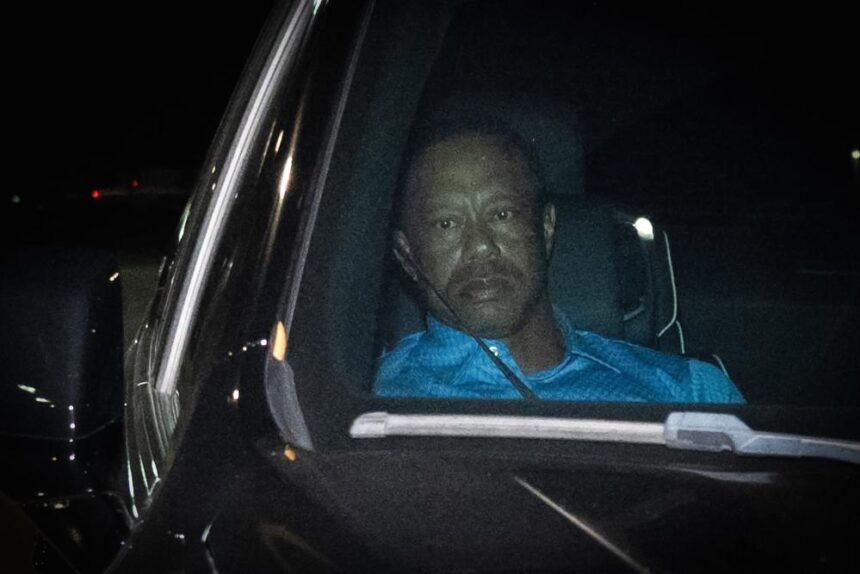
The image was jarring, a stark contrast to the Sunday red and triumphant fist pumps that defined an era. In a brief statement posted to social media, Tiger Woods, arguably the most dominant and transformative athlete of his generation, announced he is stepping away from professional golf. The reason was not another surgical procedure on his battered back or leg, but to seek treatment following his arrest on suspicion of driving under the influence. This decision marks a profound pivot point, not just in a legendary career, but in the complex narrative of a man whose struggles have become as public as his victories. The fairways will wait, as the greater battle for personal well-being takes precedence.
The Statement and The Silence: Acknowledgment Without Admission
Tiger Woods’ statement was a masterclass in controlled messaging, acknowledging gravity while carefully navigating legal realities. “I know and understand the seriousness of the situation I find myself in today,” he began, a line that resonates with the weight of personal and public consequence. His commitment to “step away for a period of time to seek treatment and focus on my health” frames this not as a suspension or a vacation, but as a necessary medical and personal intervention. Crucially, Woods has pleaded not guilty to the DUI charge and demanded a jury trial, a legal strategy that creates a parallel path: public contrition for a health crisis, and a legal defense in court.
This duality underscores the modern athlete’s reality. The court of public opinion often moves faster than the judicial system. By proactively announcing his step back and framing it around health and recovery, Woods attempts to reclaim a measure of narrative control. The statement’s closing plea for privacy for his family is a familiar refrain, yet one that feels particularly poignant given the very public nature of his latest struggle.
Beyond the Mugshot: The Unraveling of an Invincible Image
For decades, Tiger Woods cultivated an aura of superhuman focus and control. His dominance was as much psychological as physical. However, the last 15 years have been a slow, painful unraveling of that invincible image, a series of cascading crises that have reshaped his legacy in real-time.
- The 2009 Scandal: The pristine corporate and athletic image shattered, revealing a complex personal life.
- The Physical Breakdown: A relentless series of surgeries on his knee and back turned the world’s greatest golfer into a part-time competitor battling constant pain.
- The 2017 DUI Arrest: Revealed not alcohol, but an alarming cocktail of prescription medications used to manage pain and sleep, highlighting the hidden toll of his injuries.
- The 2021 Car Crash: A near-fatal rollover that threatened the amputation of his right leg, making his subsequent return to competitive golf at the Masters nothing short of miraculous.
This latest incident, another DUI-related arrest near his Florida home, feels less like a new chapter and more like a tragic recurrence. It raises urgent, uncomfortable questions about the ongoing management of his pain, his mental health in the face of physical limitation, and the sustainability of his comeback narrative. The golfer who once willed himself to victory now appears to be in a fight where sheer will is insufficient.
Golf’s Unshakable Shadow: Why the Sport Still Bends to Tiger’s Arc
Ewan Murray’s pointed question—“why golf remains so beholden to him”—cuts to the core of the sport’s modern identity. Even now, as he steps away indefinitely, Tiger Woods’ shadow is longer than any on the course. The reasons are multifaceted:
Television Ratings and Economic Impact: A PGA Tour event with Tiger in contention sees ratings spike by over 50%. His mere presence moves betting lines, spikes ticket prices, and commands corporate attention. He is a one-man economic stimulus package.
The Generational Bridge: Woods is the singular link between the Nicklaus-Palmer era and the current crop of stars. He inspired Rory McIlroy, Jordan Spieth, and Scottie Scheffler. His story is the through-line of modern golf history.
The Unfinished Quest: The pursuit of Jack Nicklaus’s record 18 major championships, once considered a foregone conclusion, remains frozen at 15. This dangling narrative thread is the sport’s most compelling “what if,” and as long as Woods breathes and can swing a club, it retains a flicker of possibility, however remote.
Golf is beholden because Tiger didn’t just change how the game was played; he changed who played it, how much they earned, and how many people watched. His absence leaves a void no current player can fill, a reality the tour grapples with even as it promotes its new stars.
The Road Ahead: Predictions for Tiger and the Game
Predicting Tiger Woods’ future has always been a fool’s errand, but this moment demands sober analysis. The path forward is fraught with more uncertainty than a buried lie in Augusta’s pine straw.
For Tiger Woods: The immediate future is clear: treatment and the legal process. The long-term golf prognosis, however, is cloudy. A return to regular Tour competition seems increasingly improbable. The more likely scenario is a ceremonial, part-time role—a potential appearance at the Masters, perhaps The Open on a forgiving links course. His competitive fire may still burn, but the body, and now this latest setback, may not cooperate. His most significant role may evolve into that of a global ambassador, a course designer, and a mentor, a transition from protagonist to legend-in-residence.
For Professional Golf: The sport faces a “post-Tiger” reality it has long anticipated but is still not fully prepared for. The ongoing fracture between the PGA Tour and LIV Golf creates a chaotic landscape. While stars like Jon Rahm, Scottie Scheffler, and Rory McIlroy are phenomenal talents, none command the transcendent, cross-cultural appeal of Woods. Golf’s next era will be one of collective star power, not a single sun around which all orbits revolve. The challenge will be building a narrative that isn’t perpetually looking backward at what was.
The legacy of Tiger Woods is now irrevocably split into three distinct volumes: the unprecedented ascent, the spectacular and human fall, and the grueling, ongoing effort at redemption and recovery. His latest decision to step away is a painful acknowledgment that the third volume is still being written, and its conclusion is unknown. The champion who taught us to expect the miraculous now teaches a harder, more human lesson: that some battles are fought far from the gallery’s roar, and that true strength may lie not in a comeback for the ages, but in the quiet, daily commitment to heal. The golf world will wait for him, but for now, and rightly so, Tiger Woods must focus on the most important shot of his life: the next step toward recovery.
Source: Based on news from Yahoo Sports.