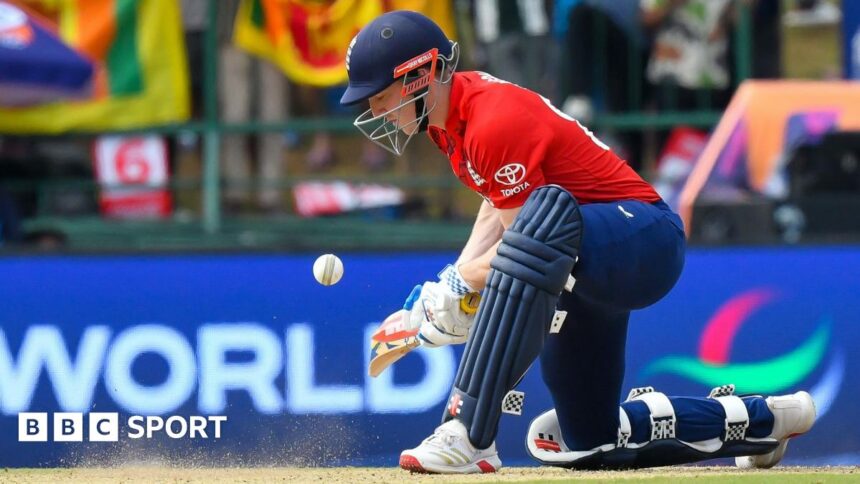
We’ll Give Them a Tough Time: England’s Perennial Trial by Spin Looms Large
The victory was secured, the points column updated, but the familiar specter remained at the crease. England’s 51-run win over Sri Lanka on Sunday kept their T20 World Cup hopes flickering, yet it did little to extinguish the nagging, generational anxiety that shadows their batting line-up: the profound, often painful, trial by spin. As they stare down a must-win clash against Pakistan, a side boasting a potent arsenal of slow bowlers, England’s historical frailty against turning balls threatens to be the narrative that defines their campaign.
A Historical Tug of War: England’s Uneasy Dance with the Turning Ball
For decades, the relationship between England batters and spin bowling has been a complex, often one-sided affair. It is a history defined by stark contrasts. On one hand, the rare, gifted practitioners of the art—figures like Joe Root, with his silken reverse sweeps, the imperious Kevin Pietersen dismantling attacks with monstrous straight hits, or the gritty Graham Thorpe working the angles with surgical precision. They are the celebrated exceptions.
On the other, a far longer list of batters, otherwise dominant, who have been reduced to uncertainty by persistent, intelligent tweak. The footwork grows tentative, the bat face closes prematurely, and the scoreboard pressure mounts with every dot ball. This isn’t a new T20 ailment; it is a deep-rooted condition in English cricket, exacerbated on slower, gripping surfaces where the ball doesn’t come onto the bat. The dismissal of Harry Brook for 14, trapped lbw by the young left-arm spinner Dunith Wellalage, was a microcosm of this enduring struggle—a hint of indecision at the crucial moment, a ball that perhaps wasn’t turning as much as feared.
Dissecting the Modern Challenge in T20 Cricket
In the contemporary T20 arena, the challenge of spin has evolved. It is no longer just about survival; it’s about proactive, calculated domination within the middle overs—a phase where matches are often won and lost. England’s ‘boom or bust’ philosophy, while devastating on flat tracks, can hit significant turbulence here. The issues observed in this World Cup are multifaceted:
- Intent vs. Execution: The desire to attack is clear, but the methods can be one-dimensional. Sweeps and heaves over leg side can become predictable, playing into a spinner’s hands.
- Adaptability Deficit: Transitioning from the powerplay, where pace-on is king, to the nuanced chess game of spin requires a dramatic shift in gear and technique. England have sometimes stalled in this transition.
- The Pitch Variable : On the Caribbean pitches offering variable bounce and turn, the margin for error shrinks. Trusting the pitch to play true is a luxury they often cannot afford.
This isn’t to say England lack the skill. Players like Jos Buttler and Liam Livingstone possess devastating power against spin. But consistency and game-awareness under pressure have been lacking. The middle order, in particular, has appeared vulnerable, creating a worrying dependency on the top three to lay an unshakable foundation.
The Pakistan Pivot: A Direct Confrontation with Fear
Tuesday’s encounter against Pakistan is not just a knockout fixture; it is a direct confrontation with their most persistent cricketing fear. Pakistan’s bowling attack, even absent a mystery spinner, is tailor-made to exploit this very weakness. The threat is multi-pronged:
- Shadab Khan: A world-class leg-spinner with a potent googly and the experience to bowl at any stage.
- Imad Wasim: The canny left-arm orthodox, master of dot-ball pressure and subtle changes of pace.
- Iftikhar Ahmed: A deceptive part-time off-spinner who can break crucial partnerships.
England’s promise to “give them a tough time” must be built on a foundation of smart cricket, not just brute force. It will require a clear, flexible plan:
Using the depth of the crease—stepping back to create room or coming right forward to smother the spin—will be crucial. Rotating the strike relentlessly to disrupt line and length must be prioritized over searching for the boundary every ball. Most importantly, selection bravery might be needed; does a specialist like Will Jacks, with his clean hitting against spin, offer a better middle-overs solution?
Pathway to the Semis: Can England Conquer Their Demons?
Reaching the semi-finals is a straightforward equation: win and they are in. But the pathway is littered with the psychological baggage of past struggles. The prediction for this crucial match hinges entirely on which England batting unit arrives at the Kensington Oval.
If it is the frenetic, anxious version, prone to collapsing in a heap of mis-timed sweeps and lbw appeals, Pakistan’s spinners will feast, and England’s World Cup defense will end with a whimper. However, if the lessons of recent stumbles—and indeed, of history—are heeded, we could witness a seminal performance. A victory built on pragmatism, where Root’s guile anchors an innings, allowing the power-hitters around him to pick their moments. This would represent more than just a semi-final berth; it would be a statement that this generation can finally solve cricket’s oldest puzzle for an Englishman.
The stage is set for a classic confrontation. Pakistan, with nothing to lose, will throw their spin web with confidence. England, burdened by expectation and history, stand at a crossroads. Their tournament life depends on it, but so too does the chance to finally lay a persistent ghost to rest. The trial by spin is upon them once more; this time, the verdict will define their legacy.
Source: Based on news from BBC Sport.