What Next for Craig Bellamy and Wales After World Cup Agony?
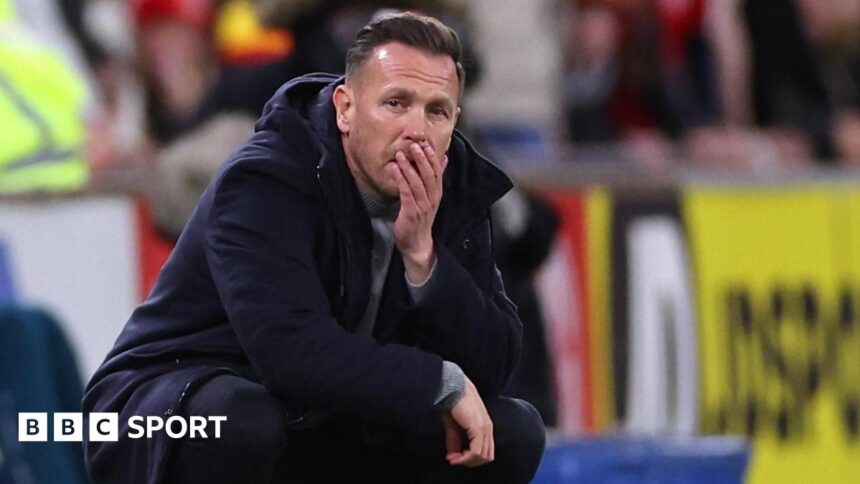
The final whistle at Cardiff City Stadium did not signal the end of a match, but the collapse of a dream. As Bosnia-Herzegovina’s players erupted in celebration, Wales’s stars crumpled to the turf, the crushing weight of penalty shootout defeat ending their 2026 World Cup hopes. For new head coach Craig Bellamy, the stark reality of international management has arrived with brutal force. The question now echoing from the Valleys to the valleys of this squad’s psyche is a simple, painful one: where do we go from here?
This was more than a play-off loss. It was a national gut-punch, a failure to reach a third consecutive major tournament that leaves Welsh football at a profound crossroads. Appointed just last July, Bellamy’s baptism has been one of fire and, ultimately, ice. The immediate task is one of emotional triage, but once the raw pain subsides, monumental decisions await that will define the next era for the Red Dragon.
The Bellamy Conundrum: Leader at a Crossroads
Craig Bellamy’s appointment was a bold, emotional choice. The former captain, with his famed intensity and deep understanding of the Welsh DNA, was seen as the natural heir to continue the golden generation’s legacy. His start was promising, instilling a clear tactical identity and re-energizing the squad. Yet, failure to qualify for the World Cup casts an unavoidable shadow over any new manager’s first campaign.
Bellamy now faces a dual challenge. Internally, he must rally a devastated group and convince the Football Association of Wales that he remains the right long-term architect. Externally, his stock in the wider game is under new scrutiny. His vibrant, modern approach had already turned heads in the club game, but this setback may give potential suitors pause. Does he see this project through, or will the allure of day-to-day club management grow?
Bellamy’s immediate future hinges on his next moves. His response in the upcoming Nations League will be dissected like never before. He must prove his strategic mettle beyond motivation, demonstrating an ability to learn, adapt, and solve the systemic problems the campaign exposed. The FAW’s faith is likely unwavering for now, but in the results-driven world of football, patience has its limits.
Squad Audit: Exposing the Depth Deficit
Tuesday night laid bare a truth known but unspoken: Wales’s golden generation is transitioning, and the well of talent behind it is worryingly shallow. The lack of strength in depth in the Wales squad was ruthlessly exposed throughout qualification and in the decisive moments against Bosnia. When key players were absent or fatigued, the drop-off was stark.
The core issue is not the star quality at the top. Players like Harry Wilson, Neco Williams, and Brennan Johnson are excellent talents. The problem lies in the options beyond them. Injuries to veterans like Aaron Ramsey and Ben Davies revealed a fragility, forcing less experienced players into high-pressure roles they weren’t yet ready to own.
A critical squad audit is now non-negotiable. Bellamy and his staff must:
- Accelerate the integration of youth: Players like Jordan James, Charlie Savage, and Liam Cullen need consistent minutes and belief to bridge the gap.
- Make tough decisions on veterans: Managing the farewells of legendary servants with grace while phasing in new blood is a delicate but essential task.
- Explore the eligibility pool: Casting the net wider for dual-qualified players who can add immediate quality must be a strategic priority.
- Develop a flexible tactical plan: The system must adapt to the players available, not vice-versa, especially when injuries bite.
The days of relying on 14-15 players are over. Building a competitive 23-man squad is Bellamy’s most pressing footballing objective.
The Road to 2028: A New Blueprint for Success
With the 2026 World Cup dream extinguished, the horizon shifts to the 2028 European Championship—a tournament Wales will co-host with the UK and Ireland. This presents an unparalleled opportunity but also a daunting timeline. Qualification is automatic, but the goal must be to arrive as a competitive force, not just participants.
The next four years must be treated as a meticulously planned construction project. The Nations League ceases to be a side-show; it becomes the vital laboratory for testing players, systems, and partnerships. Friendlies must be strategically chosen to challenge the squad against varied styles of play.
This period also demands a cultural reset within the camp. The narrative can no longer be about extending the glory of the Bale-Ramsey-Allen era. Bellamy must forge a new identity, one built on his own principles. It requires shifting the mentality from being heirs to a legacy to being architects of their own. The pain of this Bosnia defeat can be the foundation stone of that new resolve—if channeled correctly.
Predictions and The Path Forward
The immediate forecast is for a period of introspection and change. Expect to see a refreshed squad for the next Nations League camp, with several new faces and perhaps some familiar ones absent. Bellamy will likely double down on his philosophy, using the “agony as fuel” narrative to bind his group closer.
In the longer term, the co-hosting of Euro 2028 provides a clear and compelling target. Welsh football’s next cycle is already underway. Success will be measured not by a miraculous qualification, but by sustainable growth: a deeper squad, a resilient style, and a team that enters their home tournament in 2028 without fear.
For Bellamy, the journey just became infinitely harder, but also more clearly defined. The “what if” of 2026 is over. The “what next” starts now. His legacy will not be written by this defeat, but by how he, and the nation, responds to it.
Conclusion: From Agony to Opportunity
The heartbreak in Cardiff is a terminus point for one of Welsh football’s most celebrated chapters. The reliance on transcendent talent has reached its natural conclusion. What emerges from this agony must be a smarter, deeper, and more resilient Wales.
Craig Bellamy, the fierce competitor who wore his heart on his sleeve as a player, now faces his greatest test as a coach. It is a test of vision, of man-management, and of strategic building. The task is no longer to ride a wave of momentum, but to generate a new one from scratch. The road to 2028 begins today on the training pitches of Hensol, in the stands of lower-league grounds where future stars play, and in the defiant hearts of a nation that has felt this pain before and risen again. The dragon is wounded, but its fire must not be allowed to dim.
Source: Based on news from BBC Sport.