The Aston Martin Enigma: From Pit Lane Promise to Painful Reality
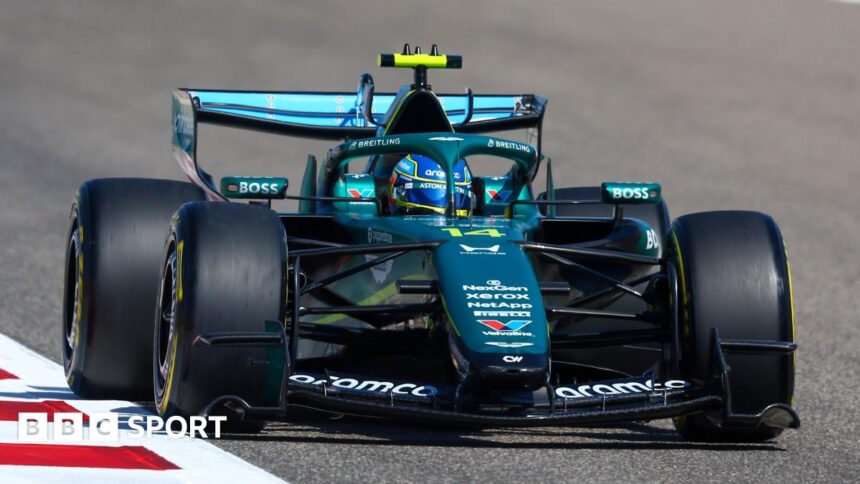
In the high-stakes theatre of Formula 1, few things are as tantalizing—or as perilous—as a winter of hype. For Aston Martin Aramco Cognizant Formula One Team, the 2025 pre-season was a masterclass in that very dichotomy. When their new challenger, the AMR25, first emerged under the winter sun, shrouded in a menacing all-black livery, it sent a palpable ripple through the paddock. Here was a car that looked radically different, bearing the fingerprints of the sport’s most celebrated designer, Adrian Newey. Yet, just weeks later, that promise has evaporated into a cloud of exhaust smoke and stark disappointment. The question echoing from Silverstone to Shanghai is simple: why has it gone so catastrophically wrong?
The Illusion of Innovation: A False Dawn in Black
The initial admiration for the AMR25 was not without foundation. Its design philosophy represented a bold departure from the prevailing trends on the grid. With Adrian Newey installed as Managing Technical Partner since March 2024, the expectation was that his genius for ground-effect aerodynamics and outside-the-box thinking would deliver a leap forward. The car’s unique geometry, particularly around the sidepods and underbody, screamed of Newey’s signature approach: innovation at any cost.
However, this early intrigue masked a fundamental and fatal flaw. In F1’s ultra-tight regulatory environment, radical innovation walks a razor’s edge between breakthrough and breakdown. The car’s lateness to the track was the first major red flag. While rivals were refining established concepts, Aston Martin was still building a revolution. This lack of on-track development time is a crippling disadvantage in the modern era, where data is king and every lap informs crucial setup and correlation decisions.
Key Early Warning Signs:
- Severely Limited Testing Debut: A mere four laps completed on its first day in Barcelona before a terminal failure.
- Radical vs. Reliable: The pursuit of a unique aerodynamic concept compromised basic reliability.
- Correlation Catastrophe: Early indications suggest the car’s on-track behavior may not match wind tunnel and CFD simulations, a team’s worst nightmare.
Anatomy of a Breakdown: More Than Just Bad Luck
To dismiss Aston Martin’s woes as simple misfortune is to misunderstand the precision required in F1. The team’s trajectory points to a systemic failure within its operational and technical processes. Finishing pre-season testing as the slowest car, with the fewest miles completed, is a statistical indictment of a project in deep trouble.
The problems appear multifaceted. The aggressive technical package, likely pushing the boundaries of the chassis and cooling systems, has revealed profound reliability issues. A car that cannot run cannot be developed. Furthermore, the integration of Newey’s visionary ideas with the existing technical team, led by Technical Director Dan Fallows, may have created friction or an overly complex design language that is proving difficult to translate into a drivable, robust package. The “concept car” that looked so promising in the garage has become a temperamental diva on the asphalt.
This crisis also exposes the limitations of the “silver bullet” hiring strategy. While Newey’s pedigree is unquestioned, his influence takes time to permeate an organization’s culture and processes. The AMR25 is likely a hybrid—a car conceived by the existing technical structure with Newey’s late input, rather than a pure Newey creation from the ground up. The result is a potentially disjointed machine struggling with its own identity.
The Ripple Effect: Morale, Momentum, and the Driver Dynamic
The technical malaise has immediate and damaging consequences beyond the lap times. For a driver pairing as ambitious and experienced as Fernando Alonso and Lance Stroll, starting a season with no hope of points is a demoralizing prospect. Alonso, in particular, joined the team on the promise of a project ascending to the front. His patience, while legendary, is not infinite. The team risks squandering the immense goodwill and performance he has brought.
Internally, the pressure will be immense. The Lawrence Stroll-led project has invested billions in new facilities, a world-class workforce, and now the sport’s top designer. The return on that investment, in the short term, is negative. This can lead to rushed decisions, panic upgrades, and a toxic atmosphere where long-term development is sacrificed for short-term fixes. The team’s ability to attract and retain top talent could be threatened if the project is seen as fundamentally flawed.
Furthermore, in a cost-cap era, the financial and regulatory penalties of this false start are severe. Resources allocated to designing and building a flawed concept must now be diverted to a massive recovery development program, eating into the budget for in-season upgrades and potentially next year’s car. One bad car can haunt a team for multiple seasons.
The Long Road Back: Predictions for a Painful Season
Realism must now replace optimism at Aston Martin. The 2025 season is likely to be a brutal exercise in damage limitation and foundational repair. Expect a season defined by several key phases:
- Early-Season Firefighting: The first races will focus on achieving basic reliability, simply to run race distances and collect data.
- Major Conceptual Revisions: By the European season, significant upgrade packages—perhaps even a “B-spec” car—will arrive to address core aerodynamic flaws.
- Driver Market Turmoil: Fernando Alonso’s future will become a constant source of speculation, potentially destabilizing the team further.
- Strategic Pivot to 2026: At some point, a hard decision may be made to cut losses on the AMR25 and pour resources into the massive regulatory change coming in 2026.
The one glimmer of hope is Adrian Newey’s proven ability to recover from setbacks. His career is littered with cars that started poorly but were developed into winners. However, that process required time, stability, and a solid base to improve upon—luxuries the current AMR25 may not provide.
Conclusion: A Cautionary Tale of Ambition and Execution
The story of Aston Martin’s 2025 car is a stark reminder that in Formula 1, aesthetics and innovation count for nothing without rigor and reliability. The menacing black livery now symbolizes a project that has, thus far, been its own worst enemy. The confluence of a radical but late concept, potential technical missteps, and the immense pressure of expectation has created a perfect storm.
This is not merely a story of a slow car; it is a case study in how difficult it is to bridge the gap from midfield to frontrunner, even with all the financial and human resources imaginable. The path forward is steep and littered with obstacles. For Aston Martin, the dream of competing with Red Bull, Ferrari, and McLaren has been deferred. The 2025 season is no longer about glory. It is about survival, learning, and laying a more conservative, solid foundation upon which Adrian Newey’s true vision can eventually be built. The road back to respectability starts not with a flash of genius, but with the humble completion of a race distance.
Source: Based on news from BBC Sport.