The Premier League’s European Power Play: Why English Clubs Dominate as Giants Stumble
The script has been flipped. As the UEFA Champions League prepares for its inaugural post-league phase knockout play-offs, the footballing world is witnessing a stark realignment of power. While continental aristocrats like Real Madrid and Paris Saint-Germain face the unfamiliar and perilous route of a two-legged play-off, the Premier League’s contingent is lounging comfortably in the round of 16. This isn’t just a good year for English football; it’s a systemic flex of financial, tactical, and competitive muscle that is reshaping European football’s hierarchy. The question is no longer if an English team can win the Champions League, but how many will be in the quarter-finals.
The Unassailable Depth: More Than a “Big Six”
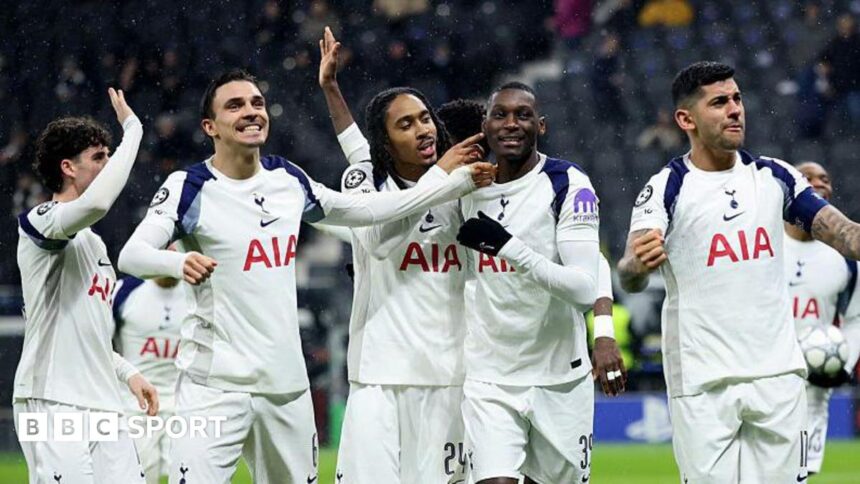
The most telling statistic is seismic: five Premier League teams finished in the top eight of the Champions League league phase, securing automatic qualification for the last 16. Arsenal topped their group, Liverpool and Tottenham navigated tough pools with ease, while Chelsea and Manchester City, despite domestic hiccups, demonstrated their European pedigree. This collective success underscores a critical shift. The Premier League’s strength is no longer confined to one or two super-clubs; it is a wave of well-resourced, deeply squadded entities capable of fighting on two fronts.
Consider the anomaly that defines this new reality: Tottenham finished fourth in the Champions League league table, a position that reflects consistency against Europe’s best. Yet, back home, they languish in 14th in the Premier League. This paradox is the ultimate evidence of the league’s brutal competitiveness. A team can be simultaneously among Europe’s elite and a mid-table domestic side. The weekly grind of the Premier League, where even the bottom clubs are fortified by historic broadcast revenues, creates a resilience that translates perfectly to the Champions League stage.
- Financial Firepower: The Premier League’s global broadcasting deals create an economic ecosystem that is the envy of world football. This revenue allows not just the elite, but also teams like Aston Villa and West Ham, to invest heavily in squads, making every weekend a physical and tactical battle that mirrors Champions League intensity.
- Squad Investment & Depth: English clubs have used their wealth to build squads with two quality players for every position. This depth is crucial for managing the relentless schedule, ensuring performance levels don’t drop drastically between competitions.
- The Managerial Melting Pot: The influx of elite coaches like Pep Guardiola, Jürgen Klopp, Mikel Arteta, and Ange Postecoglou has raised the tactical bar. The Premier League is now a laboratory of high-pressing, possession-based, and transitional football, styles that dominate modern European success.
The Play-Off Peril: A Warning to European Royalty
While English clubs rest, the play-off round presents a nerve-shredding obstacle for some of the competition’s most storied names. Real Madrid and PSG, despite their constellations of stars, fell short of the top-eight cut. Their presence in the play-offs is a stark reminder that the Champions League’s new format punishes inconsistency more than ever. For PSG, a draw at home to Newcastle—who finished 12th in the league phase—proved costly. It highlighted that on any given night, the financial and physical might of a Premier League side, even one not at its peak, can disrupt the best-laid plans of a “super-club.”
This play-off round is not a formality. It’s a potential graveyard for title aspirations. One off-night, one moment of misfortune, and a preseason favorite is eliminated. The pressure on these giants will be immense, a pressure that the five qualified English clubs have already sidestepped. This advantage cannot be overstated; extra weeks of rest, the ability to rotate in domestic competitions, and the psychological comfort of already being in the last 16 is a massive head start.
Newcastle: The Potential History Makers
All eyes now turn to Tyneside, where Newcastle United stand on the brink of history. If they can navigate their play-off tie, they would become the sixth Premier League team in the knockout stages, an unprecedented feat for any nation in the Champions League era. This possibility, stemming from a gritty 1-1 draw at defending champions PSG, encapsulates the Premier League’s depth. A team that has struggled with injuries and form domestically has the sheer quality and fortitude to go to the Parc des Princes and secure a result that keeps their European destiny in their own hands.
Newcastle’s journey is symbolic. Backed by new ownership and smart recruitment, they represent the Premier League’s ability to rapidly elevate clubs into European competitors. Their potential progression would send the clearest message yet: the league is not a “top four” or “big six,” but a deep pool where almost any club can develop the capability to challenge on the continent. It would be the ultimate validation of the league’s model, proving that its competitive and financial advantages are transferable to the highest stage.
Analysis & Predictions: What Comes Next?
This dominance is not a fluke, but a trend likely to continue. The financial gap between the Premier League and other top leagues is widening, not closing. This allows English clubs to hoard talent, attract the best managers, and build infrastructure that creates a sustainable competitive edge.
Short-Term Prediction: Expect at least three Premier League clubs in the quarter-finals, with a strong possibility of an all-English semifinal. Manchester City and Arsenal, with their combination of tactical sophistication and squad depth, look the most likely to go deepest. Liverpool’s ferocity and experience make them a threat to anyone.
The Newcastle Factor: If Newcastle progress, they become the tournament’s dark horse—a physically formidable team with nothing to lose and a fanbase creating a seismic home atmosphere. They could upset any of the established names.
Long-Term Outlook: The new Champions League format, with its expanded league phase, may further benefit Premier League clubs. Their experience with a relentless, 38-game domestic “league phase” prepares them perfectly for the grind of the new group stage. We may be entering an era where English clubs are perennial favorites, and the success of others will be measured by their ability to break into an English-dominated last eight.
Conclusion: A New European Order
The sight of Real Madrid and PSG sweating in the play-offs while a host of English clubs plan for the last 16 is a powerful image of football’s new world order. The Premier League’s domestic bloodbath has become the perfect training ground for European conquest. It is a perfect storm of wealth, elite coaching, global talent, and unrelenting competition that is paying dividends in Europe’s premier club competition.
This season could see history made with six Premier League teams in the Champions League knockouts, a feat that would resonate far beyond this campaign. It signals a consolidation of power. The Champions League trophy has become a frequent visitor to England in recent years; now, the entire knockout stage is risk of becoming a Premier League playground. For the rest of Europe, the mission is clear: find a way to bridge the gap, or get used to watching the English dominance play out on their most hallowed ground.
Source: Based on news from BBC Sport.