Wolves in Crisis: Club Executives Admit Summer Transfer Strategy Was “Wrong”
The mood at Molineux has shifted from cautious optimism to profound concern. Wolverhampton Wanderers, a club that has prided itself on shrewd recruitment and a clear identity in recent years, finds itself in a full-blown sporting and existential crisis. Rooted to the bottom of the Premier League table, winless since spring, and matching a four-decade-old club record for consecutive losses, the problems are stark. Now, in a startling admission of failure, the club’s own executives have publicly conceded they got their summer transfer business catastrophically “wrong.” This rare moment of introspection from within the Compton Park corridors signals a club acutely aware it has lost its way.
A Summer of Questionable Exodus and Inexperienced Arrivals
The seeds of the current disaster were sown during a chaotic summer transfer window. The strategy, as executed, appears in hindsight to be a perfect storm of short-term gain and long-term pain. The club sanctioned the sales of two of its most dynamic, proven assets: Matheus Cunha joined Manchester United and Rayan Ait-Nouri moved to Manchester City for a combined £92.5m. While the fees were substantial, they stripped the squad of its creative heartbeat and most potent attacking threats. Compounding this, captain and defensive stalwart Nelson Semedo departed on a free transfer, eroding leadership and experience.
The reinvestment of those funds has become the central point of contention. Wolves brought in six new faces, but the profile of the signings has raised eyebrows across the football world:
- Fer Lopez: A young goalkeeper from La Liga.
- Jhon Arias: A winger from the Brazilian league.
- Tolu Arokodare: A raw, physical striker from Genk.
- David Moller Wolfe: A Norwegian midfielder.
- Jackson Tchatchoua: A wing-back from Serie A.
- Ladislav Krejci: A Czech defender.
The common, and damning, denominator? Not a single one possesses prior Premier League experience. Technical director Matt Jackson’s admission that the club “got it wrong” is an understatement. They swapped known, high-performing quantities for a collection of gambles, all while the intense pressure of a Premier League season was bearing down.
Executive Introspection: Shi’s Empathy and Jackson’s Mea Culpa
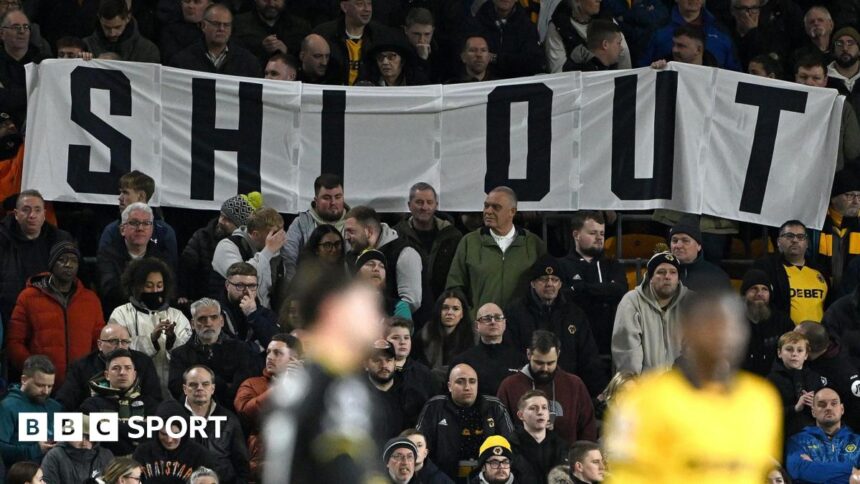
The public statements from the club’s hierarchy are as revealing as the league table. Executive Chairman Jeff Shi, a figure facing intense scrutiny from a disillusioned fanbase, has stated he can “empathise” with protesting supporters. This is a significant shift in tone for a board often perceived as detached. Empathy, however, does not equal a solution. Fans protesting against the direction of the club are unlikely to be placated by understanding alone; they demand competent action and a visible plan for survival.
More impactful is the candid assessment from Matt Jackson. For a technical director to openly state the transfer strategy was flawed is a stark indictment of the club’s internal processes. It suggests a recognition that the model broke down—whether through poor talent identification, a failure to secure primary targets, or a misguided belief that a cohort of unknowns could adapt instantly to the world’s most demanding league. This mea culpa, while refreshingly honest, does little to steady a ship taking on water each week. It places enormous, perhaps unfair, pressure on manager Rob Edwards, who is now tasked with orchestrating a great escape with a squad he did not fundamentally build.
The Perfect Storm: On-Field Consequences of Off-Field Errors
The theoretical missteps have manifested in brutal reality on the pitch. The eight-game losing run equalling a record from 1981-82 is not a coincidence; it is the direct result of a weakened squad. The lack of a proven goalscorer has crippled their attack, with the new signings struggling for fitness, form, or both. The defensive solidity that was once a Wolves hallmark has evaporated without Semedo’s organisation and with inexperienced players integrated into a backline under constant siege.
The psychological damage is equally severe. Confidence is shot. Players who remained from last season look burdened by the increased responsibility, while the new signings are battling the dual challenge of adapting to a new country and a relegation dogfight. The absence of a win since that victory over Leicester in April has created a toxic cycle of fear at Molineux, where one mistake seems to inevitably lead to defeat. The team is not just losing; it looks ill-equipped to compete, a direct reflection of the summer’s flawed squad construction.
Survival Hopes and a Long Road Ahead
So, where do Wolves go from here? The January transfer window looms as a critical juncture, but it is fraught with difficulty. The club must now rectify its summer errors in a mid-season market known for inflated prices and desperate dealings. The need for a proven Premier League striker and a commanding, experienced leader at the back is glaringly obvious. However, attracting that quality to a club bottom of the table will be a monumental challenge, even with the funds from the summer sales.
The immediate prediction is bleak. The current squad, as constructed, has shown no evidence it can halt the slide. Survival will require:
- A swift and impactful January window, targeting experience over potential.
- Rob Edwards extracting career-best form from his remaining senior players.
- One or two summer signings accelerating their adaptation far beyond normal expectations.
- A slice of luck in tight games that have all been going against them.
Even if all this happens, the gap to safety is widening each week. The Championship is a very real and looming possibility.
Conclusion: A Costly Lesson in Football’s Hardest League
Wolverhampton Wanderers’ current plight is a masterclass in how not to conduct football business. The admission from executives that they “got it wrong” is unprecedented and confirms what the league table has been screaming for weeks. The strategy of replacing established stars with an entire cohort of unproven talent was a risk that has backfired spectacularly, leaving a talented manager and a loyal fanbase to pay the price.
The club now faces a defining period. Jeff Shi’s empathy must translate into decisive, corrective action. Matt Jackson’s admission must be the foundation of a smarter, more pragmatic recruitment strategy. The protests from fans are a symptom of a deep fear that the club’s hard-won Premier League status is being squandered through avoidable errors. Wolves have time to salvage their season, but not much. The coming months will test the club’s resolve, its resources, and its very philosophy. One thing is certain: the cost of getting the summer “wrong” could be a season-long fight for survival, with the ultimate price being a painful return to the second tier.
Source: Based on news from BBC Sport.