Pills in Pocket, Profound Questions: The Troubling New Details of Tiger Woods’ Arrest
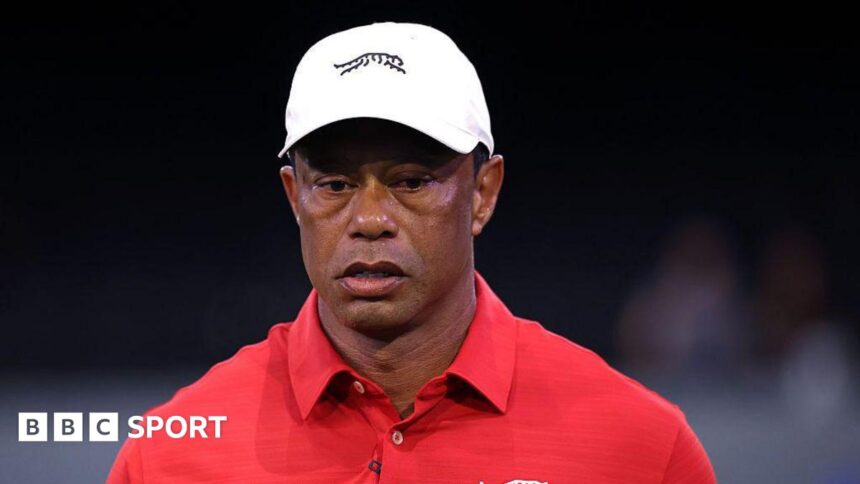
The image of Tiger Woods, the most dominant golfer of his generation, crawling out of the wreckage of his car was jarring enough. Now, a newly released police affidavit paints a far more detailed and disturbing portrait of that morning in Florida, one that goes beyond a simple traffic accident. According to the report, officers found Woods with two hydrocodone pills in his pocket, “sweating profusely” with “extremely dilated” pupils, his movements “lethargic and slow.” For a global icon whose career has been a masterclass in control and precision, these details signal a profound and public unraveling, raising urgent questions about his health, his legacy, and the immense pressure that shadows even the greatest of champions.
A Scene of Disorientation: The Police Report’s Stark Narrative
The clinical language of a police report leaves little room for myth-making. The affidavit released by the Martin County Sheriff’s Office strips away the fame and fortune to describe a man in clear distress. After clipping a truck and rolling his car, Woods was observed by deputies to be in a severe state of disorientation. Key observations from the arresting officers included:
- Physical State: “Sweating profusely” with “extremely dilated” pupils.
- Behavioral Cues: Movements described as “lethargic and slow.”
- Failed Field Sobriety Tests: Woods reportedly performed poorly on standard tests administered at the scene.
- Chemical Evidence: Two pills identified as hydrocodone, a potent prescription opioid painkiller, were found in his pocket.
Notably, Woods passed a breathalyser test, indicating alcohol was not a factor. However, his refusal to submit to a urinalysis test, as confirmed by Sheriff John Budensiek, leaves a gap in the toxicological picture. The combination of observed impairment, the presence of prescription medication, and the refusal of further testing constructs a scenario that authorities felt warranted a Driving Under the Influence (DUI) charge, albeit one where the specific intoxicant remains partially unclear.
Between Pain and Impairment: The Hydrocodone Question
The discovery of hydrocodone pills is a critical piece of the puzzle, directly connecting to the well-documented physical trials of Tiger Woods. The 15-time major winner is a veteran of the operating table, with multiple back surgeries, including a spinal fusion, and procedures on his knees and legs. Hydrocodone, often combined with acetaminophen (as in Vicodin or Norco), is a standard prescription for managing severe post-surgical and chronic pain.
This presents a complex dichotomy at the heart of the incident: the legitimate need for pain management versus the severe risks of impairment. Expert analysis from sports physicians suggests that while the medication itself may be legally prescribed, its side effects—which can include drowsiness, dizziness, and mental fog—are precisely the warnings listed on the bottle against operating machinery or driving. For an athlete whose entire being is calibrated to perform under pressure, the interaction of strong medication with possible fatigue or other factors could be devastating. This incident forces a public conversation about the tightrope many chronic pain patients walk, albeit under a global microscope.
The Unraveling of an Icon: Legacy in the Balance
Tiger Woods’ narrative has long been a saga of triumphant comebacks. From his 1997 Masters coronation to his miraculous 2019 victory at Augusta after spinal fusion, he has defined resilience in sports. Yet, this latest chapter feels fundamentally different. Previous scandals and injuries were obstacles to be overcome on the course. This incident speaks to a vulnerability that exists off it.
The public perception of Tiger Woods is now fractured along new lines. The golfer who meticulously rebuilt his body and game is now seen in a police report, disoriented and impaired. The brand built on invincibility is confronted with a moment of profound human frailty. This doesn’t erase his 82 PGA Tour wins or his transformative impact on golf, but it adds a somber, cautionary layer to his legacy. The conversation shifts from “Can he win again?” to “Is he okay?” The long-term brand impact for one of the world’s most recognizable athletes will depend heavily on his response, transparency, and the steps he takes next.
What Comes Next: Legal, Professional, and Personal Crossroads
Tiger Woods now faces a multifaceted battle on several fronts. The immediate path forward is fraught with legal, professional, and personal challenges.
- Legal Proceedings: Released on bail, Woods must navigate the Florida legal system. The DUI charge, while a misdemeanor, carries potential penalties including probation, fines, mandatory substance abuse education, and community service. His legal team’s strategy will be closely watched.
- PGA Tour Status: Unlike other sports leagues, the PGA Tour does not have a specific public policy for DUI arrests, handling matters on a case-by-case basis. However, the court of public opinion and potential sponsor reactions may exert more immediate pressure than any tour sanction.
- Health and Recovery: This is the most critical arena. This incident will likely trigger a comprehensive, private review of his pain management protocol. The focus must shift from mere physical rehabilitation to holistic health, ensuring his treatment plan never again compromises his safety or the safety of others.
Predictions for his career are now secondary. A return to competitive golf seems a distant concern. The priority will be a genuine, sustained period of personal recovery away from the spotlight. The greatest comeback of Tiger Woods’ life may no longer be about chasing Jack Nicklaus’ major record, but about reclaiming stability and health.
Conclusion: A Sobering Moment Beyond the Headlines
The details of the police affidavit—the pills, the profuse sweat, the dilated pupils—transform Tiger Woods’ crash from a celebrity news item into a stark human drama. It is a reminder that the physical and psychological toll of a lifetime in elite sports does not disappear when the crowds go home. The man who has spent three decades willing his body to perform superhuman feats is now confronting its very human limits and the dangers of mismanaging their treatment.
For fans, it is a sobering moment to separate the myth from the man. For Woods, it is a profound crossroads. His legacy as a golfer is secure, etched in history. But this incident challenges him to build a new legacy—one defined not by trophies, but by the wisdom and strength sought in the quiet, difficult work of personal recovery. The world watched him learn to walk and win again after back surgery. Now, it must watch, with hope and without judgment, as he navigates a far more private and crucial journey back to well-being.
Source: Based on news from BBC Sport.